• Fri frakt över 249 kr
  • •
  • Snabba leveranser
  • •
  • Billiga böcker
Kundservice

Du är på sajten för privatpersoner.

Företag, bibliotek eller offentlig verksamhet?

Du handlar på classic.bokus.com, där alla dina funktioner finns intakta.
Till classic.bokus.com
Bokus logotyp. Gå till startsidan.
  • Erbjudanden
  • Student
  • Topplistor
  • Barn & ungdom
  • Bokus Play
  • E-böcker
  • Ljudböcker
  • Pocketböcker
  • Spel och pussel

Pocketfynda! Hundratals böcker för 49 kr/st →

Sidfot

Mina sidor

    Hjälp

    • Kundservice
    • Vanliga frågor och svar
    • Frakt och leverans
    • Retur vid ångerrätt
    • Reklamera vara
    • Betalning
    • Köpvillkor
    • Allmänna villkor
    • Information om webbplatsens tillgänglighet

    Om Bokus

    • Om oss
    • Pressrum
    • För studenter
    • För företag
    • För bibliotek och offentlig verksamhet
    • För leverantörer
    • Hållbarhet

    Populärt

    • Aktuella erbjudanden
    • Presentkort
    • Studentlitteratur
    • Nya böcker
    • Topplistor
    • Signerade böcker
    • Engelska böcker

    Inspiration

    • Boktips
    • BookTok
    • Barnbokskaraktärer
    • Populära författare
    Logotyp för Bokus
    Följ oss på Facebook (extern länk)Följ oss på Instagram (extern länk)Följ oss på YouTube (extern länk)Följ oss på TikTok (extern länk)
    bokus @ CookiesAnpassa cookiesIntegritetspolicyKöpvillkor
    Till Citymail hemsida (extern länk)Till Budbee hemsida (extern länk)Till Postnord hemsida (extern länk)Till Schenker hemsida (extern länk)Till Early Bird hemsida (extern länk)Till Walleys hemsida (extern länk)
    1. Historia och arkeologi
    2. Historia
    3. Militärhistoria

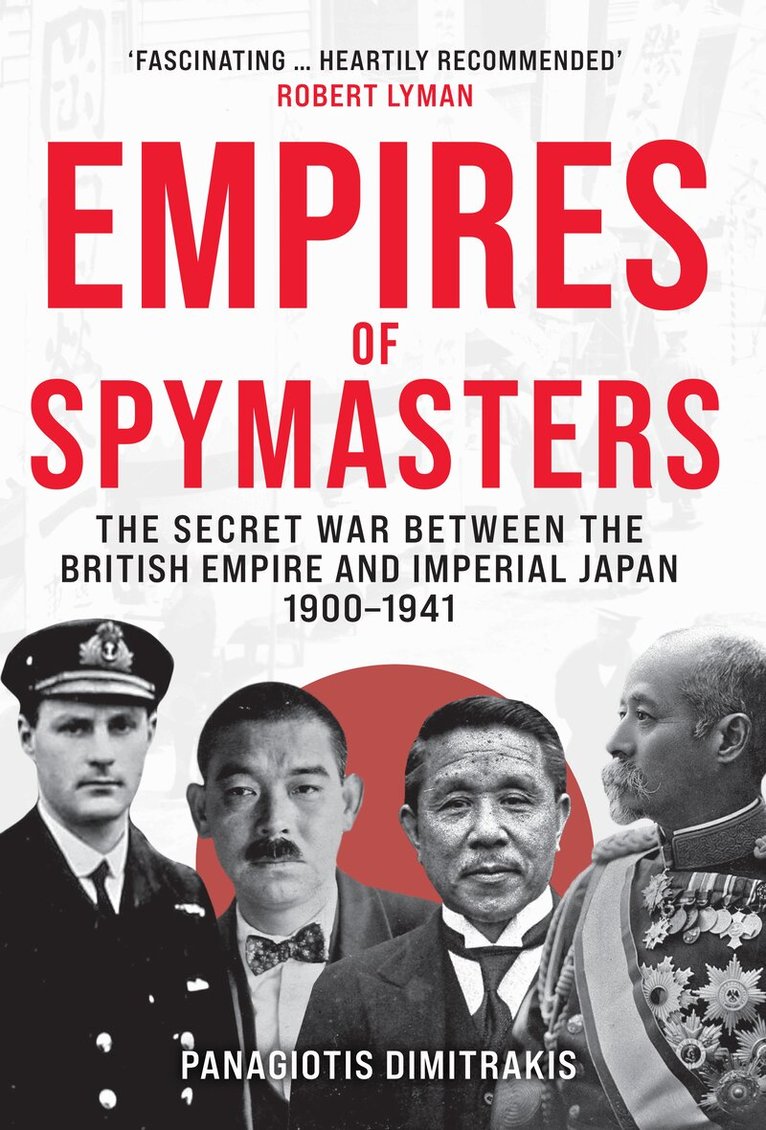
    Empires of Spymasters

    The Secret War Between the British Empire and Imperial Japan, 1900–1941

    AvPanagiotis Dimitrakis

    Inbunden, Engelska, 2025

    250 kr

    Skickas . Fri frakt över 249 kr.

    Fler format och utgåvor

    E-bok

    206 kr

    Beskrivning

    ‘The Empire is the Master [in the Far East] and they are the guests,’ Yamagata Aritomo, the chief imperial strategist in Tokyo, once remarked.From the early 1900s, Imperial Japan aimed for hegemony in the Far East. During this time, resourceful and independent-minded Japanese spymasters focused on acquiring intelligence of advanced naval and aviation technology.In London, the War Office and the Foreign Office opted for an alliance treaty with Japan. Nonetheless strategists soon realised that Tokyo was antagonizing Britain in the Far East. The British Empire was deemed weak and overextended. Officials believed that avoiding confrontation with Japan was the only choice, and so Britain condoned Japanese aggression in China. Indeed, pro-Japanese bias influenced official policy at the highest levels.Only the spymasters of the Secret Intelligence Service, the Admiralty and the Security Service, recruiting spies across the Far East, were able to reveal Japan’s hostile intent towards the British Empire. In Empires of Spymasters, Panagiotis Dimitrakis tells us how they did it.

    Produktinformation

    • Utgivningsdatum:2025-10-15
    • Mått:156 x 234 x 34 mm
    • Vikt:615 g
    • Format:Inbunden
    • Språk:Engelska
    • Antal sidor:304
    • Förlag:Amberley Publishing
    • ISBN:9781398124370

    Utforska kategorier

    • Militärhistoria inom Historia och arkeologi

    Mer om författaren

    Panagiotis Dimitrakis is an historian and completed his PhD in War Studies at King's College London. He was educated at the Department of Mass Media and Communication of the University of Athens and received an MA in International Peace and Security from King's College London. His interests lie in the history of international diplomacy, intelligence and strategy. He lives in Athens, Greece and is a member of the UK Society of Authors.

    Recensioner i media

    'This fascinating book reveals the security relationships between Britain and Japan in the four decades leading up to the outbreak of war in December 1941. Although explaining the structures of the intelligence war upon which both sides were engaged during this period, it also reveals the otherwise poorly understood political and grand strategic dimensions of the relationship between the two countries, exposing to the light the long and sorry story (especially) of British failure to fully understand what was going on in Japan, and to act on it. This is a very well told story, and is heartily recommended for anyone interested in the long run up to Japan’s adventures in the Pacific and south east Asia after 1941.'