• Fri frakt över 249 kr
  • •
  • Snabba leveranser
  • •
  • Billiga böcker
Kundservice

Du är på sajten för privatpersoner.

Företag, bibliotek eller offentlig verksamhet?

Du handlar på classic.bokus.com, där alla dina funktioner finns intakta.
Till classic.bokus.com
Bokus logotyp. Gå till startsidan.
  • Erbjudanden
  • Nyheter
  • Student
  • Topplistor
  • Barn & ungdom
  • Bokus Play
  • E-böcker
  • Pocketböcker
  • Spel & pussel

10% rabatt på allt med kod: NYSTART10 →

Sidfot

Mina sidor

    Hjälp

    • Kundservice
    • Vanliga frågor och svar
    • Frakt och leverans
    • Retur vid ångerrätt
    • Reklamera vara
    • Betalning
    • Köpvillkor
    • Allmänna villkor
    • Information om webbplatsens tillgänglighet

    Om Bokus

    • Om oss
    • Pressrum
    • För studenter
    • För företag
    • För bibliotek och offentlig verksamhet
    • För leverantörer
    • Hållbarhet

    Populärt

    • Aktuella erbjudanden
    • Presentkort
    • Studentlitteratur
    • Nya böcker
    • Topplistor
    • Signerade böcker
    • Engelska böcker

    Inspiration

    • Boktips
    • BookTok
    • Populära bokserier
    • Barnbokskaraktärer
    • Populära författare
    Logotyp för Bokus
    Följ oss på Facebook (extern länk)Följ oss på Instagram (extern länk)Följ oss på YouTube (extern länk)Följ oss på TikTok (extern länk)
    bokus @ CookiesAnpassa cookiesIntegritetspolicyKöpvillkor
    Till Citymail hemsida (extern länk)Till Budbee hemsida (extern länk)Till Postnord hemsida (extern länk)Till Schenker hemsida (extern länk)Till Early Bird hemsida (extern länk)Till Walleys hemsida (extern länk)
    1. Kultur
    2. Scenkonst och film
    3. Film

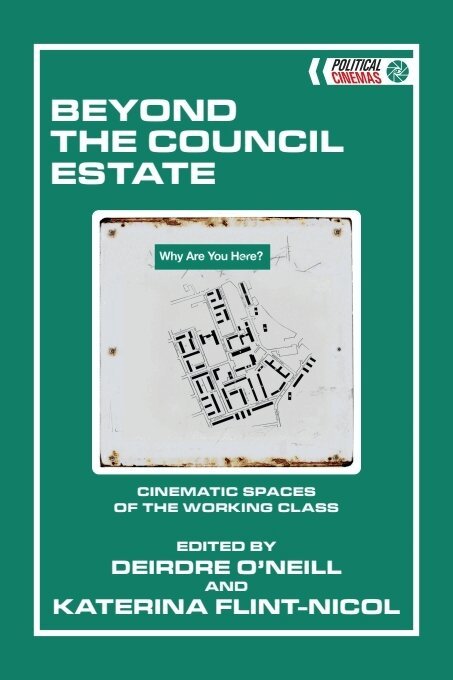
    Beyond the Council Estate

    Cinematic Spaces of the Working Class

    AvDeirdre O'Neill,Katerina Flint-Nicol

    Inbunden, Engelska, 2026

    Del 2 i serien Political Cinemas

    1 138 kr

    Kommande

    Beskrivning

    In recent years British cinema has utilised the iconic image of the council estate as an emblematic shorthand for defining the supposedly dysfunctional character of the working-class people who reside there. As a spatial determinant, it has come to signify a whole group of people in the popular imaginary as anti-social, violent and workshy. Drawing on the latest research into class and British cinema, the chapters in this edited collection explore classed identities in relation to the spaces which they occupy, both onscreen and off.The chapters in this collection shift the spatial location of the working class away from the council estates in which they are visually and symbolically contained to explore alternative spaces where their complexities, struggles and resistance to the systemic cultural and political discourses that define them can be foregrounded.

    Produktinformation

    • Utgivningsdatum:2026-11-30
    • Mått:156 x 234 x undefined mm
    • Format:Inbunden
    • Språk:Engelska
    • Serie:Political Cinemas
    • Antal sidor:224
    • Förlag:Edinburgh University Press
    • ISBN:9781399533638

    Utforska kategorier

    • Film inom Kultur

    Mer om författaren

    Deirdre O’Neill is a Senior Lecturer in Film Theory and Practice at the University of Hertfordshire. She is the author of Film as a Radical Pedagogical Tool and the co-ordinator of the Inside Film Project. She is the founding and principle editor of the Journal of Class and Culture and has co-directed (with Mike Wayne) three films, Listen to Venezuela (2008), Condition of the Working Class (2012) and The Acting Class (2017), which was the winner of the National Feature Documentary Award at the 2017 Labour Film Festival. Katerina Flint-Nicol is a Senior Lecturer in Film at Falmouth University. She is a founding member of the British Popular Cultures Research Network and has published on the gothic in musical performance and television adaptation. Her PhD, Men, Manors and Monsters: The British Hoodie Horror and the Cinema of Alterity addressed the horrorisation of the working-class in British cinema in the early 2000s.

    Innehållsförteckning

    • IntroductionKaterina Flint-Nicol and Deirdre O’Neil1. ‘Tough Blokes, Tough Buildings’: The Significance of Brutalist Architecture in Constructing Working-Class Masculinity in Post-War British CinemaJohny Smith2. Moving beyond ‘That Hill’: Shelagh Delaney, David Storey, and a new class topography of the British New WaveDavid Forrest3. Loss, impasse, and the myth of class transcendence: Shelagh Delaney’s Charlie Bubbles (1968)Thirza Wakefield 4. Back ‘Up The Junction’: Nell Dunn’s Working Class Women’s Lives on FilmMary Irwin5. The Aimless Class Wanderers – Psychogeography in My Childhood Trilogy and RatcatcherKyle Barret6. ‘Motorways, Service Stations, and Brighton Pier’ – Landscape and the Flow of Working-Class Life Amid the Post-1979 Cinematic Output of the Children’s Film FoundationPeter Jachimiak7. A World of Arrangements: Feminist and Transnational Mappings of Class Struggle in Cinema Action’s So That You Can Live (For Shirley) (1982)Rachel Fabian8. Sea, Coal and Beauty: Seacoal (1985) by Amber Film and Photography CollectiveKarolina Kosińska9. Mutations of British social cinemaAnnette Kuhn10. New Girls on the Block: Music and Dance as Spaces of Aesthetic Politics in Fish Tank (2009) and Rocks (2020)Alice Pember11. Representing Working-Class Space in UK Drill Music VideosAustin Cooper12. 'Enduring symbols of people and place' (2015)David Roberts and Andrea Luka Zimmerman13. ‘You didn’t have to sell us this house.’/ ‘Didn’t we?’:  Bait (Mark Jenkin, 2019) John White