• Fri frakt över 249 kr
  • •
  • Snabba leveranser
  • •
  • Billiga böcker
Kundservice

Du är på sajten för privatpersoner.

Företag, bibliotek eller offentlig verksamhet?

Du handlar på classic.bokus.com, där alla dina funktioner finns intakta.
Till classic.bokus.com
Bokus logotyp. Gå till startsidan.
  • Erbjudanden
  • Nyheter
  • Student
  • Topplistor
  • Barn & ungdom
  • Bokus Play
  • E-böcker
  • Pocketböcker
  • Spel & pussel

10% rabatt på allt med kod: NYSTART10 →

Sidfot

Mina sidor

    Hjälp

    • Kundservice
    • Vanliga frågor och svar
    • Frakt och leverans
    • Retur vid ångerrätt
    • Reklamera vara
    • Betalning
    • Köpvillkor
    • Allmänna villkor
    • Information om webbplatsens tillgänglighet

    Om Bokus

    • Om oss
    • Pressrum
    • För studenter
    • För företag
    • För bibliotek och offentlig verksamhet
    • För leverantörer
    • Hållbarhet

    Populärt

    • Aktuella erbjudanden
    • Presentkort
    • Studentlitteratur
    • Nya böcker
    • Topplistor
    • Signerade böcker
    • Engelska böcker

    Inspiration

    • Boktips
    • BookTok
    • Populära bokserier
    • Barnbokskaraktärer
    • Populära författare
    Logotyp för Bokus
    Följ oss på Facebook (extern länk)Följ oss på Instagram (extern länk)Följ oss på YouTube (extern länk)Följ oss på TikTok (extern länk)
    bokus @ CookiesAnpassa cookiesIntegritetspolicyKöpvillkor
    Till Citymail hemsida (extern länk)Till Budbee hemsida (extern länk)Till Postnord hemsida (extern länk)Till Schenker hemsida (extern länk)Till Early Bird hemsida (extern länk)Till Walleys hemsida (extern länk)
    1. Skönlitteratur
    2. Dramatik

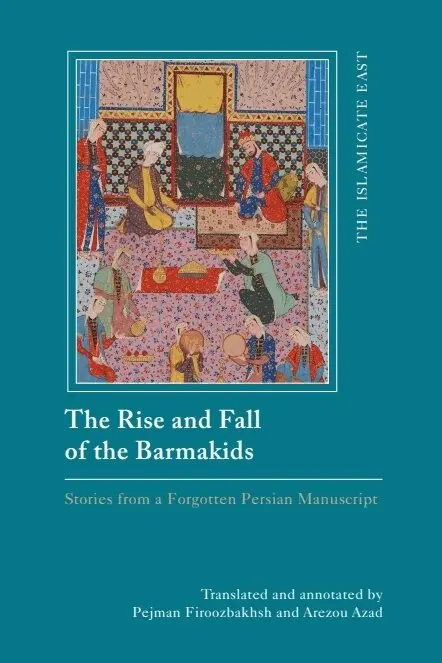
    Rise and Fall of the Barmakids

    Stories from a Forgotten Persian Manuscript

    AvPejman Firoozbakhsh

    Inbunden, Engelska, 2026

    Del i serien Islamicate East: New Approaches to Texts and History

    1 912 kr

    Beställningsvara. Skickas inom 3-6 vardagar. Fri frakt över 249 kr.

    Beskrivning

    This volume offers the first annotated English translation of Ḍiyāʾal-Dīn Baranī’s The Accounts of the Barmakids, based on a little-known manuscript housed in the Bodleian Library, MS Ouseley 217. The Barmakids, originally from the Balkh region in modern-day Afghanistan, were a prominent family of converts to Islam who rose to great power in the 8th century, under the Umayyad and Abbasid caliphates. Their influence reached its height under the Abbasid caliph Hārūn al-Rashīd, who eventually brought about their downfall. The Barmakids have intrigued both medieval and modern scholars, with their legacy preserved in regional lore and Western popular culture, the latter particularly through the One Thousand and One Nights. While early Arabic sources provide factual accounts of the family, Baranī's Persian story cycle, written in the 14th-century, paints a more vivid picture. Contained within this work are 70 tales, including stories of generosity, wise leadership, romance and skulduggery.

    Produktinformation

    • Utgivningsdatum:2026-02-28
    • Mått:156 x 234 x 23 mm
    • Vikt:716 g
    • Format:Inbunden
    • Språk:Engelska
    • Serie:Islamicate East: New Approaches to Texts and History
    • Antal sidor:344
    • Förlag:Edinburgh University Press
    • ISBN:9781399559317
    • Översättare:Pejman Firoozbakhsh

    Utforska kategorier

    • Dramatik inom Skönlitteratur
    • Historia: teori och metod inom Historia och arkeologi

    Mer om författaren

    Pejman Firoozbakhsh is a Research Associate at the University of Hamburg and a former member of the Invisible East programme at the University of Oxford. He is a linguist interested in the formation and development of early New Persian, West Iranian dialects, Persian codicology and textual criticism. Pejman Firoozbakhsh’s recent publications include “Manuscript of a Persian Qaṣīda from about the Year 400/1007”, in Bi yād-i Īraj Afshār, edited by Jawād Basharī (vol. 2. Tehran: Duktur Maḥmūd Afshār, 1402/2024, 661–72) (In Persian) and ‘The Story of Rustam and Suhrāb,’ by Abu al-Qāsim Firdawsī, edited by Jalal Khaleqi Motlaq (Tehran: Sokhan 2014; rev. 2020). He has also contributed to a book by Arezou Azad The Warehouse of Bamiyan: Economic Life in Medieval Afghanistan (Edinburgh University Press, 2025). Arezou Azad is Senior Research Fellow and Director of the Invisible East programme at the Department of Continuing Education at the University of Oxford. She is also Professor and Chair of the Arts and Heritage of Afghanistan at the Institut national des langues et civilisations orientales (Inalco) in Paris. She has authored four other peer-reviewed books: The Rise and Fall of the Barmakids (Edinburgh University Press, 2026), The Warehouse of Bamiyan: Economic Life in Medieval Afghanistan (Edinburgh University Press, 2025), Faḍāʾil-i Balkh or “The Merits of Balkh”, an annotated translation of a 13th-century history of Balkh (Edinburgh University Press, 2021) and Sacred Landscape in Medieval Afghanistan (Oxford University Press, 2013).

    Recensioner i media

    Part of Indo-Persian culture, but with deep Arabic roots, this saga of a family “whose good name would endure until the Day of Judgement” belongs to world literature. Its seventy tales are a message to rulers to always act rationally. The beautifully direct translation has a lucid historical introduction, full scholarly apparatus and delightful illustrations.

    Innehållsförteckning

    • Note on the Invisible East collectionAbbreviationsEditor’s and translator’s introductionNotes on the translation and annotationsTranslated text of Akhbār-i Barmakiyān (The Accounts of the Barmakids)IntroductionStory 1: Barmak’s meeting with ʿAbd al-Malik b. Marwān; his son Khālid and the construction of a new palace in BaghdadStory 2: Khālid’s mentorship of al-Mahdī and the battle with the DaylamitesStory 3: Yaḥyā’s illness and the Christian doctor from FarsStory 4: Yaḥyā and the petitionersStory 5: Faḍl’s generous acts towards Ṣāliḥ al-AnṣārīStory 6: The love affair of Jaʿfar and ʿAbbāsaStory 7: Faḍl b. Yaḥyā and the Sindī visitorStory 8: Faḍl’s squabble with his secretary, and his father’s reactionStory 9: The faultless house of FaḍlStory 10: Yaḥyā and Faḍl in prison without firewoodStory 11: Hārūn’s dilemma: to destroy the Barmakids or notStory 12: Hārūn’s remorse and al-Faḍl b. al-Rabīʿ’s poor adviceStory 13: Jaʿfar, the poet Ṣarīʿ al-Ghawānī and the courtesan RayḥānaStory 14: Yaḥyā saves Manṣūr b. Ziyād’s lifeStory 15: Jaʿfar’s vitiligo and Yaḥyā’s confirmation of his filial pietyStory 16: Jaʿfar’s party and ʿAbd al-Malik al-Hāshimī’s requestsStory 17: Yaḥyā and the petitioner Aḥmad b. Abī Khālid al-AḥwalStory 18: Faḍl saves the secretary Musayyib b. Qāsim’s lifeStory 19: Muʿādh b. Ḥarb’s forgery brings friendship to Yaḥyā and his rivalStory 20: Yaḥyā saves Aḥmad from his beautiful but conniving wifeStory 21: Faḍl interrupts his drinking and saves the noble man Khalīl al-KindīStory 22: Jaʿfar convinces the caliph to restore Saʿīd b. SalāmStory 23: Yaḥyā builds a grand house for Isḥāq b. Ibrāhīm al-MawṣilīStory 24: Jaʿfar’s skill at judging people’s petitions on behalf of the caliphStory 25: Jaʿfar resolves an intractable legal case from BasraStory 26: ʿAlī b. ʿĪsā b. Māhān’s ruinous rule and Hārūn’s remorseStory 27: Faḍl restores Yaḥyā b. Muʿādh’s wealth and prestigeStory 28: Faḍl fears the fires of hell while taking a hot bathStory 29: Faḍl changes the life of a youth on his wedding dayStory 30: al-Jāḥiẓ’s endorsement of Jaʿfar’s eruditionStory 31: Hārūn’s acrimony and his obstinate suppression of the Barmakids’ legacyStory 32: ʿAlī b. Hishām’s stinginess towards his teacher Isḥāq al-MawṣilīStory 33: An Abbasid family member asks Faḍl for a loanStory 34: A youth doubts the truth of the accounts about the Barmakids’ generosityStory 35: Faḍl corrects his error by reinstating the commander of KhurasanStory 36: The loyalty of Jaʿfar’s Byzantine slave in defiance of Hārūn’s banStory 37: The astrologers’ prediction of Yaḥyā’s disgraceStory 38: Yaḥyā and the blind fortune teller Abū YaʿqūbStory 39: The impertinent poet who became Faḍl’s most trusted companionStory 40: Hārūn breaks his oath to protect JaʿfarStory 41: Yaḥyā’s plea for advice on how to save his familyStory 42: The Barmakids’ kindness to others while mourning their own demiseStory 43: Yaḥyā’s last-ditch attempt to save the BarmakidsStory 44: Hārūn’s greed and desire for the Barmakids’ estateStory 45: Jaʿfar explains his expenditures on charity and beautyStory 46: Jaʿfar’s astrological predictions of his misfortuneStory 47: Jaʿfar and the eloquent beggarStory 48: Yaḥyā counsels Jaʿfar on respecting one’s neighboursStory 49: Faḍl’s helps the poor doctor who treated him in prisonStory 50: Abū al-Ḥasan recites accounts about the Barmakids to Faḍl in prisonStory 51: The man who called the Barmakids heretics and whom Faḍl forgaveStory 52: The Barmakid generosity extends to their knowledge and wisdomStory 53: Hārūn releases Yaḥyā and his family on the way to al-RaqqaStory 54: An Arab commander mourns Jaʿfar’s death and Hārūn writes to the Barmakid womenStory 55: Jaʿfar’s brothers mourn his death, Hārūn asks the guards to be good to the Barmakids and an uncle disregards their plightStory 56: Hārūn aids some members of the Barmakid family and punishes othersStory 57: Hārūn’s suspicions and the integrity of Yaḥyā and Faḍl in prisonStory 58: A few short anecdotes about Yaḥyā’s generosityStory 59: Yaḥyā and the ascetic, and his abandonment of astrologyStory 60: Yaḥyā vows to abondon his faith in omensStory 61: Yaḥyā’s rancid sweets and the petitioners who had to waitStory 62: The superiority of Jaʿfar in debating al-Faḍl b. al-RabīʿStory 63: Jaʿfar judges petitioners’ requests at the request of the caliphStory 64: The caliph and Jaʿfar trade places to teach Ḥārith a lessonStory 65: Jaʿfar hears a song about death when his executioner arrivesStory 66: Hārūn’s and Faḍl’s identical horoscopes, Hārūn’s wish to reinstate Faḍl as vizier and Hārūn’s deathStory 67: The loyalty of Jaʿfar towards Hārūn and of ʿĪsā b. Shāh Fīrūz towards JaʿfarStory 68: The restoration of the Barmakids by the caliphs Amīn and al-MaʾmūnStory 69: Yaḥyā helps Faḍl donate money to all the poor people of BaghdadStory 70: Al-Maʾmūn revives the Barmakids’ glory in a new generationAppendicesBibliographyAcknowledgementsPhoto creditsIndex