E-bok, Engelska, 2015
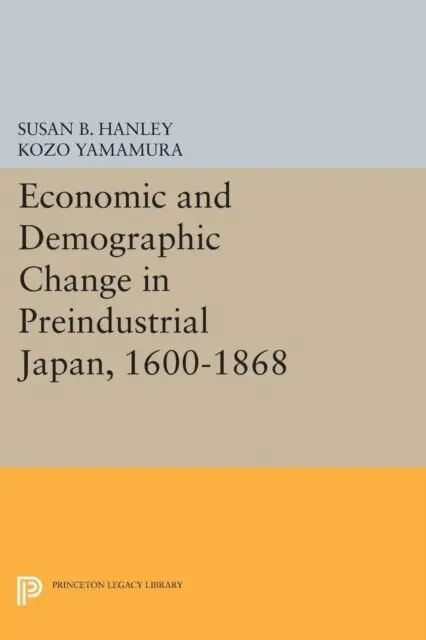
Economic and Demographic Change in Preindustrial Japan, 1600-1868
Av Kozo Yamamura, Susan B. Hanley
955 kr
Läs direkt i Bokus Reader – eller ladda ned till din enhet (PDF kräver ofta zoom och scroll på små skärmar).
Beskrivning
According to the Marxist interpretation still dominant in Japanese studies, the last century and a half of the Tokugawa period was a time of economic and demographic stagnation. Professors Hanley and Yamamura argue that a more satisfactory explanation can be provided within the framework of modem economic theory, and they advance and test three important new hypotheses in this book.The authors suggest that the Japanese economy grew throughout the Tokugawa period, though slowly by modern standards and unevenly. This growth, they show, tended to exceed the rate of population increase even in the poorer regions, thus raising the living standard despite major famines. Population growth was controlled by a variety of methods, including abortion and infanticide, for the primary purpose of raising the standard of living. Contrary to the prevailing view of scholars, thus, the conclusions advanced here indicate that the basis for Japan's rapid industrialization in the Meiji period was in many ways already established during the latter part of the Tokugawa period. The authors' analysis combines original fieldwork with study of data based on findings of the postwar years.Originally published in 1978.The Princeton Legacy Library uses the latest print-on-demand technology to again make available previously out-of-print books from the distinguished backlist of Princeton University Press. These editions preserve the original texts of these important books while presenting them in durable paperback and hardcover editions. The goal of the Princeton Legacy Library is to vastly increase access to the rich scholarly heritage found in the thousands of books published by Princeton University Press since its founding in 1905.
Produktinformation
- Utgivningsdatum: 2015-03-08
- Språk: Engelska
- Filformat: PDF
- Kopieringsskydd: LCP
- ISBN: 9781400869374
- Förlag: Princeton University Press
Utforska kategorier
Betyg & recensioner
0 recensioner
Inga recensioner tillgängliga.