• Fri frakt över 249 kr
  • •
  • Snabba leveranser
  • •
  • Billiga böcker
Kundservice

Du är på sajten för privatpersoner.

Företag, bibliotek eller offentlig verksamhet?

Du handlar på classic.bokus.com, där alla dina funktioner finns intakta.
Till classic.bokus.com
Bokus logotyp. Gå till startsidan.
  • Erbjudanden
  • Nyheter
  • Student
  • Topplistor
  • Barn & ungdom
  • Bokus Play
  • E-böcker
  • Pocketböcker
  • Spel & pussel

10% rabatt på allt med kod NYSTART10 →

Sidfot

Mina sidor

    Hjälp

    • Kundservice
    • Vanliga frågor och svar
    • Frakt och leverans
    • Retur vid ångerrätt
    • Reklamera vara
    • Betalning
    • Köpvillkor
    • Allmänna villkor
    • Information om webbplatsens tillgänglighet

    Om Bokus

    • Om oss
    • Pressrum
    • För studenter
    • För företag
    • För bibliotek och offentlig verksamhet
    • För leverantörer
    • Hållbarhet

    Populärt

    • Aktuella erbjudanden
    • Presentkort
    • Studentlitteratur
    • Nya böcker
    • Topplistor
    • Signerade böcker
    • Engelska böcker

    Inspiration

    • Boktips
    • BookTok
    • Populära bokserier
    • Barnbokskaraktärer
    • Populära författare
    Logotyp för Bokus
    Följ oss på Facebook (extern länk)Följ oss på Instagram (extern länk)Följ oss på YouTube (extern länk)Följ oss på TikTok (extern länk)
    bokus @ CookiesAnpassa cookiesIntegritetspolicyKöpvillkor
    Till Citymail hemsida (extern länk)Till Budbee hemsida (extern länk)Till Postnord hemsida (extern länk)Till Schenker hemsida (extern länk)Till Early Bird hemsida (extern länk)Till Walleys hemsida (extern länk)
    1. Naturvetenskap och teknik
    2. Matematik och naturvetenskap
    3. Fysik
    4. Tillämpad fysik

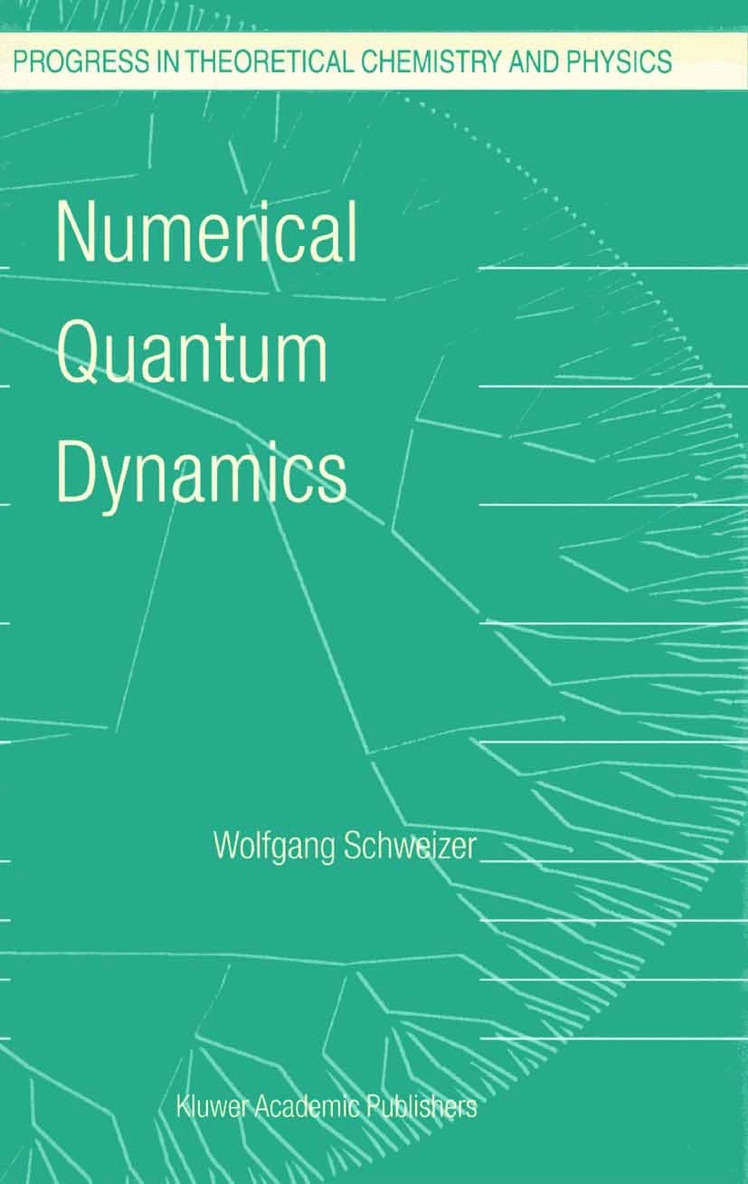
    Numerical Quantum Dynamics

    AvW. Schweizer

    Inbunden, Engelska, 2001

    Del 9 i serien Progress in Theoretical Chemistry and Physics

    1 086 kr

    Beställningsvara. Skickas inom 10-15 vardagar. Fri frakt över 249 kr.

    Fler format och utgåvor

    E-bok

    1 413 kr

    Häftad

    1 085 kr

    Beskrivning

    It is an indisputable fact that computational physics form part of the essential landscape of physical science and physical education. When writing such a book, one is faced with numerous decisions, e. g. : Which topics should be included? What should be assumed about the readers’ prior knowledge? How should balance be achieved between numerical theory and physical application? This book is not elementary. The reader should have a background in qu- tum physics and computing. On the other way the topics discussed are not addressed to the specialist. This work bridges hopefully the gap between - vanced students, graduates and researchers looking for computational ideas beyond their fence and the specialist working on a special topic. Many imp- tant topics and applications are not considered in this book. The selection is of course a personal one and by no way exhaustive and the material presented obviously reflects my own interest. What is Computational Physics? During the past two decades computational physics became the third fun- mental physical discipline. Like the ‘traditional partners’ experimental physics and theoretical physics, computational physics is not restricted to a special area, e. g. , atomic physics or solid state physics. Computational physics is a meth- ical ansatz useful in all subareas and not necessarily restricted to physics. Of course this methods are related to computational aspects, which means nume- cal and algebraic methods, but also the interpretation and visualization of huge amounts of data.

    Produktinformation

    • Utgivningsdatum:2001-12-31
    • Mått:156 x 234 x 21 mm
    • Vikt:606 g
    • Format:Inbunden
    • Språk:Engelska
    • Serie:Progress in Theoretical Chemistry and Physics
    • Antal sidor:267
    • Upplaga:2002
    • Förlag:Kluwer Academic Publishers
    • ISBN:9781402002151

    Utforska kategorier

    • Tillämpad fysik inom Naturvetenskap och teknik
    • Kvantfysik inom Naturvetenskap och teknik

    Innehållsförteckning

    • to Quantum Dynamics.- Separability.- Approximation by Perturbation.- Approximation Techniques.- Finite Differences.- Discrete Variable Method.- Finite Elements.- Software Sources.