W. Schweizer – författare
Visar alla böcker från författaren W. Schweizer. Handla med fri frakt och snabb leverans.
7 produkter
7 produkter
Inbunden, Engelska, 1998
1 622 kr
Skickas inom 10-15 vardagar
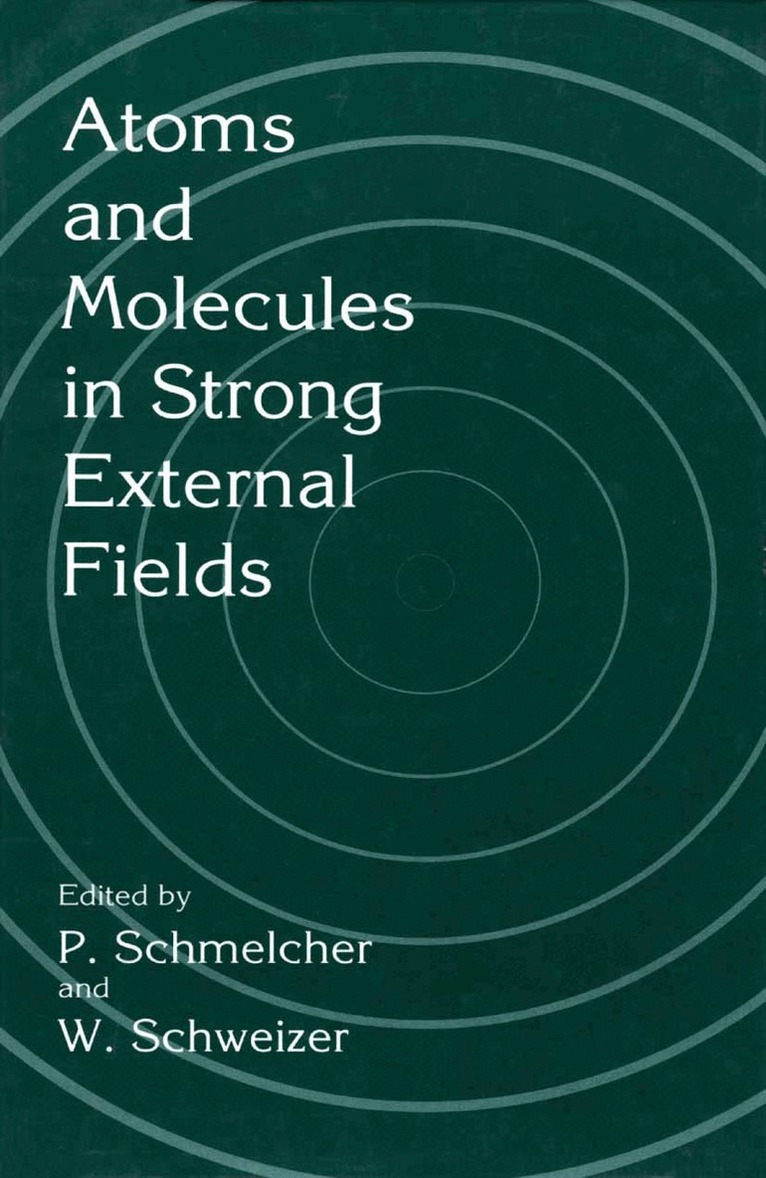
This book contains contributions to the 172. WE-Heraeus-Seminar “Atoms and Molecules in Strong External Fields,” which took place April 7–11 1997 at the Phys- zentrum Bad Honnef (Germany). The designation “strong fields” applies to external static magnetic, and/or electric fields that are sufficiently intense to cause alterations in the atomic or molecular str- ture and dynamics. The specific topics treated are the behavior and properties of atoms in strong static fields, the fundamental aspects and electronic structure of molecules in strong magnetic fields, the dynamics and aspects of chaos in highly excited R- berg atoms in external fields, matter in the atmosphere of astrophysical objects (white dwarfs, neutron stars), and quantum nanostructures in strong magnetic fields. It is obvious that the elaboration of the corresponding properties in these regimes causes the greatest difficulties, and is incomplete even today. Present-day technology has made it possible for many research groups to study the behavior of matter in strong external fields, both experimentally and theore- cally, where the phrase “experimentally” includes the astronomical observations. - derstanding these systems requires the development of modern theories and powerful computational techniques. Interdisciplinary collaborations will be helpful and useful in developing more efficient methods to understand these important systems. Hence the idea was to bring together people from different fields like atomic and molecular physics, theoretical chemistry, astrophysics and all those colleagues interested in aspects of few-body systems in external fields.
E-bok
PDF, Engelska, 20072 049 kr
Läs direkt efter köp
This book contains contributions to the 172. WE-Heraeus-Seminar “Atoms and Molecules in Strong External Fields,” which took place April 7–11 1997 at the Phys- zentrum Bad Honnef (Germany). The designation “strong fields” applies to external static magnetic, and/or electric fields that are sufficiently intense to cause alterations in the atomic or molecular str- ture and dynamics. The specific topics treated are the behavior and properties of atoms in strong static fields, the fundamental aspects and electronic structure of molecules in strong magnetic fields, the dynamics and aspects of chaos in highly excited R- berg atoms in external fields, matter in the atmosphere of astrophysical objects (white dwarfs, neutron stars), and quantum nanostructures in strong magnetic fields. It is obvious that the elaboration of the corresponding properties in these regimes causes the greatest difficulties, and is incomplete even today. Present-day technology has made it possible for many research groups to study the behavior of matter in strong external fields, both experimentally and theore- cally, where the phrase “experimentally” includes the astronomical observations. - derstanding these systems requires the development of modern theories and powerful computational techniques. Interdisciplinary collaborations will be helpful and useful in developing more efficient methods to understand these important systems. Hence the idea was to bring together people from different fields like atomic and molecular physics, theoretical chemistry, astrophysics and all those colleagues interested in aspects of few-body systems in external fields.
E-bok
PDF, Engelska, 20051 367 kr
Läs direkt efter köp
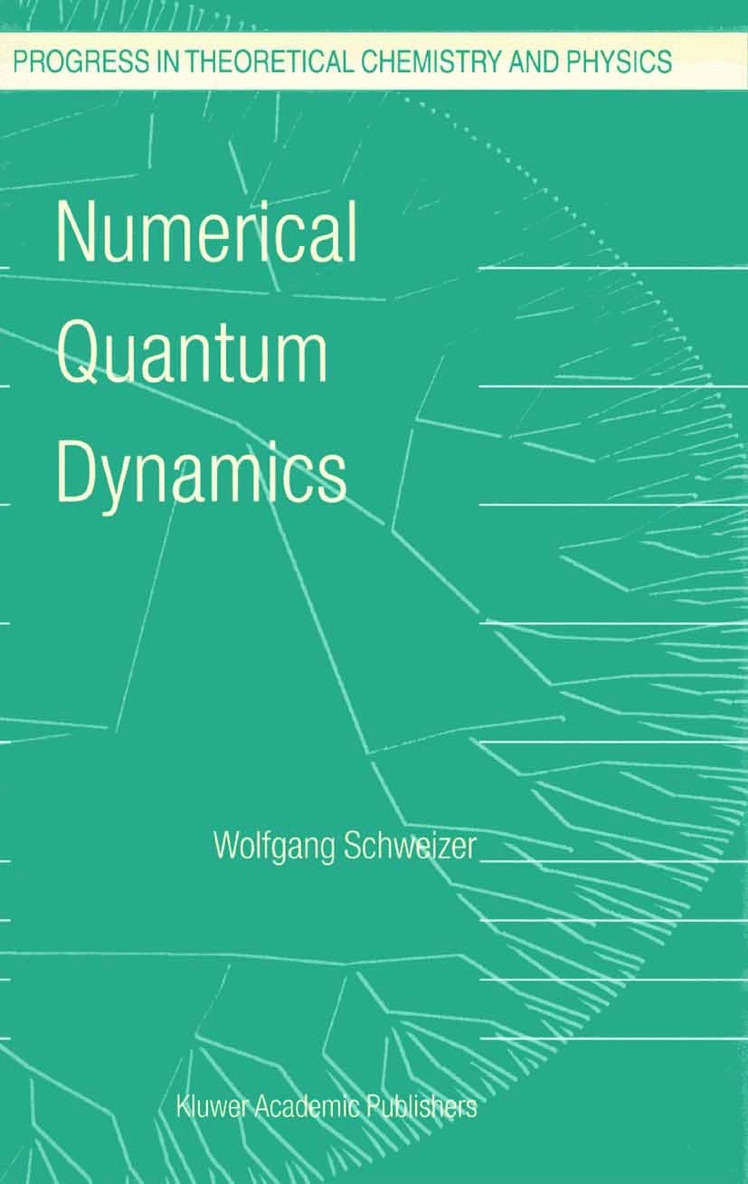
It is an indisputable fact that computational physics form part of the essential landscape of physical science and physical education. When writing such a book, one is faced with numerous decisions, e. g. : Which topics should be included? What should be assumed about the readers’ prior knowledge? How should balance be achieved between numerical theory and physical application? This book is not elementary. The reader should have a background in qu- tum physics and computing. On the other way the topics discussed are not addressed to the specialist. This work bridges hopefully the gap between - vanced students, graduates and researchers looking for computational ideas beyond their fence and the specialist working on a special topic. Many imp- tant topics and applications are not considered in this book. The selection is of course a personal one and by no way exhaustive and the material presented obviously reflects my own interest. What is Computational Physics? During the past two decades computational physics became the third fun- mental physical discipline. Like the ‘traditional partners’ experimental physics and theoretical physics, computational physics is not restricted to a special area, e. g. , atomic physics or solid state physics. Computational physics is a meth- ical ansatz useful in all subareas and not necessarily restricted to physics. Of course this methods are related to computational aspects, which means nume- cal and algebraic methods, but also the interpretation and visualization of huge amounts of data.
Del 9 - Progress in Theoretical Chemistry and Physics
Numerical Quantum Dynamics
Inbunden, Engelska, 2001
1 084 kr
Skickas inom 10-15 vardagar
It is an indisputable fact that computational physics form part of the essential landscape of physical science and physical education. When writing such a book, one is faced with numerous decisions, e. g. : Which topics should be included? What should be assumed about the readers’ prior knowledge? How should balance be achieved between numerical theory and physical application? This book is not elementary. The reader should have a background in qu- tum physics and computing. On the other way the topics discussed are not addressed to the specialist. This work bridges hopefully the gap between - vanced students, graduates and researchers looking for computational ideas beyond their fence and the specialist working on a special topic. Many imp- tant topics and applications are not considered in this book. The selection is of course a personal one and by no way exhaustive and the material presented obviously reflects my own interest. What is Computational Physics? During the past two decades computational physics became the third fun- mental physical discipline. Like the ‘traditional partners’ experimental physics and theoretical physics, computational physics is not restricted to a special area, e. g. , atomic physics or solid state physics. Computational physics is a meth- ical ansatz useful in all subareas and not necessarily restricted to physics. Of course this methods are related to computational aspects, which means nume- cal and algebraic methods, but also the interpretation and visualization of huge amounts of data.
Häftad, Engelska, 2010
1 623 kr
Skickas inom 10-15 vardagar
This book contains contributions to the 172. WE-Heraeus-Seminar “Atoms and Molecules in Strong External Fields,” which took place April 7–11 1997 at the Phys- zentrum Bad Honnef (Germany). The designation “strong fields” applies to external static magnetic, and/or electric fields that are sufficiently intense to cause alterations in the atomic or molecular str- ture and dynamics. The specific topics treated are the behavior and properties of atoms in strong static fields, the fundamental aspects and electronic structure of molecules in strong magnetic fields, the dynamics and aspects of chaos in highly excited R- berg atoms in external fields, matter in the atmosphere of astrophysical objects (white dwarfs, neutron stars), and quantum nanostructures in strong magnetic fields. It is obvious that the elaboration of the corresponding properties in these regimes causes the greatest difficulties, and is incomplete even today. Present-day technology has made it possible for many research groups to study the behavior of matter in strong external fields, both experimentally and theore- cally, where the phrase “experimentally” includes the astronomical observations. - derstanding these systems requires the development of modern theories and powerful computational techniques. Interdisciplinary collaborations will be helpful and useful in developing more efficient methods to understand these important systems. Hence the idea was to bring together people from different fields like atomic and molecular physics, theoretical chemistry, astrophysics and all those colleagues interested in aspects of few-body systems in external fields.
Häftad, Tyska, 1981
526 kr
Skickas inom 10-15 vardagar
Del 9 - Progress in Theoretical Chemistry and Physics
Numerical Quantum Dynamics
Häftad, Engelska, 2010
1 084 kr
Skickas inom 10-15 vardagar
It is an indisputable fact that computational physics form part of the essential landscape of physical science and physical education. When writing such a book, one is faced with numerous decisions, e. g. : Which topics should be included? What should be assumed about the readers’ prior knowledge? How should balance be achieved between numerical theory and physical application? This book is not elementary. The reader should have a background in qu- tum physics and computing. On the other way the topics discussed are not addressed to the specialist. This work bridges hopefully the gap between - vanced students, graduates and researchers looking for computational ideas beyond their fence and the specialist working on a special topic. Many imp- tant topics and applications are not considered in this book. The selection is of course a personal one and by no way exhaustive and the material presented obviously reflects my own interest. What is Computational Physics? During the past two decades computational physics became the third fun- mental physical discipline. Like the ‘traditional partners’ experimental physics and theoretical physics, computational physics is not restricted to a special area, e. g. , atomic physics or solid state physics. Computational physics is a meth- ical ansatz useful in all subareas and not necessarily restricted to physics. Of course this methods are related to computational aspects, which means nume- cal and algebraic methods, but also the interpretation and visualization of huge amounts of data.