• Fri frakt över 249 kr
  • •
  • Snabba leveranser
  • •
  • Billiga böcker
Kundservice

Du är på sajten för privatpersoner.

Företag, bibliotek eller offentlig verksamhet?

Du handlar på classic.bokus.com, där alla dina funktioner finns intakta.
Till classic.bokus.com
Bokus logotyp. Gå till startsidan.
  • Erbjudanden
  • Nyheter
  • Student
  • Topplistor
  • Barn & ungdom
  • Bokus Play
  • E-böcker
  • Pocketböcker
  • Spel & pussel

10% rabatt på allt med kod NYSTART10 →

Sidfot

Mina sidor

    Hjälp

    • Kundservice
    • Vanliga frågor och svar
    • Frakt och leverans
    • Retur vid ångerrätt
    • Reklamera vara
    • Betalning
    • Köpvillkor
    • Allmänna villkor
    • Information om webbplatsens tillgänglighet

    Om Bokus

    • Om oss
    • Pressrum
    • För studenter
    • För företag
    • För bibliotek och offentlig verksamhet
    • För leverantörer
    • Hållbarhet

    Populärt

    • Aktuella erbjudanden
    • Presentkort
    • Studentlitteratur
    • Nya böcker
    • Topplistor
    • Signerade böcker
    • Engelska böcker

    Inspiration

    • Boktips
    • BookTok
    • Populära bokserier
    • Barnbokskaraktärer
    • Populära författare
    Logotyp för Bokus
    Följ oss på Facebook (extern länk)Följ oss på Instagram (extern länk)Följ oss på YouTube (extern länk)Följ oss på TikTok (extern länk)
    bokus @ CookiesAnpassa cookiesIntegritetspolicyKöpvillkor
    Till Citymail hemsida (extern länk)Till Budbee hemsida (extern länk)Till Postnord hemsida (extern länk)Till Schenker hemsida (extern länk)Till Early Bird hemsida (extern länk)Till Walleys hemsida (extern länk)
    1. Psykologi och pedagogik
    2. Psykologi
    3. Kognitiv psykologi

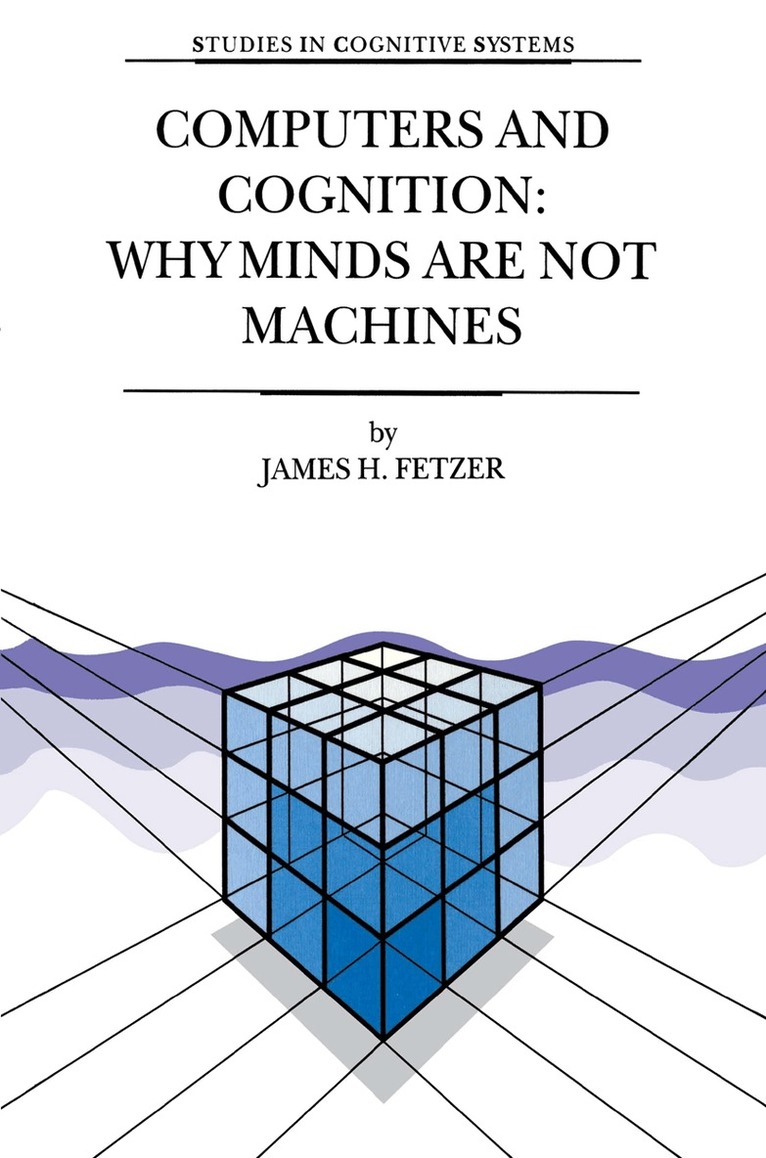
    Computers and Cognition: Why Minds are not Machines

    AvJ.H. Fetzer

    Häftad, Engelska, 2001

    Del 25 i serien Studies in Cognitive Systems

    531 kr

    Beställningsvara. Skickas inom 10-15 vardagar. Fri frakt över 249 kr.

    Fler format och utgåvor

    E-bok

    710 kr

    Beskrivning

    An important collection of studies providing a fresh and original perspective on the nature of mind, including thoughtful and detailed arguments that explain why the prevailing paradigm - the computational conception of language and mentality - can no longer be sustained. An alternative approach is advanced, inspired by the work of Charles S. Peirce, according to which minds are sign-using (or `semiotic') systems, which in turn generates distinctions between different kinds of minds and overcomes problems that burden more familiar alternatives. Unlike conceptions of minds as machines, this novel approach has obvious evolutionary implications, where differences in semiotic abilities tend to distinguish the species. From this point of view, the scope and limits of computer and AI systems can be more adequately appraised and alternative accounts of consciousness and cognition can be more thoroughly criticised. Readership: Intermediate and advanced students of computer science, AI, cognitive science, and all students of the philosophy of the mind.

    Produktinformation

    • Utgivningsdatum:2001-11-30
    • Mått:155 x 235 x 20 mm
    • Vikt:534 g
    • Format:Häftad
    • Språk:Engelska
    • Serie:Studies in Cognitive Systems
    • Antal sidor:352
    • Förlag:Kluwer Academic Publishers
    • ISBN:9781402002434

    Utforska kategorier

    • Kognitiv psykologi inom Psykologi och pedagogik

    Innehållsförteckning

    • Prologue.- 1. Minds and Machines: Behaviorism, Dualism and Beyond.- I: Semiotic Systems.- 2. Primitive Concepts: Habits, Conventions, and Laws.- 3. Signs and Minds: An Introduction to the Theory of Semiotic Systems.- 4. Language and Mentality: Computational, Representational, and Dispositional Conceptions.- II: Computers and Cognition.- 5. Mental Algorithms: Are Minds Computational Systems?.- 6. What Makes Connectionism Different? A Criticial Review of Philosophy and Connectionist Theory.- 7. People are Not Computers: (Most) Thought processes are Not Computational Procedures.- III: Computer Epistemology.- 8. Program Verification: The Very Idea.- 9. Philosophical Aspects of Program Verification.- 10. Philosophy and Computer Science: Reflections on the Program Verification Debate.- Epilogue.- 11. Computer Reliability and Public Policy: Limits of Knowledge of Computer-Based Systems.- Index of Names.- Index of Subjects.