• Fri frakt över 249 kr
  • •
  • Snabba leveranser
  • •
  • Billiga böcker
Kundservice

Du är på sajten för privatpersoner.

Företag, bibliotek eller offentlig verksamhet?

Du handlar på classic.bokus.com, där alla dina funktioner finns intakta.
Till classic.bokus.com
Bokus logotyp. Gå till startsidan.
  • Erbjudanden
  • Nyheter
  • Student
  • Topplistor
  • Barn & ungdom
  • Bokus Play
  • E-böcker
  • Pocketböcker
  • Spel & pussel

Må bättre, för mindre! Upp till 50% rabatt på hälsoböcker

Sidfot

Mina sidor

    Hjälp

    • Kundservice
    • Vanliga frågor och svar
    • Frakt och leverans
    • Retur vid ångerrätt
    • Reklamera vara
    • Betalning
    • Köpvillkor
    • Allmänna villkor
    • Information om webbplatsens tillgänglighet

    Om Bokus

    • Om oss
    • Pressrum
    • För studenter
    • För företag
    • För bibliotek och offentlig verksamhet
    • För leverantörer
    • Hållbarhet

    Populärt

    • Aktuella erbjudanden
    • Presentkort
    • Studentlitteratur
    • Nya böcker
    • Topplistor
    • Signerade böcker
    • Engelska böcker

    Inspiration

    • Boktips
    • BookTok
    • Populära bokserier
    • Barnbokskaraktärer
    • Populära författare
    Logotyp för Bokus
    Följ oss på Facebook (extern länk)Följ oss på Instagram (extern länk)Följ oss på YouTube (extern länk)Följ oss på TikTok (extern länk)
    bokus @ CookiesAnpassa cookiesIntegritetspolicyKöpvillkor
    Till Citymail hemsida (extern länk)Till Budbee hemsida (extern länk)Till Postnord hemsida (extern länk)Till Schenker hemsida (extern länk)Till Early Bird hemsida (extern länk)Till Walleys hemsida (extern länk)
    1. Naturvetenskap och teknik
    2. Teknik och industri
    3. Agronomi och lantbruk

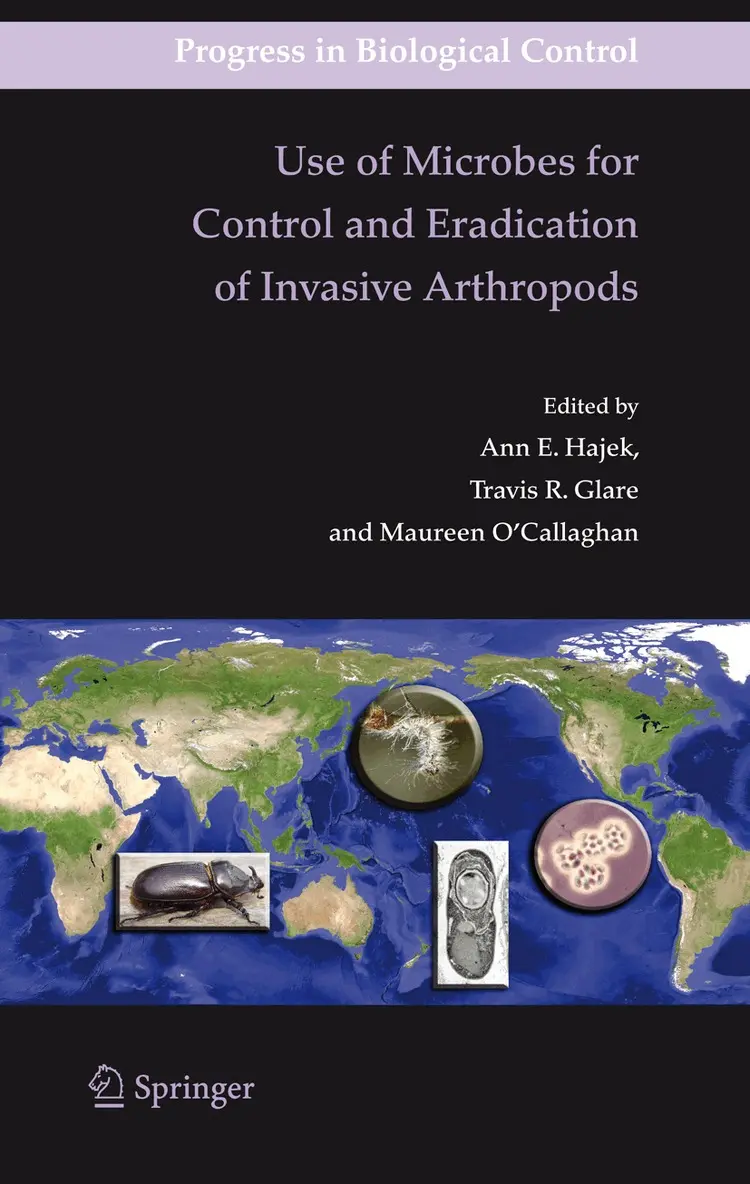
    Use of Microbes for Control and Eradication of Invasive Arthropods

    AvAnn Hajek,Travis Glare

    Inbunden, Engelska, 2008

    Del i serien Progress in Biological Control

    1 626 kr

    Beställningsvara. Skickas inom 10-15 vardagar. Fri frakt över 249 kr.

    Beskrivning

    One of the main reasons that we organized this edited volume is to increase - ternational awareness of the growing use of invertebrate pathogens for control and eradication of invasive arthropods. As the numbers of invasive species continues to rise, more insect pathologists have been involved with work on their control using entomopathogens. In fact, this is not a new area of focus for insect pathologists; work on microbes against invasive arthropods began more than a century ago with classicalbiologicalcontrolintroductionsofentomopathogenicfungiagainstinvasive species in the 1890s. Chapters in this book cover entomopathogens that have been developedforcontrolofinvasivespeciesovermanydecades(e. g. anematodeagainst Sirex noctilio and Bacillus thuringiensis against gypsy moth) while other chapters focusondevelopmentofcontrolmeasuresforveryrecentinvasives(e. g. emeraldash borer?rstfoundintheUSin2002). SinceboththeUnitedStatesandNewZealandare countrieswithabundanttrade,whichisakeypathwayforinvasives,wehavebeenvery awareofthegrowingnumbers ofinvasive pestsarrivinginour owncountries andthe needforcontrolstrategies.Wehavebeencloselyinvolvedwiththeircontrolusing- crobes,atvaryinglevels(fromlaboratorybenchto?eldstudiestonationalcommittees evaluating eradication programs using the entomopathogen B. thuringiensis). Within the past few years, symposia on use of microbes for invasive control have been organized twice at the annual meetings of the Society of Invertebrate Pathology (2005 - Anchorage, Alaska, and 2007 - Quebec City, Quebec, Canada), demonstrating interest in this subject across the international community of inv- tebrate pathologists. However, no written summaries, covering the different types of pathogens being studied, developed and used for control, have previously - dressed this subject.

    Produktinformation

    • Utgivningsdatum:2008-10-29
    • Mått:155 x 235 x 26 mm
    • Vikt:740 g
    • Format:Inbunden
    • Språk:Engelska
    • Serie:Progress in Biological Control
    • Antal sidor:366
    • Upplaga:2009
    • Förlag:Springer-Verlag New York Inc.
    • ISBN:9781402085598

    Utforska kategorier

    • Agronomi och lantbruk inom Naturvetenskap och teknik
    • Zoologi inom Naturvetenskap och teknik
    • Djurböcker inom Djur och Natur

    Recensioner i media

    From the reviews: "Chapters on ecology, eradication and control methods, and public policy are written by experts who collectively address a wide diversity of pests targeted with many kinds of microbes in many parts of the world. ... The focus here on microbes and exotic pests is novel. ... Summing Up: Highly recommended. Graduate students through professionals." (M. K. Harris, Choice, Vol. 47 (7), March, 2010)

    Innehållsförteckning

    • Invasive Arthropods and Approaches for Their Microbial Control.- Ecological Considerations.- Naturally Occurring Pathogens and Invasive Arthropods.- Population Ecology of Managing Insect Invasions.- Eradication.- Use of Pathogens for Eradication of Exotic Lepidopteran Pests in New Zealand.- North American Eradications of Asian and European Gypsy Moth.- Control.- Exotic Aphid Control with Pathogens.- Steinernema scapterisci as a Biological Control Agent of Scapteriscus Mole Crickets.- The Use of Oryctes Virus for Control of Rhinoceros Beetle in the Pacific Islands.- Use of Microbes for Control of Monochamus alternatus, Vector of the Invasive Pinewood Nematode.- Use of Entomopathogens against Invasive Wood Boring Beetles in North America.- Control of Gypsy Moth, Lymantria dispar, in North America since 1878.- Controlling the Pine-Killing Woodwasp, Sirex noctilio, with Nematodes.- Fire Ant Control with Entomopathogens in the USA.- Biological Control of the Cassava Green Mite in Africa with Brazilian Isolates of the Fungal Pathogen Neozygites tanajoae.- Microbial Control for Invasive Arthropod Pests of Honey Bees.- Safety and Public Issues.- Human Health Effects Resulting from Exposure to Bacillus thuringiensis Applied during Insect Control Programmes.- Environmental Impacts of Microbial Control Agents Used for Control of Invasive Pests.- Conclusions.- Considerations for the Practical Use of Pathogens for Control and Eradication of Arthropod Invasive Pests.