• Fri frakt över 249 kr
  • •
  • Snabba leveranser
  • •
  • Billiga böcker
Kundservice

Du är på sajten för privatpersoner.

Företag, bibliotek eller offentlig verksamhet?

Du handlar på classic.bokus.com, där alla dina funktioner finns intakta.
Till classic.bokus.com
Bokus logotyp. Gå till startsidan.
  • Erbjudanden
  • Nyheter
  • Student
  • Topplistor
  • Barn & ungdom
  • Bokus Play
  • E-böcker
  • Pocketböcker
  • Spel & pussel

10% rabatt på allt med kod: NYSTART10 →

Sidfot

Mina sidor

    Hjälp

    • Kundservice
    • Vanliga frågor och svar
    • Frakt och leverans
    • Retur vid ångerrätt
    • Reklamera vara
    • Betalning
    • Köpvillkor
    • Allmänna villkor
    • Information om webbplatsens tillgänglighet

    Om Bokus

    • Om oss
    • Pressrum
    • För studenter
    • För företag
    • För bibliotek och offentlig verksamhet
    • För leverantörer
    • Hållbarhet

    Populärt

    • Aktuella erbjudanden
    • Presentkort
    • Studentlitteratur
    • Nya böcker
    • Topplistor
    • Signerade böcker
    • Engelska böcker

    Inspiration

    • Boktips
    • BookTok
    • Populära bokserier
    • Barnbokskaraktärer
    • Populära författare
    Logotyp för Bokus
    Följ oss på Facebook (extern länk)Följ oss på Instagram (extern länk)Följ oss på YouTube (extern länk)Följ oss på TikTok (extern länk)
    bokus @ CookiesAnpassa cookiesIntegritetspolicyKöpvillkor
    Till Citymail hemsida (extern länk)Till Budbee hemsida (extern länk)Till Postnord hemsida (extern länk)Till Schenker hemsida (extern länk)Till Early Bird hemsida (extern länk)Till Walleys hemsida (extern länk)
    1. Medicin
    2. Medicin: icke kliniska discipliner
    3. Fysiologi

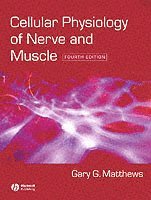
    Cellular Physiology of Nerve and Muscle

    AvGary G. Matthews

    Häftad, Engelska, 2002

    953 kr

    Beställningsvara. Skickas inom 5-8 vardagar. Fri frakt över 249 kr.

    Fler format och utgåvor

    E-bok

    1 069 kr

    E-bok

    1 105 kr

    Beskrivning

    Cellular Physiology of Nerve and Muscle, Fourth Edition offers a state of the art introduction to the basic physical, electrical and chemical principles central to the function of nerve and muscle cells.The text begins with an overview of the origin of electrical membrane potential, then clearly illustrates the cellular physiology of nerve cells and muscle cells. Throughout, this new edition simplifies difficult concepts with accessible models and straightforward descriptions of experimental results. An all-new introduction to electrical signaling in the nervous system.Expanded coverage of synaptic transmission and synaptic plasticity.A quantitative overview of the electrical properties of cells.New detailed illustrations.

    Produktinformation

    • Utgivningsdatum:2002-10-18
    • Mått:191 x 246 x 15 mm
    • Vikt:499 g
    • Format:Häftad
    • Språk:Engelska
    • Antal sidor:256
    • Upplaga:4
    • Förlag:John Wiley and Sons Ltd
    • ISBN:9781405103305

    Utforska kategorier

    • Fysiologi inom Medicin
    • Cellbiologi inom Naturvetenskap och teknik

    Mer om författaren

    Gary G. Matthews is the author of Cellular Physiology of Nerve and Muscle, 4th Edition, published by Wiley.

    Innehållsförteckning

    • Part I: Origin of Electrical Membrane Potential. 1. Introduction to Electrical Signaling in the Nervous System.The Patellar Reflex as a Model for Neural Function.The Cellular Organization of Neurons.Electrical Signals in Neurons.Transmission between Neurons.2. Composition of Intracellular and Extracellular Fluids.Intracellular and Extracellular Fluids.The Structure of the Plasma Membrane.Summary.3. Maintenance of Cell Volume.Molarity, Molality, and Diffusion of Water.Osmotic Balance and Cell Volume.Answers to the Problem of Osmotic Balance.Tonicity.Time-Course of Volume Changes.Summary.4. Membrane Potential: Ionic Equilibrium.Diffusion Potential.Equilibrium Potential.The Nernst Equation.The Principle of Electrical Neutrality.The Cell Membrane as an Electrical Capacitor.Incorporating Osmotic Balance.Donnan Equilibrium.A Model Cell That Looks Like a Real Animal Cell.The Sodium Pump.Summary.5. Membrane Potential: Ionic Steady State.Equilibrium Potentials for Sodium, Potassium, and Chloride.Ion Channels in the Plasma Membrane.Membrane Potential and Ionic Permeability.The Goldman Equation.Ionic Steady State.The Chloride Pump.Electrical Current and the Movement of Ions Across Membranes.Factors Affecting Ion Current Across a Cell Membrane.Membrane Permeability vs. Membrane Conductance.Behavior of Single Ion Channels.Summary.Part II: Cellular Physiology of Nerve Cells.6. Generation of Nerve Action Potential.The Action Potential.Ionic Permeability and Membrane Potential.Measuring the Long-Distance Signal in Neurons.Characteristics of the Action Potential.Initiation and Propagation of Action Potentials.Changes in Relative Sodium Permeability During an Action Potential.Voltage-Dependent Sodium Channels of the Neuron Membrane.Repolarization.The Refractory Period.Propagation of an Action Potential Along a Nerve Fiber.Factors Affecting the Speed of Action Potential Propagation.Molecular Properties of the Voltage-Sensitive Sodium Channel.Molecular Properties of Voltage-Dependent Potassium Channels.Calcium-Dependent Action Potentials.Summary.7. The Action Potential: Voltage Clamp Experiments.The Voltage Clamp.Measuring Changes in Membrane Ionic Conductance Using the Voltage Clamp.The Squid Giant Axon.Ionic Currents Across an Axon Membrane Under Voltage Clamp.The Gated Ion Channel Model.Membrane Potential and Peak Ionic Conductance.Kinetics of the Change in Ionic Conductance Following a Step Depolarization.Sodium Inactivation.The Temporal Behavior of Sodium and Potassium Conductance.Gating Currents.Summary.8. Synaptic Transmission at the Neuromuscular Junction.Chemical and Electrical Synapses.The Neuromuscular Junction as a Model Chemical Synapse.Transmission at a Chemical Synapse.Presynaptic Action Potential and Acetylcholine Release.Effect of ACh on the Muscle Cell.Neurotransmitter Release.The Vesicle Hypothesis of Quantal Transmitter Release.Mechanism of Vesicle Fusion.Recycling of Vesicle Membrane.Inactivation of Released Acetylcholine.Recording the Electrical Current Flowing Through a Single Acetylcholine-Activated Ion Channel.Molecular Properties of the Acetylcholine-Activated Channel.Summary.9. Synaptic Transmission in the Central Nervous System.Excitatory and Inhibitory Synapses.Excitatory Synaptic Transmission Between Neurons.Temporal and Spatial Summation of Synaptic Potentials.Some Possible Excitatory Neurotransmitters.Conductance-Decrease E.P.S.P.'s.Inhibitory Synaptic Transmission.The Synapse Between Sensory Neurons and Antagonist Neurons in the Patellar Reflex.Characteristics of Inhibitory Synaptic Transmission.Mechanism of Inhibition in the Postsynaptic Membrane.Some Possible Inhibitory Neurotransmitters.The Family of Neurotransmitter-Gated Ion Channels.Neuronal Integration.Indirect Actions of Neurotransmitters.Presynaptic Inhibition and Factilitation.Synaptic Plasticity.Short-Term Changes in Synaptic Strength.Long-Term Changes in Synaptic Strength.Summary.Part III: Cellular Physiology of Muscle Cells.10. Excitation-Contraction Coupling in Skeletal Muscle.The Three Types of Muscle.Structure of Skeletal Muscle.Changes in Striation Pattern on Contraction.Molecular Composition of Filaments.Interaction Between Myosin and Actin.Regulation of Contraction.The Sarcoplasmic Reticulum.The Transverse Tubule System.Summary.11. Neural Control of Muscle Contraction.The Motor Unit.The Mechanics of Contraction.The Relationship Between Isometric Tension and Muscle Length.Control of Muscle Tension by the Nervous System.Recruitment of Motor Neurons.Fast and Slow Muscle Fibers.Temporal Summation of Contractions Within a Single Motor Unit.Asynchronous Activation of Motor Units During Maintained Contraction.Summary.12. Cardiac Muscle: The Autonomic Nervous System.Autonomic Control of the Heart.The Pattern of Cardiac Contraction.Coordination of Contraction Across Cardiac Muscle Fibers.Generation of Rhythmic Contractions.The Cardiac Action Potential.The Pacemaker Potential.Actions of Acetylcholine and Norepinephrine on Cardiac Muscle Cells.Summary.Appendix A: Derivation of the Nernst Equation.Appendix B: Derivation of the Goldman Equation.Appendix C: Electrical Properties of Cells.Suggested Readings