• Fri frakt över 249 kr
  • •
  • Snabba leveranser
  • •
  • Billiga böcker
Kundservice

Du är på sajten för privatpersoner.

Företag, bibliotek eller offentlig verksamhet?

Du handlar på classic.bokus.com, där alla dina funktioner finns intakta.
Till classic.bokus.com
Bokus logotyp. Gå till startsidan.
  • Erbjudanden
  • Nyheter
  • Student
  • Topplistor
  • Barn & ungdom
  • Bokus Play
  • E-böcker
  • Pocketböcker
  • Spel & pussel

10% rabatt på allt med kod NYSTART10 →

Sidfot

Mina sidor

    Hjälp

    • Kundservice
    • Vanliga frågor och svar
    • Frakt och leverans
    • Retur vid ångerrätt
    • Reklamera vara
    • Betalning
    • Köpvillkor
    • Allmänna villkor
    • Information om webbplatsens tillgänglighet

    Om Bokus

    • Om oss
    • Pressrum
    • För studenter
    • För företag
    • För bibliotek och offentlig verksamhet
    • För leverantörer
    • Hållbarhet

    Populärt

    • Aktuella erbjudanden
    • Presentkort
    • Studentlitteratur
    • Nya böcker
    • Topplistor
    • Signerade böcker
    • Engelska böcker

    Inspiration

    • Boktips
    • BookTok
    • Populära bokserier
    • Barnbokskaraktärer
    • Populära författare
    Logotyp för Bokus
    Följ oss på Facebook (extern länk)Följ oss på Instagram (extern länk)Följ oss på YouTube (extern länk)Följ oss på TikTok (extern länk)
    bokus @ CookiesAnpassa cookiesIntegritetspolicyKöpvillkor
    Till Citymail hemsida (extern länk)Till Budbee hemsida (extern länk)Till Postnord hemsida (extern länk)Till Schenker hemsida (extern länk)Till Early Bird hemsida (extern länk)Till Walleys hemsida (extern länk)
    1. Skönlitteratur
    2. Litteraturvetenskap
    3. Litteraturvetenskap

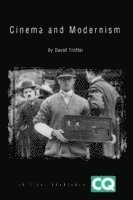
    Cinema and Modernism

    AvDavid Trotter

    Häftad, Engelska, 2007

    Del 1 i serien Critical Quarterly Book Series

    319 kr

    Beställningsvara. Skickas inom 5-8 vardagar. Fri frakt över 249 kr.

    Beskrivning

    This study revolutionises our understanding of both literary modernism and early cinema. Trotter draws on the most recent scholarship in English and film studies to demonstrate how central cinema as a recording medium was to Joyce, Eliot and Woolf, and how modernist were the concerns of Chaplin and Griffith. This book rewrites the cultural history of the early twentieth century, showing how film technology and modernist aesthetics combined to explore the limits of the human. Offers major re-interpretations of key Modernist works, including Ulysses, The Waste Land, and To the Lighthouse Explores film and film-going in works by Henry James, Frank Norris, Rudyard Kipling, Katherine Mansfield, and Elizabeth Bowen Offers original analyses of crucial phases in the careers of two of the most celebrated film-makers of the silent era, D.W. Griffith and Charlie Chaplin

    Produktinformation

    • Utgivningsdatum:2007-01-03
    • Mått:155 x 230 x 13 mm
    • Vikt:372 g
    • Format:Häftad
    • Språk:Engelska
    • Serie:Critical Quarterly Book Series
    • Antal sidor:224
    • Förlag:John Wiley and Sons Ltd
    • ISBN:9781405159821

    Utforska kategorier

    • Litteraturvetenskap inom Skönlitteratur
    • Film inom Kultur

    Mer om författaren

    David Trotter is King Edward VII Professor of English Literature at the University of Cambridge, and a Fellow of the British Academy. He has written widely about British and American literature of the nineteenth and twentieth centuries, including, most recently, the fiction of George Eliot, and aspects of literary Naturalism. The focus of his current research is the history and theory of film. He co-founded the Cambridge Screen Media Group, and is director of its M.Phil. programme in Screen Media and Cultures.

    Recensioner i media

    "The great success of Cinema and Modernism derives from the author's constant methodological insistence on how cinema and literature matter for each other in modernism, and his methodology demands that he deal rigorously with both film and literature on their own terms and as mutually constitutive in their will-to-automatism. " (James Joyce Quarterly, Summer 2008) “Trotter conducts his enquiry with admirable historical rigor, rightly castigating approaches which have proved anachronistic in relation to the film-making of the period. He also wisely avoids simplistic models of causality and influence, in favor of subtler aesthetic ‘convergences’ and ‘parallelism’. This grounds his case for interdependency: that we can’t fully understand cinema without literary Modernism, and vice-versa.” (The Review of English Studies, April 2009)

    Innehållsförteckning

    • Introduction. Chapter 1. The literature of cinema.Chapter 2. D.W. Griffith.Chapter 3. James Joyce and the Automatism of the Photographic Image.Chapter 4. T.S. Eliot.Chapter 5. Virginia Woolf.Chapter 6. Charlie Chaplin.