• Fri frakt över 249 kr
  • •
  • Snabba leveranser
  • •
  • Billiga böcker
Kundservice

Du är på sajten för privatpersoner.

Företag, bibliotek eller offentlig verksamhet?

Du handlar på classic.bokus.com, där alla dina funktioner finns intakta.
Till classic.bokus.com
Bokus logotyp. Gå till startsidan.
  • Erbjudanden
  • Nyheter
  • Student
  • Topplistor
  • Barn & ungdom
  • Bokus Play
  • E-böcker
  • Pocketböcker
  • Spel & pussel

10% rabatt på allt med kod NYSTART10 →

Sidfot

Mina sidor

    Hjälp

    • Kundservice
    • Vanliga frågor och svar
    • Frakt och leverans
    • Retur vid ångerrätt
    • Reklamera vara
    • Betalning
    • Köpvillkor
    • Allmänna villkor
    • Information om webbplatsens tillgänglighet

    Om Bokus

    • Om oss
    • Pressrum
    • För studenter
    • För företag
    • För bibliotek och offentlig verksamhet
    • För leverantörer
    • Hållbarhet

    Populärt

    • Aktuella erbjudanden
    • Presentkort
    • Studentlitteratur
    • Nya böcker
    • Topplistor
    • Signerade böcker
    • Engelska böcker

    Inspiration

    • Boktips
    • BookTok
    • Populära bokserier
    • Barnbokskaraktärer
    • Populära författare
    Logotyp för Bokus
    Följ oss på Facebook (extern länk)Följ oss på Instagram (extern länk)Följ oss på YouTube (extern länk)Följ oss på TikTok (extern länk)
    bokus @ CookiesAnpassa cookiesIntegritetspolicyKöpvillkor
    Till Citymail hemsida (extern länk)Till Budbee hemsida (extern länk)Till Postnord hemsida (extern länk)Till Schenker hemsida (extern länk)Till Early Bird hemsida (extern länk)Till Walleys hemsida (extern länk)
    1. Ekonomi och Ledarskap
    2. Företagsekonomi

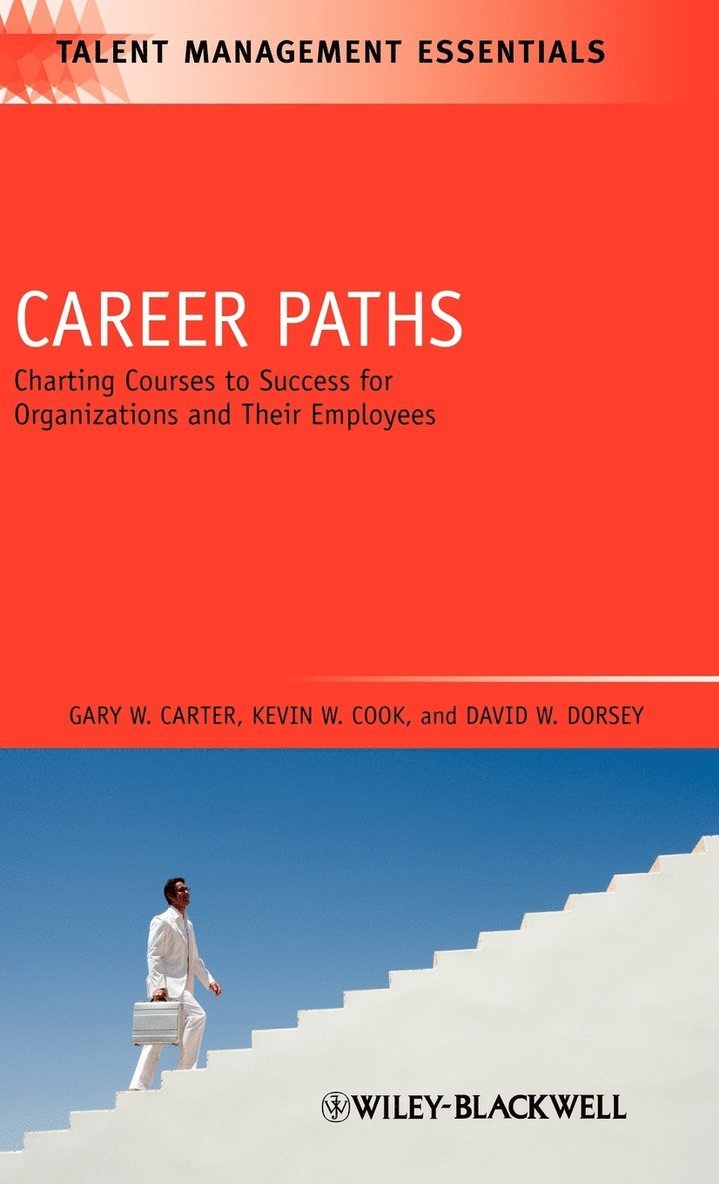
    Career Paths

    Charting Courses to Success for Organizations and Their Employees

    AvGary W. Carter,Kevin W. Cook

    Inbunden, Engelska, 2009

    Del 12 i serien Talent Management Essentials

    1 114 kr

    Beställningsvara. Skickas inom 5-8 vardagar. Fri frakt över 249 kr.

    Fler format och utgåvor

    Häftad

    376 kr

    Beskrivning

    CAREER PATHS “I like how Carter, Cook, and Dorsey have balanced the perspective and needs of the employee with the needs of the organization. They’ve provided a practical toolkit for practitioners, rooted in a strong conceptual model. I have looked at other sources on career paths in organizations, but this is the book I’d actually use to design a system.”Steven D. Ashworth Ph.D, Manager, Human Resource Research & Analysis, Sempra Energy Utilities“If you are, like me, a consultant who helps organizations develop and utilize their talent toward maximum performance; or a business leader building a worldclass organization with limited financial resources; or a Human Resources manager whose Generation Y employees are anxious to get ahead – you need to read this book. It clearly defines the ‘why’ and ‘how’ of using career path models as the foundation for a comprehensive talent management process.”Gena Cox Ph.D, Managing Consultant, Human Capital Resource CenterCareer Paths offers a career path model and useful tools and tips for developing, implementing, and integrating career paths into talent management systems. The authors describe the value of career paths from individual employee, organizational, and industry standpoints and show how career path efforts can be integrated with recruitment and hiring, strategic planning, succession management, employee development, and retention programs. With a sample career path guide and a list of resources for organizations, this book is an indispensable reference for HR professionals, managers and executives, training and development professionals, and organizational consultants.

    Produktinformation

    • Utgivningsdatum:2009-05-08
    • Mått:145 x 224 x 21 mm
    • Vikt:354 g
    • Format:Inbunden
    • Språk:Engelska
    • Serie:Talent Management Essentials
    • Antal sidor:174
    • Förlag:John Wiley and Sons Ltd
    • ISBN:9781405177337

    Utforska kategorier

    • Företagsekonomi inom Ekonomi och Ledarskap
    • Arbetspsykologi inom Psykologi och pedagogik

    Mer om författaren

    Dr. Carter is a Vice President of Personnel Decisions Research Institutes (PDRI), a leading human capital consulting firm. He is the leader of human capital consulting services in PDRI’s Washington, DC office. Dr. Carter has over 20 years of experience designing and implementing human capital systems and processes. He has designed career paths and talent management tools integrated with career paths for many clients.Dr. Cook has more than 12 years of experience in design, development, implementation and evaluative research of assessment and development methodologies at all employee levels. Currently, he focuses on the development and global launch of executive level assessment and development capabilities as well as direct support of multinational implementations. Dr. Dorsey is a Vice President at Personnel Decisions Research Institutes (PDRI). He has more than 15 years of experience in human capital consulting and applied research and development. He has conducted innovative work in the areas of performance measurement, career management, and training and development. Dr. Dorsey has produced numerous professional book chapters, articles, and presentations, and he is the recipient of multiple research awards.

    Innehållsförteckning

    • Series Editor's Preface xi Preface xiiiChapter 1 Introduction 1What are Career Paths? 2The Goal of This Book 19Overview 21Chapter 2 A Conceptual Toolkit for Constructing Career Paths 23Career Path Attributes 26Career Path Patterns 27Outcomes 29The Bottom Line 31Chapter 3 A Practical Toolkit for Constructing Career Paths 33Sources and Methods 34Past 34Present 37Future 37A Note about the Special Role of Interviews and Focus Groups 38How to Construct Career Paths 39Initial Steps 39Sequential List of Positions or Roles 47Qualifi cations 53Critical Developmental Experiences 54Competencies that are Accrued, Strengthened, or Required 56Career Success Factors 60Other Information 63Explicit Focus on Movement 64Promoting Alignment 64Assessment of Personal Attributes and Career Paths 64Implementation Tips 65The Bottom Line 67Chapter 4 Integrating Career Paths into Talent Management Systems I: Recruitment, Hiring, Retention, Promotion, and Employee Development 69Connecting the Employee to the Organization 69Engaging the New Workforce 72Recruitment and Hiring 73Retention 80Promotion 81Development Planning and Execution 83The Bottom Line 89Chapter 5 Integrating Career Paths into Talent Management Systems II: Strategic Workforce Planning, the Early Identifi cation and Development of Executive Talent, and Succession Management 91Keeping an Eye on the Big Picture 91Strategic Workforce Planning 92Identifying and Developing Early-Career, High-Potential Leadership Talent 95Who Are Our High Potentials? 95How Can We Develop (and Promote) Them Faster? 97Managing Communications Regarding High Potentials 98Succession Management 99Evaluating Readiness for Promotion in the Context of Succession Management 101Methods for Evaluating Readiness 102Keeping Those "Not Yet Ready" on the Path(s) to Get There 102The Bottom Line 105Chapter 6 Expanding Success Beyond the Individual Organization – Industry and Economic Development Perspectives 107Career Paths and the Industry Perspective 109Examples 110Differences between Industry Career Paths and Organizational Career Paths 116Career Paths and the Economic Development Perspective 118Examples 120Differences between Career Paths Designed for Economic Development Purposes and Organizational Career Paths 124Labor Market Analyses and Analyses of Cross-Occupation Requirements 125Labor Market Analyses 125Analyses of Requirements across Occupations 126The Bottom Line 127Chapter 7 Looking to the Future 129Trend One – Demographic Trends 130Implications for Organizations 131Trend Two – Technology 132Implications for Organizations 134Trend Three – Globalization and Changing Organizational Structures 134Implications for Organizations 135Trend Four – Defi ning Career Success 136Implications for Organizations 136The Bottom Line 137Career Path Resource List 139Notes 143References 147Name Index 151Subject Index 153