• Fri frakt över 249 kr
  • •
  • Snabba leveranser
  • •
  • Billiga böcker
Kundservice

Du är på sajten för privatpersoner.

Företag, bibliotek eller offentlig verksamhet?

Du handlar på classic.bokus.com, där alla dina funktioner finns intakta.
Till classic.bokus.com
Bokus logotyp. Gå till startsidan.
  • Erbjudanden
  • Nyheter
  • Student
  • Topplistor
  • Barn & ungdom
  • Bokus Play
  • E-böcker
  • Pocketböcker
  • Spel & pussel

10% rabatt på allt med kod: NYSTART10 →

Sidfot

Mina sidor

    Hjälp

    • Kundservice
    • Vanliga frågor och svar
    • Frakt och leverans
    • Retur vid ångerrätt
    • Reklamera vara
    • Betalning
    • Köpvillkor
    • Allmänna villkor
    • Information om webbplatsens tillgänglighet

    Om Bokus

    • Om oss
    • Pressrum
    • För studenter
    • För företag
    • För bibliotek och offentlig verksamhet
    • För leverantörer
    • Hållbarhet

    Populärt

    • Aktuella erbjudanden
    • Presentkort
    • Studentlitteratur
    • Nya böcker
    • Topplistor
    • Signerade böcker
    • Engelska böcker

    Inspiration

    • Boktips
    • BookTok
    • Populära bokserier
    • Barnbokskaraktärer
    • Populära författare
    Logotyp för Bokus
    Följ oss på Facebook (extern länk)Följ oss på Instagram (extern länk)Följ oss på YouTube (extern länk)Följ oss på TikTok (extern länk)
    bokus @ CookiesAnpassa cookiesIntegritetspolicyKöpvillkor
    Till Citymail hemsida (extern länk)Till Budbee hemsida (extern länk)Till Postnord hemsida (extern länk)Till Schenker hemsida (extern länk)Till Early Bird hemsida (extern länk)Till Walleys hemsida (extern länk)
    1. Naturvetenskap och teknik
    2. Geovetenskap
    3. Geovetenskap
    4. Geologi

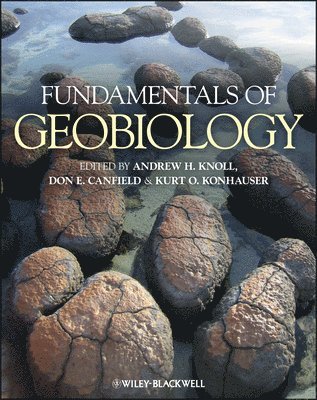
    Fundamentals of Geobiology

    AvAndrew H. Knoll,Don E. Canfield

    Häftad, Engelska, 2012

    745 kr

    Beställningsvara. Skickas inom 5-8 vardagar. Fri frakt över 249 kr.

    Beskrivning

    2012 PROSE Award, Earth Science: Honorable Mention For more than fifty years scientists have been concerned with the interrelationships of Earth and life. Over the past decade, however, geobiology, the name given to this interdisciplinary endeavour, has emerged as an exciting and rapidly expanding field, fuelled by advances in molecular phylogeny, a new microbial ecology made possible by the molecular revolution, increasingly sophisticated new techniques for imaging and determining chemical compositions of solids on nanometer scales, the development of non-traditional stable isotope analyses, Earth systems science and Earth system history, and accelerating exploration of other planets within and beyond our solar system. Geobiology has many faces: there is the microbial weathering of minerals, bacterial and skeletal biomineralization, the roles of autotrophic and heterotrophic metabolisms in elemental cycling, the redox history in the oceans and its relationship to evolution and the origin of life itself..This book is the first to set out a coherent set of principles that underpin geobiology, and will act as a foundational text that will speed the dissemination of those principles. The chapters have been carefully chosen to provide intellectually rich but concise summaries of key topics, and each has been written by one or more of the leading scientists in that field..Fundamentals of Geobiology is aimed at advanced undergraduates and graduates in the Earth and biological sciences, and to the growing number of scientists worldwide who have an interest in this burgeoning new discipline.Additional resources for this book can be found at: http://www.wiley.com/go/knoll/geobiology.

    Produktinformation

    • Utgivningsdatum:2012-04-20
    • Mått:218 x 274 x 23 mm
    • Vikt:1 362 g
    • Format:Häftad
    • Språk:Engelska
    • Antal sidor:456
    • Förlag:John Wiley and Sons Ltd
    • ISBN:9781405187527
    • Utmärkelser:Commended for PROSE (Earth Science) 2012

    Utforska kategorier

    • Geologi inom Naturvetenskap och teknik
    • Biologi inom Naturvetenskap och teknik

    Mer om författaren

    Andrew H. Knoll is the Fisher Professor of Natural History at Harvard University. A paleontologist by training, he has worked for three decades to understand the environmental history of Earth and, more recently, Mars. Knoll is a member of the U.S. National Academy of Sciences. Donald E. Canfield is Professor of Ecology at the University of Southern Denmark and Director of the Nordic Center for Earth Evolution (NordCEE). Canfield uses the study of modern microbes and microbial ecosystems to understand the evolution of Earth surface chemistry and biology through time. Canfield is a member of the U.S. National Academy of Sciences.Kurt O. Konhauser is a Professor of Geomicrobiology at the University of Alberta. He is Editor-in-Chief for the journal, Geobiology, and author of the textbook, Introduction to Geomicrobiology. His research focuses on metal-mineral-microbe interactions in both modern and ancient environments.

    Recensioner i media

    “In summary, Fundamentals of Geobiology would be a welcome addition to any geoscientist’s bookshelf, especially those interested in sedimentary geology, palaeobiology or Earth history.”  (The Geological Journal, 1 January 2013)“It would be this reviewer’s “stranded on a desert island” selection.  Summing Up:  Highly recommended.  Upper-division undergraduates through professionals.”  (Choice, 1 January 2013) PROSE Awards 2012: Honorable Mention in the Earth Sciences Category.

    Innehållsförteckning

    • Contributors, xi 1. What is Geobiology?, 1Andrew H. Knoll, Donald E. Canfield, and Kurt O. Konhauser1.1 Introduction, 11.2 Life interacting with the Earth, 21.3 Pattern and process in geobiology, 21.4 New horizons in geobiology, 32. The Global Carbon Cycle: Biological Processes, 5Paul G. Falkowski2.1 Introduction, 52.2 A brief primer on redox reactions, 52.3 Carbon as a substrate for biological reactions, 52.4 The evolution of photosynthesis, 82.5 The evolution of oxygenic phototrophs, 112.6 Net primary production, 132.7 What limits NPP on land and in the ocean?, 152.8 Is NPP in balance with respiration?, 162.9 Conclusions and extensions, 173. The Global Carbon Cycle: Geological Processes, 20Klaus Wallmann and Giovanni Aloisi3.1 Introduction, 203.2 Organic carbon cycling, 203.3 Carbonate cycling, 223.4 Mantle degassing, 233.5 Metamorphism, 243.6 Silicate weathering, 243.7 Feedbacks, 253.8 Balancing the geological carbon cycle, 263.9 Evolution of the geological carbon cycle through Earth's history: proxies and models, 273.10 The geological C cycle through time, 303.11 Limitations and perspectives, 324. The Global Nitrogen Cycle, 36Bess Ward4.1 Introduction, 364.2 Geological nitrogen cycle, 364.3 Components of the global nitrogen cycle, 384.4 Nitrogen redox chemistry, 404.5 Biological reactions of the nitrogen cycle, 404.6 Atmospheric nitrogen chemistry, 454.7 Summary and areas for future research, 465. The Global Sulfur Cycle, 49Donald E. Canfield and James Farquhar5.1 Introduction, 495.2 The global sulfur cycle from two perspectives, 495.3 The evolution of S metabolisms, 535.4 The interaction of S with other biogeochemical cycles, 555.5 The evolution of the S cycle, 595.6 Closing remarks, 616. The Global Iron Cycle, 65Brian Kendall, Ariel D. Anbar, Andreas Kappler and Kurt O. Konhauser6.1 Overview, 656.2 The inorganic geochemistry of iron: redox and reservoirs, 656.3 Iron in modern biology and biogeochemical cycles, 696.4 Iron through time, 736.5 Summary, 837. The Global Oxygen Cycle, 93James F. Kasting and Donald E. Canfield7.1 Introduction, 937.2 The chemistry and biochemistry of oxygen, 937.3 The concept of redox balance, 947.4 The modern O2 cycle, 947.5 Cycling of O2 and H2 on the early Earth, 987.6 Synthesis: speculations about the timing and cause of the rise of atmospheric O2, 1028. Bacterial Biomineralization, 105Kurt Konhauser and Robert Riding8.1 Introduction, 1058.2 Mineral nucleation and growth, 1058.3 How bacteria facilitate biomineralization, 1068.4 Iron oxyhydroxides, 1118.5 Calcium carbonates, 1169. Mineral–Organic–Microbe Interfacial Chemistry, 131David J. Vaughan and Jonathan R. Lloyd9.1 Introduction, 1319.2 The mineral surface (and mineral–bio interface) and techniques for its study, 1319.3 Mineral-organic-microbe interfacial processes: some key examples, 14010. Eukaryotic Skeletal Formation, 150Adam F. Wallace, Dongbo Wang, Laura M. Hamm, Andrew H. Knoll and Patricia M. Dove 10.1 Introduction, 15010.2 Mineralization by unicellular organisms, 15110.3 Mineralization by multicellular organisms, 16410.4 A brief history of skeletons, 17310.5 Summary, 17511. Plants and Animals as Geobiological Agents, 188David J. Beerling and Nicholas J. Butterfield11.1 Introduction, 18811.2 Land plants as geobiological agents, 18811.3 Animals as geobiological agents, 19511.4 Conclusions, 20012. A Geobiological View of Weathering and Erosion, 205Susan L. Brantley, Marina Lebedeva and Elisabeth M. Hausrath12.1 Introduction, 20512.2 Effects of biota on weathering, 20712.3 Effects of organic molecules on weathering, 20912.4 Organomarkers in weathering solutions, 21112.5 Elemental profiles in regolith, 21312.6 Time evolution of profile development, 21712.7 Investigating chemical, physical, and biological weathering with simple models, 21812.8 Conclusions, 22213. Molecular Biology’s Contributions to Geobiology, 228Dianne K. Newman, Victoria J. Orphan and Anna-Louise Reysenbach13.1 Introduction, 22813.2 Molecular approaches used in geobiology, 22913.3 Case study: anaerobic oxidation of methane, 23813.4 Challenges and opportunities for the next generation, 24214. Stable Isotope Geobiology, 250D.T. Johnston and W.W. Fischer14.1 Introduction, 25014.2 Isotopic notation and the biogeochemical elements, 25314.3 Tracking fractionation in a system, 25514.4 Applications, 25814.5 Using isotopes to ask a geobiological question in deep time, 26114.6 Conclusions, 26515. Biomarkers: Informative Molecules for Studies in Geobiology, 269Roger E. Summons and Sara A. Lincoln15.1 Introduction, 26915.2 Origins of biomarkers, 26915.3 Diagenesis, 26915.4 Isotopic compositions, 27015.5 Stereochemical considerations, 27215.6 Lipid biosynthetic pathways, 27315.7 Classification of lipids, 27315.8 Lipids diagnostic of Archaea, 27715.9 Lipids diagnostic of Bacteria, 28015.10 Lipids of Eukarya, 28315.11 Preservable cores, 28315.12 Outlook, 28716. The Fossil Record of Microbial Life, 297Andrew H. Knoll16.1 Introduction, 29716.2 The nature of Earth’s early microbial record, 29716.3 Paleobiological inferences from microfossil morphology, 29916.4 Inferences from microfossil chemistry and ultrastructure (new technologies), 30216.5 Inferences from microbialites, 30616.6 A brief history, with questions, 30816.7 Conclusions, 31117. Geochemical Origins of Life, 315Robert M. Hazen17.1 Introduction, 31517.2 Emergence as a unifying concept in origins research, 31517.3 The emergence of biomolecules, 31717.4 The emergence of macromolecules, 32017.5 The emergence of self-replicating systems, 32317.6 The emergence of natural selection, 32617.7 Three scenarios for the origins of life, 32718. Mineralogical Co-evolution of the Geosphere and Biosphere, 333Robert M. Hazen and Dominic Papineau18.1 Introduction, 33318.2 Prebiotic mineral evolution I – evidence from meteorites, 33418.3 Prebiotic mineral evolution II – crust and mantle reworking, 33518.4 The anoxic Archean biosphere, 33618.5 The Great Oxidation Event, 34018.6 A billion years of stasis, 34118.7 The snowball Earth, 34118.8 The rise of skeletal mineralization, 34218.9 Summary, 34319. Geobiology of the Archean Eon, 351Roger Buick19.1 Introduction, 35119.2 Carbon cycle, 35119.3 Sulfur cycle, 35419.4 Iron cycle, 35519.5 Oxygen cycle, 35719.6 Nitrogen cycle, 35919.7 Phosphorus cycle, 36019.8 Bioaccretion of sediment, 36019.9 Bioalteration, 36519.10 Conclusions, 36620. Geobiology of the Proterozoic Eon, 371Timothy W. Lyons, Christopher T. Reinhard, Gordon D. Love and Shuhai Xiao20.1 Introduction, 37120.2 The Great Oxidation Event, 37120.3 The early Proterozoic: Era geobiology in the wake of the GOE, 37220.4 The mid-Proterozoic: a last gasp of iron formations, deep ocean anoxia, the 'boring' billion, and a mid-life crisis, 37520.5 The history of Proterozoic life: biomarker records, 38120.6 The history of Proterozoic life: mid-Proterozoic fossil record, 38320.7 The late Proterozoic: a supercontinent, oxygen, ice, and the emergence of animals, 38420.8 Summary, 39221. Geobiology of the Phanerozoic, 403Steven M. Stanley21.1 The beginning of the Phanerozoic Eon, 40321.2 Cambrian mass extinctions, 40521.3 The terminal Ordovician mass extinction, 40521.4 The impact of early land plants, 40621.5 Silurian biotic crises, 40621.6 Devonian mass extinctions, 40621.7 Major changes of the global ecosystem in Carboniferous time, 40621.8 Low-elevation glaciation near the equator, 40721.9 Drying of climates, 40821.10 A double mass extinction in the Permian, 40821.11 The absence of recovery in the early Triassic, 40921.12 The terminal Triassic crisis, 40921.13 The rise of atmospheric oxygen since early in Triassic time, 41021.14 The Toarcian anoxic event, 41021.15 Phytoplankton, planktonic foraminifera, and the carbon cycle, 41121.16 Diatoms and the silica cycle, 41121.17 Cretaceous climates, 41121.18 The sudden Paleocene–Eocene climatic shift, 41421.19 The cause of the Eocene–Oligocene climatic shift, 41521.20 The re-expansion of reefs during Oligocene time, 41621.21 Drier climates and cascading evolutionary radiations on the land, 41622. Geobiology of the Anthropocene, 425Daniel P. Schrag22.1 Introduction, 42522.2 The Anthropocene, 42522.3 When did the Anthropocene begin?, 42622.4 Geobiology and human population, 42722.5 Human appropriation of the Earth, 42822.6 The carbon cycle and climate of the Anthropocene, 43022.7 The future of geobiology, 433Acknowledgements, 434References, 435Index, 437Colour plate pages fall between pp. 228 and 229