• Fri frakt över 249 kr
  • •
  • Snabba leveranser
  • •
  • Billiga böcker
Kundservice

Du är på sajten för privatpersoner.

Företag, bibliotek eller offentlig verksamhet?

Du handlar på classic.bokus.com, där alla dina funktioner finns intakta.
Till classic.bokus.com
Bokus logotyp. Gå till startsidan.
  • Erbjudanden
  • Nyheter
  • Student
  • Topplistor
  • Barn & ungdom
  • Bokus Play
  • E-böcker
  • Pocketböcker
  • Spel & pussel

10% rabatt på allt med kod: NYSTART10 →

Sidfot

Mina sidor

    Hjälp

    • Kundservice
    • Vanliga frågor och svar
    • Frakt och leverans
    • Retur vid ångerrätt
    • Reklamera vara
    • Betalning
    • Köpvillkor
    • Allmänna villkor
    • Information om webbplatsens tillgänglighet

    Om Bokus

    • Om oss
    • Pressrum
    • För studenter
    • För företag
    • För bibliotek och offentlig verksamhet
    • För leverantörer
    • Hållbarhet

    Populärt

    • Aktuella erbjudanden
    • Presentkort
    • Studentlitteratur
    • Nya böcker
    • Topplistor
    • Signerade böcker
    • Engelska böcker

    Inspiration

    • Boktips
    • BookTok
    • Populära bokserier
    • Barnbokskaraktärer
    • Populära författare
    Logotyp för Bokus
    Följ oss på Facebook (extern länk)Följ oss på Instagram (extern länk)Följ oss på YouTube (extern länk)Följ oss på TikTok (extern länk)
    bokus @ CookiesAnpassa cookiesIntegritetspolicyKöpvillkor
    Till Citymail hemsida (extern länk)Till Budbee hemsida (extern länk)Till Postnord hemsida (extern länk)Till Schenker hemsida (extern länk)Till Early Bird hemsida (extern länk)Till Walleys hemsida (extern länk)
    1. Kultur
    2. Arkitektur
    3. Inredningsarkitektur

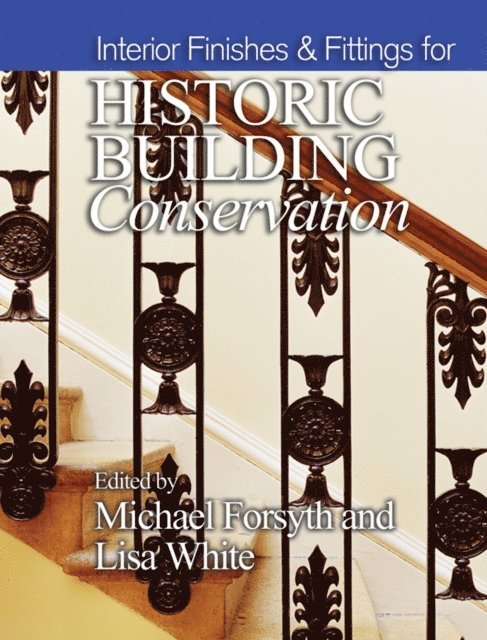
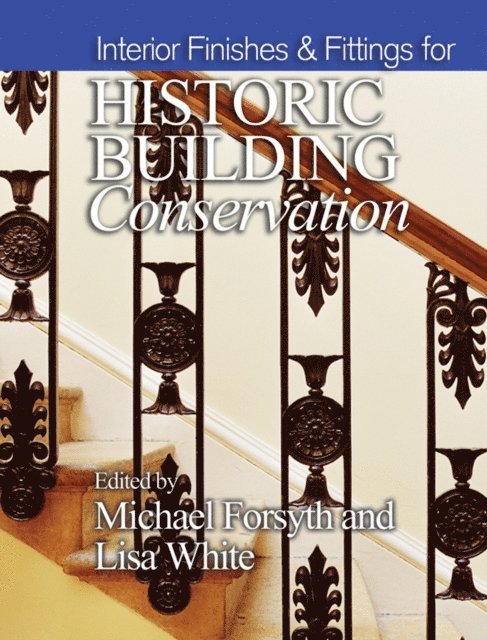
    Interior Finishes and Fittings for Historic Building Conservation

    AvMichael Forsyth,Lisa White

    Inbunden, Engelska, 2011

    880 kr

    Beställningsvara. Skickas inom 5-8 vardagar. Fri frakt över 249 kr.

    Beskrivning

    Interior Finishes & Fittings for Historic Building Conservation complements Materials & Skills for Historic Building Conservation, combining the history and application of each material with current knowledge of maintenance and conservation techniques. Of direct practical application in the field, it takes the reader through the process of conserving historic interior finishes, covering everything from decorative plasterwork, joinery and paint colour; to chimneypieces, lighting and fire safety management. The series is particularly aimed at construction professionals – architects, decorative arts historians and specifiers, surveyors, engineers – as well as postgraduate building conservation students and undergraduate architects and surveyors as specialist or optional course reading. The series is also of value to other professional groups such as commissioning client bodies, managers and advisors, and interested individuals involved in house refurbishment or setting up a building preservation trust. While there is a focus on UK practice, most of the content is of relevance overseas (just as UK conservation courses attract many overseas students, for example from India, China, Australia and the USA).The chapters are written by leading conservators, historians, architects, and related professionals, who together reflect the interdisciplinary nature of conservation work.This volume on the historic interior is the fourth of a series on Historic Building Conservation that combine conservation philosophy in the built environment with knowledge of traditional materials and structural and constructional conservation techniques and technology: Understanding Historic Building ConservationStructures & Construction in Historic Building ConservationMaterials & Skills for Historic Building ConservationInterior Finishes & Fittings for Historic Building ConservationWhile substantial publications exist on each of the subject areas - some by the authors of the Historic Building Conservation series - few individuals and practices have ready access to all of these or the time to read them in detail. The aim of the series is to introduce each aspect of conservation and to provide concise, basic and up-to-date knowledge within four volumes, sufficient for the professional to appreciate the subject better and to know where to seek further help.

    Produktinformation

    • Utgivningsdatum:2011-10-21
    • Mått:196 x 254 x 19 mm
    • Vikt:748 g
    • Format:Inbunden
    • Språk:Engelska
    • Antal sidor:232
    • Förlag:John Wiley and Sons Ltd
    • ISBN:9781405190220

    Utforska kategorier

    • Inredningsarkitektur inom Kultur
    • Byggnadsteknik inom Naturvetenskap och teknik

    Mer om författaren

    Michael Graham de Jong Forsyth, Director of Studies in Conservation of Historic Buildings, University of Bath.

    Recensioner i media

    "Michael Forsyth & Lisa White's Interior Finishes & Fittings for Historic Building Conservation, is an expert introduction to every aspect of the historic interior from wallpapers, paints and textiles to lighting and fire safety." (The Times, 24 December 2011) "This volume enriches the excellence established by its predecessors ... This book references tons of good stuff, which all who operate in the conservation field should read over Christmas." (BD Building Design, 16 December 2011)

    Innehållsförteckning

    • Preface viiiContributors x1. Conservation of the historic interior 1Michael ForsythIntroduction 1The presentation of historic interiors 1Managing change 3Building history and understanding significance 4‘Reading’ the classical interior 6The fall and rise of craftsmanship 6Joinery detailing: a case study 7Finding ‘forgotten spaces’ 8Conclusion 92. Stone floors 11Lisa WhiteIntroduction 11Materials 11Floors 123. Cantilever or hanging stone stairs 19Ian HumeHow do they work? 19Landings 21Sources of problems 21Investigation 22Repairs 22Load testing 23Timber cantilever stairs 23Conclusion 244. Decorative plasterwork: materials and methods 25David BostwickIntroduction 25Materials 26Methods 28Ceiling construction 32Design 33Finishes 34Significance 375. Woodwork 41Lisa WhiteIntroduction: timber 41Floors 42Staircases 45Panelling 49Doors and doorcases 54Architectural woodwork details 586. Metalwork and gilding 61Lisa WhiteIntroduction 61Staircases and balustrades 62Architectural metal furniture 67Gilding 727. Chimneypieces 77Lisa WhiteIntroduction: early chimneypieces 77Early chimney furniture 80Seventeenth- and eighteenth-century developments 80Firegrates and chimney furniture 85Victorian style 878. Wallpaper 93Treve RosomanIntroduction 93A brief history of wallpaper 93Making hand-blocked wallpaper 94Hand block printing 95Designing wallpaper 98The selling of wallpaper 98Where and how to hang wallpaper 99Dating and identifying wallpaper 1029. Textiles 105Annabel WestmanIntroduction 105Wall hangings 107Window curtains 113Floor coverings 117Conservation 121Glossary 12210. Ceramic and glass 125Lisa WhiteEarly floor tiles 125Tin-glazed earthenware or Delft tiles 127Victorian tiles 129Glass 132Mirror glass 13811. The impact of historic lighting 143Lisa WhiteIntroduction 143Providing artificial light 143Managing artificial light 148The impact of artificial light 154The impact of technological change 156Conclusion 16012. Paint colour and paintwork 163Patrick BatyConservation projects 163Traditional paint 164Care when specifying 167Lead as an exterior paint 168Distemper 16913. Recreating historic schemes of interior decoration 173James FinlayResearch 173Recreating and interpreting historic schemes 183House versus home 184Conclusion 18514. Environment in the historic interior 187David DreweIntroduction 187Considerations with respect to people, collections and the building fabric 187Heating 190The options 192Maintenance and statutory requirements 194Conclusion 19415. Fire safety in Georgian houses 197Peter NorrisIntroduction: legislation and guidance 197Fire protection 198Fire-resisting doors 200Code-compliant solutions to fi re safety and means of escape 201Flat conversions 201Fire engineering 205Mixed-use buildings containing living accommodation 210BS9999: 2008 Code of practice for fi re safety in the design, construction and use of buildings 210Conclusion 211Index 213