• Fri frakt över 249 kr
  • •
  • Snabba leveranser
  • •
  • Billiga böcker
Kundservice

Du är på sajten för privatpersoner.

Företag, bibliotek eller offentlig verksamhet?

Du handlar på classic.bokus.com, där alla dina funktioner finns intakta.
Till classic.bokus.com
Bokus logotyp. Gå till startsidan.
  • Erbjudanden
  • Nyheter
  • Student
  • Topplistor
  • Barn & ungdom
  • Bokus Play
  • E-böcker
  • Pocketböcker
  • Spel & pussel

10% rabatt på allt med kod NYSTART10 →

Sidfot

Mina sidor

    Hjälp

    • Kundservice
    • Vanliga frågor och svar
    • Frakt och leverans
    • Retur vid ångerrätt
    • Reklamera vara
    • Betalning
    • Köpvillkor
    • Allmänna villkor
    • Information om webbplatsens tillgänglighet

    Om Bokus

    • Om oss
    • Pressrum
    • För studenter
    • För företag
    • För bibliotek och offentlig verksamhet
    • För leverantörer
    • Hållbarhet

    Populärt

    • Aktuella erbjudanden
    • Presentkort
    • Studentlitteratur
    • Nya böcker
    • Topplistor
    • Signerade böcker
    • Engelska böcker

    Inspiration

    • Boktips
    • BookTok
    • Populära bokserier
    • Barnbokskaraktärer
    • Populära författare
    Logotyp för Bokus
    Följ oss på Facebook (extern länk)Följ oss på Instagram (extern länk)Följ oss på YouTube (extern länk)Följ oss på TikTok (extern länk)
    bokus @ CookiesAnpassa cookiesIntegritetspolicyKöpvillkor
    Till Citymail hemsida (extern länk)Till Budbee hemsida (extern länk)Till Postnord hemsida (extern länk)Till Schenker hemsida (extern länk)Till Early Bird hemsida (extern länk)Till Walleys hemsida (extern länk)
    1. Naturvetenskap och teknik
    2. Teknik och industri
    3. Tillverkningsteknik

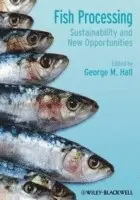
    Fish Processing

    Sustainability and New Opportunities

    AvGeorge M. Hall

    Inbunden, Engelska, 2010

    2 354 kr

    Beställningsvara. Skickas inom 5-8 vardagar. Fri frakt över 249 kr.

    Beskrivning

    This book seeks to address the challenges facing the international seafood industry via a two pronged approach: by offering the latest information on established technologies and introducing new ideas and technologies. An introductory chapter sets the tone for the book by presenting the background against which fish processing will exist in the near future. Chapter two looks at the environmental and sustainability issues relating to conventional fish processing, including processing efficiency and better use of the outputs currently considered wastes. The impact of mechanisation and computerisation on environmental sustainability is also addressed. Subsequent chapters examine the latest developments in established fish processing technologies such as canning, curing, freezing and chilling, with an emphasis on the environmental aspects of packaging and the process itself. In addition, quality and processing parameters for specific species, including new species, are described. The second part of the book gives authors the opportunity to introduce the potential technologies and applications of the future to a wider audience. These include fermented products and their acceptance by a wider audience; the utilisation of fish processing by-products as aquaculture feeds; and the use of by-products for bioactive compounds in biomedical, nutraceutical, cosmetic and other applications.

    Produktinformation

    • Utgivningsdatum:2010-10-28
    • Mått:178 x 251 x 22 mm
    • Vikt:835 g
    • Format:Inbunden
    • Språk:Engelska
    • Antal sidor:312
    • Förlag:John Wiley and Sons Ltd
    • ISBN:9781405190473

    Utforska kategorier

    • Tillverkningsteknik inom Naturvetenskap och teknik

    Mer om författaren

    About the Editor Dr George M. Hall, Research Fellow, Centre for Sustainable Development, University of Central Lancashire, Preston, UK

    Recensioner i media

    “The book lays the groundwork for assessing seafood sustainability beyond the harvesting sector to encompass whole industry segments in the future. The authors present a fine academic analysis of both the potential and limits of the LCA approach, given basic disagreements on the definition of sustainability; appropriate inclusion and measurement of environmental impacts; and the role of regulations, costs, and acceptance by industry, consumers, and the public.”  (Journal of Aquatic Food Product Technology, 25 December 2013)

    Innehållsförteckning

    • Preface xiContributors xii1 Introduction: Challenges to the Fish-Processing Industry in a Resource-Starved World 1George M. Hall1.1 Introduction 11.1.1 Defining sustainability 11.1.2 Sustainable development concepts for FPI 41.2 Sustainability tools 81.2.1 Carbon footprinting 91.2.2 Carbon labelling 91.2.3 Life cycle assessment 101.2.4 The supply chain 141.3 Climate change 151.4 The capture fishery 171.4.1 Current production levels 171.4.2 Future trends and fisheries management 171.5 Contribution of aquaculture 191.5.1 Current production levels 191.5.2 Future trends 191.5.3 Barriers to increased production 201.6 Industrial fish production 211.6.1 Current levels 211.6.2 Future trends 221.6.3 Redefining ‘industrial species’ 221.7 Implications for the processing industry 221.7.1 Efficiency in processing 221.7.2 Food security and trade 231.7.3 Introducing new food species 241.7.4 Post-harvest losses 251.7.5 Environmental impact of fish processing 261.8 Conclusion: sustainability in the fish-processing industry 27References 282 Canning Fish and Fish Products 30George M. Hall2.1 Principles of canning 302.1.1 Thermal destruction of fish-borne bacteria 302.1.2 Quality criteria for thermally processed fish 342.2 Packaging materials 342.2.1 Glass jars 352.2.2 Rigid metal containers 352.2.3 Rigid plastic containers 372.2.4 Flexible containers (pouches) 372.2.5 Environmental issues related to packaging materials 372.3 Processing operations 392.3.1 Pre-processing operations 402.3.2 Heat-processing operations 442.3.3 Post-processing operations 462.3.4 Environmental issues and process optimization 462.4 Canning of specific species 472.4.1 Small pelagics 482.4.2 Tuna and mackerel 482.4.3 Crustacea 482.5 Conclusions 48References 493 Preservation by Curing (Drying, Salting and Smoking) 51George M. Hall3.1 Basic relationships 513.1.1 Water activity and spoilage 513.1.2 Product quality 533.2 Drying 533.2.1 Air- or contact drying 533.2.2 Improving the efficiency of drying 553.3 Salting 553.3.1 Wet and dry salting 553.3.2 Quality aspects 563.4 Smoking 573.4.1 The preservative effect 573.4.2 Quality aspects 573.4.3 Smoking systems and equipment 583.4.4 Traditional systems 593.4.5 Fuel wood for traditional fish smoking 623.5 Post-harvest losses in fish smoking 653.5.1 Sustainable livelihoods approach 673.5.2 Assessing post-harvest fisheries losses 703.6 Sustainability issues 74References 754 Freezing and Chilling of Fish and Fish Products 77George M. Hall4.1 Introduction 774.1.1 Freezing time calculations 774.1.2 Effect of freezing on micro-organisms and parasites 794.1.3 Physico-chemical effects during freezing 794.1.4 Temperature modelling in fish transportation 814.2 Freezing systems 824.2.1 The refrigeration cycle 824.2.2 Classification of freezers 834.2.3 Air-blast freezers 844.2.4 Immersion freezers 864.2.5 Plate freezers 864.2.6 Cryogenic freezers 864.3 Environmental impact of freezing operations 874.3.1 Energy efficiency of freezing systems 874.3.2 Cold storage systems 884.3.3 Refrigerants and cryogens 894.3.4 New refrigeration techniques 904.3.5 Environmental impact of freezer/cold storage buildings 914.4 Life cycle assessment and the supply chain 92References 955 Surimi and Fish Mince Products 98George M. Hall5.1 Introduction 985.1.1 Fish muscle proteins 1005.1.2 Important protein properties in surimi processing 1015.1.3 Appropriate species for surimi production 1025.1.4 Surimi quality and sustainability 1045.2 The surimi process 1045.2.1 Basic process elements 1045.2.2 Energy consumption 1065.2.3 Water consumption 1085.2.4 By-product development 1095.3 Fish mince processing 109References 1106 Sustainability Impacts of Fish-Processing Operations 112George M. Hall6.1 Introduction 1126.2 Sustainability issues 1136.2.1 Sustainability and legislation 1136.2.2 Energy 1156.2.3 Water 1206.2.4 Effluents 1206.2.5 By-product development 1206.3 Individual processes 1216.4 Life cycle assessment 1236.4.1 Background 1236.4.2 Application to fish-processing operations 1256.4.3 Development of LCA for fishing activity 1276.5 Supply chain analysis 1296.6 Cleaner production 1316.7 Processing in a changing world 134References 1357 Sustainability of Fermented Fish Products 138S. Kose and George M. Hall7.1 Introduction 1387.2 Principles of the fermentation process 1397.2.1 Metabolic activity of LAB 1397.2.2 The genera of LAB 1407.2.3 Other issues relating to fermentation process 1407.2.4 Inhibitory effects of LAB 1417.3 Definition and classification of fermented fish products 1427.3.1 Definition 1427.3.2 Classification 1437.4 Types of fermented fish products 1467.4.1 European products 1467.4.2 South-East Asian products 1477.4.3 Fermented fish products of Africa 1507.5 Quality and standards of fermented fish products 1517.5.1 Salting procedures 1527.5.2 Micro-organisms 1527.5.3 Fish enzymes 1537.5.4 Temperature during fermentation 1537.5.5 Nutritional issues 1537.5.6 Flavour 1547.5.7 Presence of lipids 1547.5.8 Colour 1547.5.9 Other characteristics 1557.6 Safety issues related to fermented fish products 1557.6.1 Pathogenic bacteria 1567.6.2 Parasites 1587.6.3 Histamine and other biogenic amines 1587.7 Conclusions 163Acknowledgements 163References 1638 On-board Fish Processing 167S. Kose8.1 Introduction 1678.2 On-board processing 1688.2.1 Types of plants processing at sea 1688.2.2 Tenders 1718.2.3 History of on-board processing 1728.2.4 Species and products processed at sea 1738.3 Advantages of on-board processing 1748.4 Quality issues related to on-board processing 1758.4.1 Introduction to quality issues for fisheries products 1758.4.2 Receiving and handling raw materials 1768.4.3 Quality issues during processing 1878.4.4 Quality issues during storage and transport 2028.5 Sustainable issues 203Acknowledgements 203References 2049 Fishmeal Production and Sustainability 207George M. Hall9.1 Introduction 2079.1.1 Fishmeal production 2079.1.2 Conversion efficiency of fishmeal and fish oil 2109.1.3 Nutritional value of fishmeal and fish oil 2129.2 The fishmeal process 2159.2.1 Raw material unloading 2169.2.2 The cooker 2179.2.3 The press 2189.2.4 The decanter 2189.2.5 Separators and purifiers 2199.2.6 Evaporators 2199.2.7 The drier 2209.2.8 Post-production operations 2209.2.9 Conclusions 2219.3 Sustainability issues 2219.3.1 Energy 2229.3.2 Water 2229.3.3 Effluents 2229.3.4 By-products 2239.3.5 Cleaner production 2239.3.6 Life cycle assessment of the fishmeal and fish oil process 2249.4 Alternatives to fishmeal 2269.4.1 Fish silage 2279.4.2 Fish protein hydrolysates 2299.4.3 Plant-based alternatives to fishmeal 2319.5 Conclusions 232References 23310 Utilization of Fish Processing By-products for Bioactive Compounds 236K. Shirai and J. C. Ramirez-Ramirez10.1 Introduction 23610.2 Raw material chemical composition 23610.3 Protein hydrolysates and peptides 23710.3.1 General aspects and production 23710.3.2 FPH composition and use as food ingredient 24010.3.3 FPH and peptide applications 24010.3.4 Therapeutic and health-promoting properties 24310.4 Collagen and gelatin 24410.4.1 Extraction conditions of fish collagens and gelatins 24610.4.2 Functional properties 24810.4.3 Therapeutic properties 24910.5 Omega-3 polyunsaturated fatty acid in fish 25010.5.1 Composition 25010.5.2 Extraction 25510.5.3 Therapeutic properties 25610.6 Concluding remarks 258Acknowledgements 258References 25811 Life Cycle Assessment of Bulk Packaging Used to Transport Fresh Fish Products: Case Study 266K. S. Williams11.1 Introduction 26611.1.1 Background to UK waste and sustainability 26711.2 UK fishing industry 26811.2.1 Transportation of fish products 26911.2.2 Packaging of fish 27011.2.3 Types of packaging 27111.3 Life cycle assessment 27511.3.1 Methodology 27511.4 Case study: Rainbow Seafood – EPS and PP fish boxes 27611.4.1 Company profile 27611.4.2 Context of the study 27711.4.3 Methodology 27811.5 System design 27811.6 Data acquisition 28011.7 Life cycle inventory 28011.8 Life cycle impact assessment 28111.9 Results and recommendations 28211.10 Conclusions 282Acknowledgement 285References 285Index 289