• Fri frakt över 249 kr
  • •
  • Snabba leveranser
  • •
  • Billiga böcker
Kundservice

Du är på sajten för privatpersoner.

Företag, bibliotek eller offentlig verksamhet?

Du handlar på classic.bokus.com, där alla dina funktioner finns intakta.
Till classic.bokus.com
Bokus logotyp. Gå till startsidan.
  • Erbjudanden
  • Nyheter
  • Student
  • Topplistor
  • Barn & ungdom
  • Bokus Play
  • E-böcker
  • Pocketböcker
  • Spel & pussel

10% rabatt på allt med kod NYSTART10 →

Sidfot

Mina sidor

    Hjälp

    • Kundservice
    • Vanliga frågor och svar
    • Frakt och leverans
    • Retur vid ångerrätt
    • Reklamera vara
    • Betalning
    • Köpvillkor
    • Allmänna villkor
    • Information om webbplatsens tillgänglighet

    Om Bokus

    • Om oss
    • Pressrum
    • För studenter
    • För företag
    • För bibliotek och offentlig verksamhet
    • För leverantörer
    • Hållbarhet

    Populärt

    • Aktuella erbjudanden
    • Presentkort
    • Studentlitteratur
    • Nya böcker
    • Topplistor
    • Signerade böcker
    • Engelska böcker

    Inspiration

    • Boktips
    • BookTok
    • Populära bokserier
    • Barnbokskaraktärer
    • Populära författare
    Logotyp för Bokus
    Följ oss på Facebook (extern länk)Följ oss på Instagram (extern länk)Följ oss på YouTube (extern länk)Följ oss på TikTok (extern länk)
    bokus @ CookiesAnpassa cookiesIntegritetspolicyKöpvillkor
    Till Citymail hemsida (extern länk)Till Budbee hemsida (extern länk)Till Postnord hemsida (extern länk)Till Schenker hemsida (extern länk)Till Early Bird hemsida (extern länk)Till Walleys hemsida (extern länk)
    1. Samhälle och politik
    2. Politik och statsskick
    3. Internationella relationer

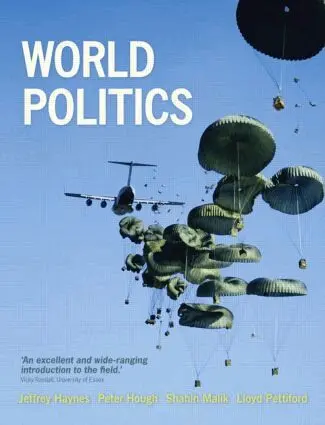
    World Politics

    International Relations and Globalisation in the 21st Century

    AvJeffrey Haynes,Peter Hough

    Häftad, Engelska, 2010

    892 kr

    Beställningsvara. Skickas inom 10-15 vardagar. Fri frakt över 249 kr.

    Fler format och utgåvor

    Inbunden

    2 957 kr

    Häftad

    597 kr

    Beskrivning

    From the war on terror to the global financial crisis, traditional concepts of world politics are being challenged on a daily basis. In these uncertain times, the study of international relations and the forces that shape them have never been more important.Written specifically for students who are approaching this subject for the first time, World Politics is the most accessible, coherent and up-to-date account of the field available. It covers the historical backdrop to today’s political situations, the complex interactions of states and non-state actors, the role of political economy, human security in all its forms, and the ways in which culture, religion and identity influence events. World Politics takes a new approach that challenges traditional interpretations, and will equip students with the knowledge and the confidence needed to tackle the big issues.

    Produktinformation

    • Utgivningsdatum:2010-12-10
    • Mått:189 x 246 x 45 mm
    • Vikt:1 540 g
    • Format:Häftad
    • Språk:Engelska
    • Antal sidor:832
    • Förlag:Taylor & Francis Ltd
    • ISBN:9781408204924

    Utforska kategorier

    • Internationella relationer inom Samhälle och politik

    Mer om författaren

    Jeffrey Haynes, Peter Hough, Shahin Malik, Lloyd Pettiford

    Innehållsförteckning

    • Part One: International Relations and Globalisation1. International Relations and Globalisation in the 21st CenturyInternational Relations and globalisationWhy is globalisation important for understanding International Relations?Technological, political, economic and cultural globalisationImportant post-Cold War changes affecting International RelationsUnderstanding globalisationConclusion 2. International Order, International Society and GlobalisationFundamental aspects of International Relations following the Peace of Westphalia (1648)International order and international society after the cold WarGlobalisation, international order and international societyConclusionPart Two: The History of Globalisation and International Relations3. International Relations from the early 19th Century to World War IIEuropean nationalism and imperialismWorld War I and International RelationsThe League of Nations: an attempt to build an international organisation to maintain collective securityThe legacy of the League of NationsConclusion4. International Relations after World War IIInternational relations after World War IIThe United NationsThe Cold War and nuclear weaponsThe international relations of the developing countriesConclusion5. After the Cold War: International Relations in a Globalised WorldIntroductionInternational relations after the Cold War: the impact of globalisationNew World Order: more cooperation, less conflict?Competing norms and values in international relations after the Cold WarTrends in post-Cold War international relations: security, ideology and developmentInternational Relations in the 21st centuryConclusionsPart Three: International Relations Theories6. Realism and Neo-RealismContextThe ‘back-story’ to RealismRealism in International RelationsKey assumptionsKey conceptsConclusions and criticisms7. LiberalismContextThe ‘back-story’ to LiberalismLiberalism in contemporary International RelationsKey assumptions Key conceptsConclusions and criticisms8. Marxism and Neo-MarxismContextThe ideas of MarxThe ideas of LeninDependency TheoryWorld Systems TheoryKey conceptsConclusions and criticisms9. Critical TheoryContextContemporary critical theory and IRKey conceptsConclusions10. Alternative ApproachesTheoretical contextPostmodernismFeminismGreen theoryConclusions11. Social ConstructivismSocial Constructivism as a bridge between the traditional theoriesAgency and culture in IRA Social Constructivist reappraisal of IR’s key conceptsThe empiricists strike back? Critiques of Social ConstructivismConclusionPart Four: International and Regional Actors12. Intergovernmental OrganisationsWhat is an intergovernmental organisation?The evolution and diversity of IGOsIR theory and IGOsConclusions13. Global Multi-Purpose IGOs: The United Nations and the Organisation of the Islamic ConferenceIntergovernmental organisations and globalisationThe United Nations and international lawThe UN CharterThe five permanent members of the UN Security Council: permanent privilegesOrganisation of the Islamic Conference (OIC)The OIC: history and development Conclusion: comparing the UN and the OIC14. Regional Organisations and Regionalisation: Theory and PracticeIntroductionRegional cooperation and globalisationOld regionalisation and new regionalisationThe North American Free Trade AgreementAsia Pacific Economic CooperationConclusion15. The European Union and the African UnionIntroductionThe European UnionThe African UnionConclusionPart Five: Current Global Issues16. International Political Economy, Part I: Theory and History What is IPE?A short history of IPEApproaches to IPEThe contemporary trading systemThe contemporary international monetary systemConclusions17. International Political Economy, Part II: Key Actors and ControversiesThe IMF and World BankInternational trade organisationsMulti-national corporations (MNCs)Theoretical perspectives on the actors of IPEConclusions18. Development, Poverty and InequalityThe persistence of global povertyApproaches to developmentThe evolution of development policyConclusions19. GenderContextGender approaches to IRGender and securityGender and international developmentFuture developmentsConclusions20. Identity and IdentitiesForms of identityTheorising identityConclusions21. DemocratisationWhat is democracy?The three waves of democratisationWhat can make democracy permanent?Democratisation by force – ‘nation building’Is democratisation important for international relations?Conclusions22. Human RightsThe evolution of the idea of human rightsThe United Nations and the codification of human rightsImplementing human rightsAre human rights ‘right’?Conclusions23. The Natural EnvironmentThe emergence of political ecologyThe globalisation of political ecologyGlobal environmental policy and human securityThreats to a global consensus on environmental policyConclusions