• Fri frakt över 249 kr
  • •
  • Snabba leveranser
  • •
  • Billiga böcker
Kundservice

Du är på sajten för privatpersoner.

Företag, bibliotek eller offentlig verksamhet?

Du handlar på classic.bokus.com, där alla dina funktioner finns intakta.
Till classic.bokus.com
Bokus logotyp. Gå till startsidan.
  • Erbjudanden
  • Nyheter
  • Student
  • Topplistor
  • Barn & ungdom
  • Bokus Play
  • E-böcker
  • Pocketböcker
  • Spel & pussel

10% rabatt på allt med kod NYSTART10 →

Sidfot

Mina sidor

    Hjälp

    • Kundservice
    • Vanliga frågor och svar
    • Frakt och leverans
    • Retur vid ångerrätt
    • Reklamera vara
    • Betalning
    • Köpvillkor
    • Allmänna villkor
    • Information om webbplatsens tillgänglighet

    Om Bokus

    • Om oss
    • Pressrum
    • För studenter
    • För företag
    • För bibliotek och offentlig verksamhet
    • För leverantörer
    • Hållbarhet

    Populärt

    • Aktuella erbjudanden
    • Presentkort
    • Studentlitteratur
    • Nya böcker
    • Topplistor
    • Signerade böcker
    • Engelska böcker

    Inspiration

    • Boktips
    • BookTok
    • Populära bokserier
    • Barnbokskaraktärer
    • Populära författare
    Logotyp för Bokus
    Följ oss på Facebook (extern länk)Följ oss på Instagram (extern länk)Följ oss på YouTube (extern länk)Följ oss på TikTok (extern länk)
    bokus @ CookiesAnpassa cookiesIntegritetspolicyKöpvillkor
    Till Citymail hemsida (extern länk)Till Budbee hemsida (extern länk)Till Postnord hemsida (extern länk)Till Schenker hemsida (extern länk)Till Early Bird hemsida (extern länk)Till Walleys hemsida (extern länk)
    1. Kultur
    2. Arkitektur

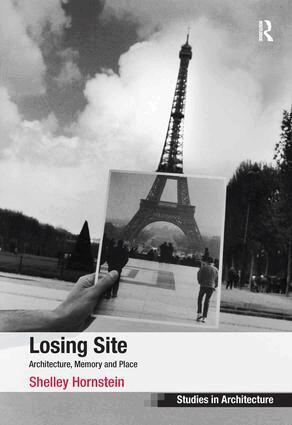
    Losing Site

    Architecture, Memory and Place

    AvShelley Hornstein

    Inbunden, Engelska, 2011

    2 495 kr

    Beställningsvara. Skickas inom 10-15 vardagar. Fri frakt över 249 kr.

    Fler format och utgåvor

    E-bok

    829 kr

    E-bok

    829 kr

    Beskrivning

    As Ruskin suggests in his Seven Lamps of Architecture: "We may live without [architecture], and worship without her, but we cannot remember without her." We remember best when we experience an event in a place. But what happens when we leave that place, or that place no longer exists? This book addresses the relationship between memory and place and asks how architecture captures and triggers memory. It explores how architecture exists as a material object and how it registers as a place that we come to remember beyond the physical site itself. It questions what architecture is in the broadest sense, assuming that it is not simply buildings. Rather, architecture is considered to be the mapping of physical, mental or emotional space. The idea that we are all architects in some measure - as we actively organize and select pathways and markers within space - is central to this book's premise. Each chapter provides a different example of the manifold ways in which the physical place of architecture is curated by the architecture in our "mental" space: our imaginary toolbox when we think of a place and look at a photograph, or visit a site and describe it later or send a postcard. By connecting architecture with other disciplines such as geography, visual culture, sociology, and urban studies, as well as the fine and performing arts, this book puts forward the idea that a conversation about architecture is not exclusively about formal, isolated buildings, but instead must be deepened and broadened as spatialized visualizations and experiences of place.

    Produktinformation

    • Utgivningsdatum:2011-08-18
    • Mått:174 x 246 x 17 mm
    • Vikt:500 g
    • Format:Inbunden
    • Språk:Engelska
    • Antal sidor:182
    • Förlag:Taylor & Francis Ltd
    • ISBN:9781409408710

    Utforska kategorier

    • Arkitektur inom Kultur
    • Referensverk och tvärvetenskap inom Samhälle och politik
    • Regional planering inom Naturvetenskap och teknik

    Mer om författaren

    Shelley Hornstein is Associate Professor of Architectural History and Visual Culture at York University, Canada

    Recensioner i media

    'In Losing Site Hornstein takes us on a dizzying pilgrimage from the Guggenheim to Google Earth, from Toronto to Tel Aviv, showing along the way how architecture, place, and memory work together in dynamic interplay. Hornstein’s themes are as wide-ranging as the places she explores: nationhood and nationalism, war and demolition, starchitecture and everyday life. The book offers a unique look at how our fast-paced, technology-driven lives have re-shaped travel and tourism.' Annmarie Adams, McGill University, Canada 'Losing Site is an erudite and extremely thoughtful meditation on the nexus of architecture, memory, and place. Shelley Hornstein brings a theoretically-grounded sensibility together with an amazingly astute eye in her discussions of site-specific art and architecture - ranging from Karavan's Benjamin memorial at Portbou, to synagogue ruins at Capernaum, to the contemporary explosion of striking new memorials and museums in Berlin, and beyond.' James E. Young, University of Massachusetts Amherst, USA ’Losing Site: Architecture, Memory and Place is an extended meditation on how architecture sutures, unravels, and transforms the human experience of place and identity... Hornstein’s intriguing interdisciplinary odyssey reminds social theorists, visual artists, and architects alike, why we need to pay close attention to both the architecture of imagination and our imagination of architecture.’ Historical Justice and Memory Research Network 'Losing Site: Architecture, Memory and Place is an inspiring work of ample intellectual breadth. Hornstein has skilfully interwoven a wide variety of case studies, to suggest that the material and non-material worlds are seamlessly interconnected in everyday life and we often can’t easily know where one ends and the other starts. She most aptly reminds us that architecture that shapes and is shaped by us remains open and unfinished.' Emotion, Space and Society 'Hornstein’s book evokes landscapes, buildin

    Innehållsförteckning

    • Introduction; Chapter 1 Marking Site; Chapter 2 Memorializing Site; Chapter 3 Transporting Sites; Chapter 4 Destroyed Sites; Chapter 5 Curating Site; Chapter 6 Erasing Sites; Chapter 7 Finding Site;