• Fri frakt över 249 kr
  • •
  • Snabba leveranser
  • •
  • Billiga böcker
Kundservice

Du är på sajten för privatpersoner.

Företag, bibliotek eller offentlig verksamhet?

Du handlar på classic.bokus.com, där alla dina funktioner finns intakta.
Till classic.bokus.com
Bokus logotyp. Gå till startsidan.
  • Erbjudanden
  • Nyheter
  • Student
  • Topplistor
  • Barn & ungdom
  • Bokus Play
  • E-böcker
  • Pocketböcker
  • Spel & pussel

10% rabatt på allt med kod NYSTART10 →

Sidfot

Mina sidor

    Hjälp

    • Kundservice
    • Vanliga frågor och svar
    • Frakt och leverans
    • Retur vid ångerrätt
    • Reklamera vara
    • Betalning
    • Köpvillkor
    • Allmänna villkor
    • Information om webbplatsens tillgänglighet

    Om Bokus

    • Om oss
    • Pressrum
    • För studenter
    • För företag
    • För bibliotek och offentlig verksamhet
    • För leverantörer
    • Hållbarhet

    Populärt

    • Aktuella erbjudanden
    • Presentkort
    • Studentlitteratur
    • Nya böcker
    • Topplistor
    • Signerade böcker
    • Engelska böcker

    Inspiration

    • Boktips
    • BookTok
    • Populära bokserier
    • Barnbokskaraktärer
    • Populära författare
    Logotyp för Bokus
    Följ oss på Facebook (extern länk)Följ oss på Instagram (extern länk)Följ oss på YouTube (extern länk)Följ oss på TikTok (extern länk)
    bokus @ CookiesAnpassa cookiesIntegritetspolicyKöpvillkor
    Till Citymail hemsida (extern länk)Till Budbee hemsida (extern länk)Till Postnord hemsida (extern länk)Till Schenker hemsida (extern länk)Till Early Bird hemsida (extern länk)Till Walleys hemsida (extern länk)
    1. Samhälle och politik
    2. Samhälle och kultur
    3. Sociala grupper och identitet
    4. HBTQ+

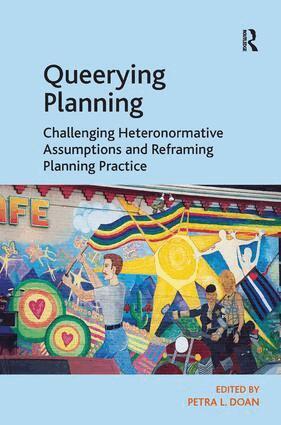
    Queerying Planning

    Challenging Heteronormative Assumptions and Reframing Planning Practice

    AvPetra L. Doan

    Inbunden, Engelska, 2011

    2 423 kr

    Beställningsvara. Skickas inom 10-15 vardagar. Fri frakt över 249 kr.

    Beskrivning

    Current planning practices have largely neglected the needs of the Lesbian, Gay, Bisexual, and Transgender (LGBT) community for safe urban spaces in which to live, work, and play. This volume fills the gap in the literature on the planning and development of queer spaces, and highlights some of the resistance within the planning profession to incorporate gay and lesbian concerns into the planning mainstream. Planning lags behind other disciplines concerned with queer urban issues. In contrast, the field of geography has developed a rich sub-specialty in the geographies of sex and gender that examines spaces and the variety of non-heteronormative populations that inhabit them. This volume brings together both planners and geographers with experience in planning to examine some of the fundamental assumptions of urban planning as they relate to the LGBT community. The first few chapters are substantial revisions and expansions of earlier influential work on planning for non-conformist populations and the preservation of LGBT neighborhoods. Subsequent chapters comprise original contributions that draw on the rich literature from queer theory, planning theory and the geography of sexualities to explore the ways that nonconformist populations struggle with heteronormative expectations embedded in planning theory and procedures. These chapters consider the intersection of planning and a range of populations including transgendered and gender variant individuals. Subsequent chapters examine the ways that variations in the scale of urban and regional governance influence local politics around the implementation of more equitable policies at the city level. In addition, several chapters critically examine the implications of using the tolerance component of Richard Florida's "creative cities" arguments. The final section consists of two chapters that explore the ways that urban planning regimes have been used to regulate sexually-oriented businesses and the way this regulation of sexualized spaces has implications on the heteronormativity of plans and planners. In summary, these chapters interrogate planning practice and pose questions for academic and professional planners about the ways that the queer community and its needs for spaces have shifted. What do those changes mean for the practice of planning 40 years after the North American Stonewall rebellion and looking forward to the next 40 years? To what extent does existing planning practice constrain the evolution of queer communities or seek to commercialize such spaces to the benefit of large developers and the detriment of marginalized members of the community? How might planning practice change to provide more direct support to the evolution of queer people and the spaces in which they live? This volume draws on these insights as well as the experiences of the various authors to lay out possible future directions for the field of planning to create truly inclusive urban areas.

    Produktinformation

    • Utgivningsdatum:2011-09-20
    • Mått:156 x 234 x 23 mm
    • Vikt:657 g
    • Format:Inbunden
    • Språk:Engelska
    • Antal sidor:294
    • Förlag:Taylor & Francis Ltd
    • ISBN:9781409428152

    Utforska kategorier

    • HBTQ+ inom Samhälle och politik

    Mer om författaren

    Petra I. Doan, Associate Professor, Department of Urban and Regional Planning, Florida State University, Tallahassee, Florida, USA

    Recensioner i media

    'Queering Planning is a greatly needed collection of both new and influential literature on queer issues in planning. It is an essential source for planning academics who study LGBT issues and an inspiration for practitioners who seek a deeper understanding of diversity, inclusion and justice in planning. It captures the evolution of the planning profession at a key moment that enlightens about the behavior of professions.' Curt Winkle, University of Illinois at Chicago, USA

    Innehållsförteckning

    • 1: Why Question Planning Assumptions and Practices about Queer Spaces; I: Planning Theory and Practice; 2: Queerying Planning Practice: Understanding Non-Conformist Populations; 3: Lavender Landmarks Revisited: Advancing an LGBT Preservation Agenda 1; 4: Querying Planning (Theory): Alphabet Soup or Paradox City?; 5: Queerying Identity: Planning and the Tyranny of Gender; 6: Queering the Suburbs: Analyzing Property Values in Male and Female Same-Sex Suburbs in the United States; II: Governance and Political Issues; 7: Queerying Planning in Australia: The Problems and Possibilities of Multiscalar Governance for LGBT Sexual Minorities; 8: Queering the Political-Economy: Anti-discrimination Law and the Urban Regime in Orlando, Florida; 9: Queerying Creative Cities; III: Regulating Sex in the City; 10: Planning for Sex/Work; 11: Queerying Urban Governance: The Emergence of Sex Industry Premises into the Planned City; IV: Reflections and Conclusions; 12: Reflections on Classic Articles on Planning and LGBT Communities; 13: Conclusions and Reflections for the Future: Reframing Planning Practice