• Fri frakt över 249 kr
  • •
  • Snabba leveranser
  • •
  • Billiga böcker
Kundservice

Du är på sajten för privatpersoner.

Företag, bibliotek eller offentlig verksamhet?

Du handlar på classic.bokus.com, där alla dina funktioner finns intakta.
Till classic.bokus.com
Bokus logotyp. Gå till startsidan.
  • Erbjudanden
  • Nyheter
  • Student
  • Topplistor
  • Barn & ungdom
  • Bokus Play
  • E-böcker
  • Pocketböcker
  • Spel & pussel

Må bättre, för mindre! Upp till 50% rabatt på hälsoböcker

Sidfot

Mina sidor

    Hjälp

    • Kundservice
    • Vanliga frågor och svar
    • Frakt och leverans
    • Retur vid ångerrätt
    • Reklamera vara
    • Betalning
    • Köpvillkor
    • Allmänna villkor
    • Information om webbplatsens tillgänglighet

    Om Bokus

    • Om oss
    • Pressrum
    • För studenter
    • För företag
    • För bibliotek och offentlig verksamhet
    • För leverantörer
    • Hållbarhet

    Populärt

    • Aktuella erbjudanden
    • Presentkort
    • Studentlitteratur
    • Nya böcker
    • Topplistor
    • Signerade böcker
    • Engelska böcker

    Inspiration

    • Boktips
    • BookTok
    • Populära bokserier
    • Barnbokskaraktärer
    • Populära författare
    Logotyp för Bokus
    Följ oss på Facebook (extern länk)Följ oss på Instagram (extern länk)Följ oss på YouTube (extern länk)Följ oss på TikTok (extern länk)
    bokus @ CookiesAnpassa cookiesIntegritetspolicyKöpvillkor
    Till Citymail hemsida (extern länk)Till Budbee hemsida (extern länk)Till Postnord hemsida (extern länk)Till Schenker hemsida (extern länk)Till Early Bird hemsida (extern länk)Till Walleys hemsida (extern länk)
    1. Historia och arkeologi
    2. Historia
    3. Historia: särskilda händelser och ämnen
    4. Kolonialism och imperialism

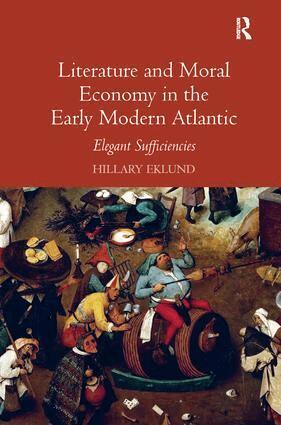
    Literature and Moral Economy in the Early Modern Atlantic

    Elegant Sufficiencies

    AvHillary Eklund

    Inbunden, Engelska, 2015

    2 784 kr

    Beställningsvara. Skickas inom 10-15 vardagar. Fri frakt över 249 kr.

    Fler format och utgåvor

    Häftad

    783 kr

    E-bok

    926 kr

    E-bok

    926 kr

    Beskrivning

    Grounded in the literary history of early modern England, this study explores the intersection of cultural attitudes and material practices that shape the acquisition, circulation, and consumption of resources at the turn of the seventeenth century. Considering a formally diverse and ideologically rich array of texts from the period - including drama, poetry, and prose, as well as travel narrative and early modern political and literary theory - this book shows how ideas about what is considered 'enough' adapt to changing material conditions and how cultural forces shape those adaptations. Literature and Moral Economy in the Early Modern Atlantic traces how early modern English authors improvised new models of sufficiency that pushed back the threshold of excess to the frontier of the known world itself. The book argues that standards of economic sufficiency as expressed through literature moved from subsistence toward the increasing pursuit of plenty through plunder, trade, and plantation. Author Hillary Eklund describes what it means to have enough in the moral economies of eating, travel, trade, land use and public policy.

    Produktinformation

    • Utgivningsdatum:2015-04-28
    • Mått:156 x 234 x 21 mm
    • Vikt:610 g
    • Format:Inbunden
    • Språk:Engelska
    • Antal sidor:242
    • Förlag:Taylor & Francis Ltd
    • ISBN:9781409462347

    Utforska kategorier

    • Kolonialism och imperialism inom Historia och arkeologi
    • Litteraturvetenskap inom Skönlitteratur

    Mer om författaren

    Hillary Eklund is Assistant Professor of English at Loyola University New Orleans, where she teaches courses on Shakespeare, Renaissance Literature, and the early modern Atlantic.

    Recensioner i media

    'The reader is guided to discover the connections between colonial government and profit-seeking back in England, between discourses of bodily humors and circulation of resources, and between national territorial disputes and notions of agrarian management. Harnessing Aristotle, Xenophon, and early moderns such as Erasmus or Elizabeth I in order to examine the shifting valence of "sufficiency," Eklund grounds her argument in the rich vocabulary of the day, proving how modes of discourse not only reflect but help to shape thinking about economic "progress" in the period.' Jill P. Ingram, Ohio University, USA

    Innehållsförteckning

    • Part 1 Movement: Liquid agencies in Thomas Heywood's The Fair Maid of the West. Privation and policy in Shakespeare's 2 Henry VI and Coriolanus. Part 2 Improvement: Tempering temperance in Book II of The Faerie Queene. 'Expedient manage must be made': kingship and husbandry in Richard II. Part III Government: 'So great was our famine': managing plenty in Virginia. Epilogue: satis sufficit.