• Fri frakt över 249 kr
  • •
  • Snabba leveranser
  • •
  • Billiga böcker
Kundservice

Du är på sajten för privatpersoner.

Företag, bibliotek eller offentlig verksamhet?

Du handlar på classic.bokus.com, där alla dina funktioner finns intakta.
Till classic.bokus.com
Bokus logotyp. Gå till startsidan.
  • Erbjudanden
  • Nyheter
  • Student
  • Topplistor
  • Barn & ungdom
  • Bokus Play
  • E-böcker
  • Pocketböcker
  • Spel & pussel

10% studentrabatt med kod TERM26

Sidfot

Mina sidor

    Hjälp

    • Kundservice
    • Vanliga frågor och svar
    • Frakt och leverans
    • Retur vid ångerrätt
    • Reklamera vara
    • Betalning
    • Köpvillkor
    • Allmänna villkor
    • Information om webbplatsens tillgänglighet

    Om Bokus

    • Om oss
    • Pressrum
    • För studenter
    • För företag
    • För bibliotek och offentlig verksamhet
    • För leverantörer
    • Hållbarhet

    Populärt

    • Aktuella erbjudanden
    • Presentkort
    • Studentlitteratur
    • Nya böcker
    • Topplistor
    • Signerade böcker
    • Engelska böcker

    Inspiration

    • Boktips
    • BookTok
    • Populära bokserier
    • Barnbokskaraktärer
    • Populära författare
    Logotyp för Bokus
    Följ oss på Facebook (extern länk)Följ oss på Instagram (extern länk)Följ oss på YouTube (extern länk)Följ oss på TikTok (extern länk)
    bokus @ CookiesAnpassa cookiesIntegritetspolicyKöpvillkor
    Till Citymail hemsida (extern länk)Till Budbee hemsida (extern länk)Till Postnord hemsida (extern länk)Till Schenker hemsida (extern länk)Till Early Bird hemsida (extern länk)Till Walleys hemsida (extern länk)
    1. Medicin
    2. Andra medicinska specialiteter
    3. Behandling och behandlingsmetoder
    4. Missbruk

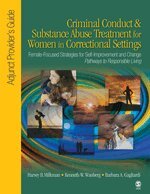
    Criminal Conduct and Substance Abuse Treatment for Women in Correctional Settings: Adjunct Provider's Guide

    Female-Focused Strategies for Self-Improvement and Change-Pathways to Responsible Living

    AvHarvey B. Milkman,Kenneth W. Wanberg

    Häftad, Engelska, 2009

    1 309 kr

    Beställningsvara. Skickas inom 3-6 vardagar. Fri frakt över 249 kr.

    Beskrivning

    There is an urgent demand for treatment protocols designed specifically for women who abuse drugs, commit crimes, and receive treatment in correctional settings. Criminal Conduct and Substance Abuse Treatment for Women in Correctional Settings answers the clamor by targeting the biological, psychological, and social roots of female substance abuse and crime. Designed as an adjunct to the Criminal Conduct and Substance Abuse Treatment: Strategies for Self-Improvement and Change (SSC) curriculum, this provider's guide uses female-focused examples, exercises, role plays, and content enhancements that pinpoint women's treatment issues.

    Features and Benefits

    • Increases the female focus of each session in the original SSC curriculum, a renowned and effective treatment model
    • Assumes a strengths-based approach, which helps build support systems and motivate recovery for women
    • Provides a broad perspective on psychological, social and biological issues and enhances treatment outcomes across a wide spectrum of agencies and treatment providers

    Intended Audience
    This adjunct provider's guide is essential to agencies, treatment centers, and practitioners working with women in the judicial system – offering female clients the best possible chance to get back on the road to recovery.

    This adjunct provider's guide is essential to agencies, treatment centers, and practitioners working with women in the judicial system – offering female clients the best possible chance to get back on the road to recovery.

    This volume provides an invaluable gender focus for:

    Criminal Conduct and Substance Abuse Treatment
    Strategies for Responsible Living and Change
    The Participant's Workbook
    Second Edition
    Kenneth W. Wanberg and Harvey B. Milkman
    ISBN: 978-1-4129-0591-6

    The Provider's Guide
    Second Edition
    Kenneth W. Wanberg and Harvey B. Milkman
    ISBN: 978-1-4129-0592-3


    Produktinformation

    • Utgivningsdatum:2009-06-03
    • Mått:215 x 279 x 14 mm
    • Vikt:590 g
    • Format:Häftad
    • Språk:Engelska
    • Antal sidor:256
    • Upplaga:1
    • Förlag:SAGE Publications
    • ISBN:9781412905930

    Utforska kategorier

    • Missbruk inom Medicin

    Mer om författaren

    Harvey B. Milkman, PhD received his baccalaureate degree from City College of New York and his doctorate from Michigan State University. He is currently professor of psychology at Metropolitan State College of Denver. His doctoral research was conducted with William Frosch, MD, at Bellevue Psychiatric Hospital in New York City, on the User’s Drug of Choice. From 1980–1981, he completed a sabbatical exploration of addictive behavior in Africa, India, and Southeast Asia; in 1985 he was recipient of a Fulbright-Hays Lectureship award at the National University of Malaysia. He has represented the United States Information Agency as a consultant and featured speaker in Australia, Brazil, Iceland, The Netherlands, Peru, Turkey, and Yugoslavia. He is principle author with Stanley Sunderwirth of “The Chemistry of Craving,” and author of “Better than Dope,” featured articles in Psychology Today, October, 1983 and April, 2001 respectively. From September 1992–June 2002, he was author, principal investigator, and director of Project Self-Discovery: Artistic Alternatives for High-Risk Youth, a national demonstration model funded by The Center for Substance Abuse Prevention and the Edward Byrne Foundation.Kenneth W. Wanberg, ThD, PhD, has worked as a clinician and researcher in the field of alcohol and drug abuse for more than four decades, specializing in the intersection of criminal conduct and substance abuse.  Barbara Gagliardi received her BA in Psychology from SUNY Albany and her MA in Psychology from Antioch University. She is an Adjunct Faculty Member in the Department of Psychology at Metropolitan State College, Denver, where she teaches courses in Violence and Aggression and other topics in Social Psychology. She has decades of experience working with victims and perpetrators of violence in a wide variety of cultural and direct service settings. Recently, she participated in an NIC project assessing the extent and nature of victim services nationwide. She has conducted extensive research and writing for the Center for Interdisciplinary Studies in Denver on such topics as development of culturally-sensitive services; treatment for juvenile offenders; efficacy assessments of treatment with sexual offenders; and development of gender-focused treatment for women offenders.

    Innehållsförteckning

    • PrefaceIntroductionSECTION I: UNDERSTANDING THE CAUSES AND CONTEXT OF FEMALE SUBSTANCE ABUSE, CRIME, AND MENTAL DISORDER1. Women and CrimeScope of the Problem: Women in the Criminal Justice SystemGeneral Patterns of Criminal Conduct Among WomenRisk Factors and Dynamic Predictors of Criminal Condut in WomenTheories of Female CrimeImplications for Treatment and Policy: What Factors Reduce Recidivism Among Female Judicial Clients?Chapter Review2. Connecting Female Substance Abuse, Cognition, and CrimeGender Differences in Substance AbusePsychosocial Issues and Substance Abuse in WomenPatterns and Trends in Women′s LivesStigmas and Stereotypes of Women and Substance AbuseThe Interaction of Women′s Social Roles and RelationshipsGender Norms and Sense of SelfPersonal Responsibility and the Sociocentric PerspectiveImplications for Treatment and Policy: What Factors Reduce Recidivism?Chapter Review3. Mental and Physical Health Issues in Female Criminal Justice ClientsOverview of Mental Health Issues in Female Substance-Abusing Judicial ClientsDual Diagnosis in Women: Common Psychiatric Disorders Found Among Women Judicial ClientsWomen and Violent TraumaThe Specific Causes of Violent TraumaMedical Challenges for Women Judical ClientsEthnic Considerations in Health CareImplications for Treatment and Policy: What Factors Reduce Recidivism?Chapter Review4. Adolescent Girls and Delinquency: The Route Into Correctional SettingsGender Differences Between Adolescents in AOD Treatment and Juvenile Justice SettingsAdolescent Girls and DelinquencyThe Nature of Female Adolescent OffenseJuvenile Victims of CrimeRisk Factors for Juvenile Offending Among FemalesPsychological Consequences of Violent Trauma in AdolescenceGender Norms and AdolescenceGirls and GangsFemale Adolescent DetentionExperiences of Girls Within the Juvenile Justice SystemImplications for Treatment and Policy: What Factors Reduce Recidivism?Chapter Review5. Understanding Posttraumatic Stress DisorderHistory of Posttraumatic Stress DisorderPTSD Population StatisticsSymptoms of Posttraumatic Stress DisorderComplex Posttraumatic Stress DisorderPTSD Assessment MethodsPosttraumatic Stress Disorder and GenderPosttraumatic Stress Disorder and Childhood TraumaPosttraumatic Stress Disorder and the Female Judicial ClientAllostasis and the Allostatice Load FactorRecovery From TraumaCore Areas and Treatment Goals for Posttraumatic Stress DisorderTreatment ModalitiesTherapist CharacteristicsChapter ReviewSECTION II: ESSENTIAL ELEMENTS IN THE EDUCATION AND TREATMENT OF FEMALE JUDICIAL CLIENTS6. Assessment of Women in Correctional SettingsOverview of the SSC Assessment ProgramComponents of AssessmentAn Assessment and Case Management Service Planning ModelSpecific Factors Important in the Assessment of Female Judicial ClientsThe Client Master Profile and Master Assessment PlanTreatment MatchingCollaborative Involvement in Assessment and the Development of the Treatment PlanThe Continuum of CareChapter Review7. Gender as Culture and Other Diversity ConsiderationsDiversity Considerations in Working with Women Judicial ClientsBeyond Cultural DifferencesSocioeconomic IssuesWomen Judicial Clients and Their ChildrenChapter Review8. Gender-Specific Strategies and Models for TreatmentThe Therapeutic Alliance: What Makes an Effective Counselor?The Therapeautic EnvironmentGoals of Treatment With Female Judicial ClientsTherapeutic Intervention With Female Judicial ClientsIndividualized Plans for Reentry and TransitionSupport for Service ProvidersCurrent Trends in Women-Focused Programs: Models for TreatmentChapter ReviewSECTION III: GENDER-SPECIFIC ADAPTATIONS FOR WOMENPHASE I: Challenge to ChangeModule 1: Orientation: How This Program WorksModule 2: Cognitive-Behavioral Approach to Change and Responsible LivingModule 3: AOD Use Patterns and OutcomesModule 4: Understanding Criminal Thinking and BehaviorModule 5: Sharing and Listening: Communication Pathways to Self-Awareness and Other-AwarenessModule 6: Understanding and Preventing Relapse and RecidivismModule 7: The Process and Skills for Self-Improvement and ChangePHASE II: Commitment to ChangeModule 8: Self-Control: Managing Thoughts and EmotionsModule 9: Social and Relationship Skills BuildingModule 10: Skills in Social and Community ResponsibilityPHASE III: Ownership of Change: Lifestyle Balance and Healthy LivingModule 11: Relapse and Recidivism Prevention: Review Strategies for Healthy LivingModule 12: Strengthening Ownership of Change: Skills for a Healthy LifestylePROGRAM CLOSURE: Continuing Your Journey of Responsible Living