• Fri frakt över 249 kr
  • •
  • Snabba leveranser
  • •
  • Billiga böcker
Kundservice

Du är på sajten för privatpersoner.

Företag, bibliotek eller offentlig verksamhet?

Du handlar på classic.bokus.com, där alla dina funktioner finns intakta.
Till classic.bokus.com
Bokus logotyp. Gå till startsidan.
  • Erbjudanden
  • Nyheter
  • Student
  • Topplistor
  • Barn & ungdom
  • Bokus Play
  • E-böcker
  • Pocketböcker
  • Spel & pussel

10% rabatt på allt med kod NYSTART10 →

Sidfot

Mina sidor

    Hjälp

    • Kundservice
    • Vanliga frågor och svar
    • Frakt och leverans
    • Retur vid ångerrätt
    • Reklamera vara
    • Betalning
    • Köpvillkor
    • Allmänna villkor
    • Information om webbplatsens tillgänglighet

    Om Bokus

    • Om oss
    • Pressrum
    • För studenter
    • För företag
    • För bibliotek och offentlig verksamhet
    • För leverantörer
    • Hållbarhet

    Populärt

    • Aktuella erbjudanden
    • Presentkort
    • Studentlitteratur
    • Nya böcker
    • Topplistor
    • Signerade böcker
    • Engelska böcker

    Inspiration

    • Boktips
    • BookTok
    • Populära bokserier
    • Barnbokskaraktärer
    • Populära författare
    Logotyp för Bokus
    Följ oss på Facebook (extern länk)Följ oss på Instagram (extern länk)Följ oss på YouTube (extern länk)Följ oss på TikTok (extern länk)
    bokus @ CookiesAnpassa cookiesIntegritetspolicyKöpvillkor
    Till Citymail hemsida (extern länk)Till Budbee hemsida (extern länk)Till Postnord hemsida (extern länk)Till Schenker hemsida (extern länk)Till Early Bird hemsida (extern länk)Till Walleys hemsida (extern länk)
    1. Psykologi och pedagogik
    2. Pedagogik
    3. Skolan och förskolan

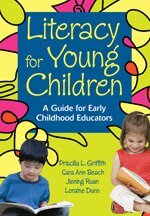
    Literacy for Young Children

    A Guide for Early Childhood Educators

    AvPriscilla L. Griffith,Sara Ann Beach

    Häftad, Engelska, 2008

    575 kr

    Beställningsvara. Skickas inom 3-6 vardagar. Fri frakt över 249 kr.

    Fler format och utgåvor

    Inbunden

    1 324 kr

    Beskrivning

    "This book merges the five big ideas in reading with developmentally appropriate practice to create a practical guide that will enhance literacy development in any type of preschool setting. The references, resources, and examples will help teachers bring these ideas to life in their classrooms."—Addie Gaines, PrincipalKirbyville Elementary School, MOUse research-based strategies to build early literacy skills!Early childhood educators recognize that young children are more likely to succeed in later grades if they have a variety of engaging preschool experiences. Literacy for Young Children brings together reading research and learning standards to help teachers become informed decision makers about meeting the literacy needs of young students from diverse backgrounds.Based on the authors′ work in Early Reading First classrooms, this resource includes evidence-based, easy-to-implement activities to develop oral language, phonological awareness, print awareness, emergent writing, and early comprehension skills. Chapters provide an overview of each skill, methods for assessment, and appropriate instructional strategies. The book showcases examples of PreK and kindergarten children from different cultural and linguistic backgrounds to demonstrate how teachers can support individual learners. Readers will be able to:Adapt instruction appropriately for ELLs and children with special needsPartner knowledgeably with families to provide rich literacy experiences at homeIntegrate literacy across the curriculum, and moreAs teachers and literacy coaches become more purposeful and confident instructors, they open the door to successful learning while continuing to close the achievement gap.

    Produktinformation

    • Utgivningsdatum:2008-05-06
    • Mått:177 x 254 x 17 mm
    • Vikt:510 g
    • Format:Häftad
    • Språk:Engelska
    • Antal sidor:256
    • Förlag:SAGE Publications Inc
    • ISBN:9781412952002

    Utforska kategorier

    • Skolan och förskolan inom Psykologi och pedagogik

    Mer om författaren

    Priscilla L. Griffith is the Ruth G. Hardman Chair in Education and a Professor in the Department of Instructional Leadership and Academic Curriculum at the University of Oklahoma where she teaches undergraduate and graduate level literacy education courses. Priscilla has worked in language and literacy, and teacher education for over three decades. She has applied her expertise in these areas as an editor of professional journals including The Reading Teacher and Action in Teacher Education, as a consultant for school districts, and as a classroom teacher. She has worked with Pre-K teachers in Early Reading First classrooms. In addition, Priscilla works regularly with teachers as Director of the Oklahoma Writing Project, a site of the National Writing Project. She is a past president of the Florida Reading Association and the Oklahoma Reading Association. Priscilla received her Ph.D. degree from the University of Texas at Austin. Sara Ann (Sally) Beach is a professor of literacy education at the University of Oklahoma where she is coordinator of the reading program and teaches undergraduate and graduate literacy courses. Her professional experiences include teaching children from kindergarten through fifth grade and teaching teachers around the world to use reading and writing as a tool for thinking. Beach has worked with preschool teachers on Early Childhood Professional Educator and Early Reading First grants. Her research focuses on children’s development as literate people and the classrooms that provide opportunities students to become critically literate. Beach has a master’s degree from Texas A&M University and a doctorate in reading from the University of California, Riverside. Jiening Ruan is associate professor of reading/literacy education in the College of Education at the University of Oklahoma, where she teaches graduate and undergraduate courses in reading and literacy education. She also directs the University of Oklahoma’s Reading Clinic and Reading Specialist Certification Program. Ruan’s research interests focus on literacy development of children from diverse backgrounds and on the effectiveness of technology integration in literacy education. Ruan holds master’s degrees in elementary education and in reading education from Indiana University of Pennsylvania and a doctorate in curriculum and instruction with an emphasis on language and literacy education from Purdue University.Loraine Dunn is a professor in early childhood education at the University of Oklahoma where she teaches early childhood classes, oversees the child development laboratory, and makes student teaching placements. Her research has focused on child care program quality, developmentally appropriate practice, and children’s learning and development. Recently, Dunn served on a team that developed the Early Steps to Literacy project funded by an Early Childhood Educator Professional Development grant from the U.S. Department of Education. Dunn began her career teaching in a child care center serving children living in poverty. She later served as the education coordinator for a Head Start program, a kindergarten teacher in a small rural school, and as a teacher of children and adults in university child development laboratories. Dunn received her master’s degree in child development from Iowa State University and her doctorate in child development and family studies from Purdue University.

    Recensioner i media

    "A comprehensive and comprehensible book that provides a framework for a productive, engaging, literacy-developing classroom. This text provides a complete schema to support and enable novice teachers and affirm the experienced teacher with an overview for developing literacy in early childhood."

    Innehållsförteckning

    • AcknowledgmentsAbout the AuthorsIntroduction: Why Early Literacy?Early Reading FirstDevelopmentally Appropriate PracticeOverview of This BookChapter 1. Children′s Development and Literacy LearningHow Children Develop and LearnChild Development: The Foundation for LiteracyIntroducing Rebecca, Juan, Michael, and AnnieFoundations for Learning to ReadSupportive Classroom EnvironmentsSummaryChapter 2. Language Development and DiversityRole of Oral Language in Literacy DevelopmentWhat Does Research Say About How Children Acquire Language?Benchmarks of Oral Language Development for Preschool ChildrenAssessing Oral Language DevelopmentResearch-Based Instructional Strategies Supporting Oral Language DevelopmentLanguage DiversitySummaryChapter 3. Phonological Awareness Development in Preschool ChildrenWhat Is Phonological Awareness and What Is Its Role in Literacy Development?What does Research Say About How Children Acquire Phonological Awareness?Indicators of Children′s Development of Phonological AwarenessAssessing Phonological AwarenessResearch-Based Instructional Strategies Supporting Phonological AwarenessAddressing DiversitySummaryChapter 4. Alphabetic PrincipleWhat Is the Alphabetic Principle and What is Its Role in Literacy Development?What Does Research Tell Us About the Alphabetic Principle?Assessing the Alphabetic PrincipleResearch-Based Instructional Strategies Supporting Understanding of the Alphabetic PrincipleAddressing DiversitySummaryChapter 5. WritingHow Are Reading and Writing Connected in Early Literacy Development?What Does Research Say About Emergent Writing Development?Assessing WritingResearch-Based Instructional Strategies to Support Emergent WritingAddressing DiversitySummaryChapter 6. Comprehension: Making MeaningWhat Is Comprehension?What Helps Children Comprehend?Assessing ComprehensionResearch-Based Instructional StrategiesAddressing DiversitySummaryChapter 7. Sharing Books With ChildrenThe Importance of Book Sharing for Children′s Early Literacy DevelopmentWhat Does Research Say About Storybook Reading With Children?Selecting High-Quality Children′s LiteratureDeveloping Classroom LibrariesResearch-Based Instructional Strategies for Sharing Books With ChildrenAddressing DiversitySummaryChapter 8. Integrating Literacy Across the CurriculumIntegrated CurriculumPlanning an Integrated UnitSummaryChapter 9. Literacy in the Real WorldLanguage and Literacy in CommunitiesInfusing Home and Community Literacy in the ClassroomSummaryChapter 10. Helping Parents Facilitate Children′s Literacy at HomeWhy Parents Become InvolvedParental BeliefsTypes of Parental InvolvementWhy Parental Involvement?SummaryChapter 11. Bringing It All TogetherPreschool Programs Make a DifferenceThe Physical EnvironmentThe Interactional EnvironmentAssessing Your Literacy and Language EnvironmentPlanning Whole and Half Day ProgramsSummaryReferencesChildren′s Books ReferencedAdditional Resources for TeachersHelpful WebsitesReferencesIndex