• Fri frakt över 249 kr
  • •
  • Snabba leveranser
  • •
  • Billiga böcker
Kundservice

Du är på sajten för privatpersoner.

Företag, bibliotek eller offentlig verksamhet?

Du handlar på classic.bokus.com, där alla dina funktioner finns intakta.
Till classic.bokus.com
Bokus logotyp. Gå till startsidan.
  • Erbjudanden
  • Nyheter
  • Student
  • Topplistor
  • Barn & ungdom
  • Bokus Play
  • E-böcker
  • Pocketböcker
  • Spel & pussel

10% rabatt på allt med kod: NYSTART10 →

Sidfot

Mina sidor

    Hjälp

    • Kundservice
    • Vanliga frågor och svar
    • Frakt och leverans
    • Retur vid ångerrätt
    • Reklamera vara
    • Betalning
    • Köpvillkor
    • Allmänna villkor
    • Information om webbplatsens tillgänglighet

    Om Bokus

    • Om oss
    • Pressrum
    • För studenter
    • För företag
    • För bibliotek och offentlig verksamhet
    • För leverantörer
    • Hållbarhet

    Populärt

    • Aktuella erbjudanden
    • Presentkort
    • Studentlitteratur
    • Nya böcker
    • Topplistor
    • Signerade böcker
    • Engelska böcker

    Inspiration

    • Boktips
    • BookTok
    • Populära bokserier
    • Barnbokskaraktärer
    • Populära författare
    Logotyp för Bokus
    Följ oss på Facebook (extern länk)Följ oss på Instagram (extern länk)Följ oss på YouTube (extern länk)Följ oss på TikTok (extern länk)
    bokus @ CookiesAnpassa cookiesIntegritetspolicyKöpvillkor
    Till Citymail hemsida (extern länk)Till Budbee hemsida (extern länk)Till Postnord hemsida (extern länk)Till Schenker hemsida (extern länk)Till Early Bird hemsida (extern länk)Till Walleys hemsida (extern länk)
    1. Psykologi och pedagogik
    2. Pedagogik
    3. Specialundervisning

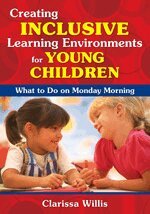
    Creating Inclusive Learning Environments for Young Children

    What to Do on Monday Morning

    AvClarissa Willis

    Inbunden, Engelska, 2008

    1 183 kr

    Beställningsvara. Skickas inom 3-6 vardagar. Fri frakt över 249 kr.

    Fler format och utgåvor

    Häftad

    592 kr

    Beskrivning

    "Invites teachers to apply appropriate strategies in classroom environments for young children with special needs, setting the stage for future school success!"
    —Toby Karten, Author, Inclusion Strategies That Work!

    "This book helps teachers better understand specific disabilities and intentional support mechanisms that encourage ALL children to learn and grow. It is a resource that I will use for years to come!"
    —Kim Hughes, Therapeutic Preschool Teacher
    Project Enlightenment, Wake County Public Schools, NC

    Research-based techniques to help all children thrive in early childhood settings!

    More and more frequently, early childhood educators teach children with special needs, yet few have the necessary background knowledge and experiences to meet the challenge of teaching in an inclusive classroom.

    Creating Inclusive Learning Environments for Young Children gives teachers targeted information, strategies, and activities to address the learning needs of all children, including those at risk. The author provides in-depth information on a variety of disabilities, including autism, vision and hearing loss, communication delays, and sensory integration disorders. Each chapter offers a glossary of terms, a list of suggested resources, and a brief summary of relevant research. Aligned with NAEYC and DEC standards, this engaging and comprehensive resource helps readers:

    • Create appropriate inclusive environments and establish daily schedules
    • Build relationships among peers with and without disabilities
    • Work productively with families, special education teachers, and paraprofessionals
    • Understand Individualized Education Programs and Response to Intervention

    This handbook gives preschool and kindergarten teachers the tools to support all young learners by building relationships and providing positive classroom experiences.

    Produktinformation

    • Utgivningsdatum:2008-09-18
    • Mått:177 x 254 x 18 mm
    • Vikt:670 g
    • Format:Inbunden
    • Språk:Engelska
    • Antal sidor:240
    • Upplaga:1
    • Förlag:SAGE Publications
    • ISBN:9781412957182

    Utforska kategorier

    • Specialundervisning inom Psykologi och pedagogik

    Mer om författaren

    Clarissa A. Willis is the associate director of the Center of Excellence at East Tennessee State University and an associate professor of special education in the Department of Human Development and Learning. She is the author of Teaching Young Children with Autism Spectrum Disorders and coauthor of Inclusive Literacy Lessons with Special Education Adaptations. Willis has over 30 years of experience working with children with special needs as a speech pathologist, early interventionist, teacher, and grant administrator. As a consultant, she has provided workshops and keynote addresses to schools and organizations across the country and abroad.

    Recensioner i media

    "Invites teachers to apply appropriate strategies in classroom environments for young children with special needs, setting the stage for future school success!”

    Innehållsförteckning

    • AcknowledgmentsAbout the AuthorIntroductionPart I. Children With Special Needs in the Inclusive Classroom1. Working With Children With Special NeedsWhat Do I Need to Know to Work With Children With Special Needs?Setting the Stage for InclusionInclusion, Blending, and Reverse MainstreamingWhy Is Inclusion Important?What Is "Meaningful" Inclusion?How Do I Develop a Philosophy of Meaningful Inclusion?General Strategies for Working With Children With Special NeedsHow Do I Get the Child′s Family Involved?Resources for FamiliesWorking to "Enable" and "Empower" FamiliesTerms Used in This ChapterResources Used in This ChapterSuggested ReadingThe Research Says...Developmentally Appropriate Practices Must Apply to Everyone2. Blending the World of Special Education With General Education ServicesBest Practices According to NAEYC and DECConstructivism vs. Behaviorism: Blending Without Ignoring Best PracticeUsing Observation Skills to Guide InstructionPlanning for an IEP MeetingThe Teacher′s Rules of the RoadRelated ServicesThe Role of the Special Education TeacherWorking With Paraprofessionals and Instructional AssistantsTerms Used in This ChapterResources Used in This ChapterSuggested ReadingThe Research Says...What Early Childhood Practitioners Think About InclusionPart II. Who Are the Children With Special Needs?3. Children With Vision ImpairmentsHow Do Young Children Develop Vision?What Causes Visual Impairments in Young Children?How Are Vision Impairments Classified?What Resources Are Available to Help the Child Function in My Classroom?How Do Children With Vision Impairments Learn?Preparing the Early Childhood EnvironmentSuggestions for Children With Low VisionSuggestions for Children Who Are Blind or Severely Vision ImpairedSummaryTerms Used in This ChapterResources Used in This ChapterSuggested ReadingThe Research Says...Play Behaviors in Young Children Who Are Blind4. Children With Hearing LossDefining Hearing LossWhat Determines the Degree of Hearing Loss?So, What About Hearing Aids?Cochlear ImplantHow Will Hearing Loss Affect Children in My Classroom?Social IsolationEffects of Hearing Loss on Speech (Oral Language)Reduced Academic AchievementSuggestions for the ClassroomTerms Used in This ChapterResources Used in This ChapterSuggested ReadingThe Research Says...Cochlear Implants Can Result in Better Prosody5. Children With Cognitive ChallengesUnderstanding the Challenges for Children With Cognitive DelaysCharacteristics of Children With Cognitive ChallengesEducational ImplicationsWhat Are Functional Skills and Why Are They Important?How Do I Teach Everyday Tasks (Functional Skills)?What Do I Do First, Before Teaching a New Skill?How Exactly Does This All Fit Together?Classroom Suggestions for Children With Cognitive ChallengesSummaryTerms Used in This ChapterResources Used in This ChapterSuggested ReadingThe Research Says...Social Development Across Time6. Children With Atypical Motor DevelopmentCauses of Atypical Motor DevelopmentMuscle ToneCerebral PalsyFine and Gross Motor SkillsPositioning and HandlingAdaptive EquipmentSummaryTerms Used in This ChapterResources Used in This ChapterSuggested ReadingThe Research Says...Children With Motor Delays Are At-Risk for Social Isolation7. Children With Communication DelaysWhat Is Communication?Understanding the Child′s "Form" of CommunicationFunction and Content of CommunicationThe Nonverbal ChildCleft Lip and PalateChildhood Apraxia of Speech (CAS)Terms Used in This ChapterResources Used in This ChapterSuggested ReadingThe Research Says...Communication Is More Than Just Imitation8. Children With Emotional/Behavior DisordersWhat Are Challenging Behaviors?Young Children and Mental HealthAnxiety DisordersClassroom Suggestions for Children with Anxiety DisordersSeparation AnxietyClassroom Suggestions for Children With Separation AnxietyPost-Traumatic Stress Disorder (PTSD)Classroom Suggestions for Children With PTSDOppositional Defiant Disorder (ODD)Classroom Suggestions for Children With ODDAttention Deficit/Hyperactivity Disorder (ADHD)Medication IssuesClassroom Suggestions for Children With ADHDSummaryTerms Used in This ChapterResources Used in This ChapterSuggested ReadingThe Research Says...Risk Factors for Future Challenging Behaviors9. Children With Autism Spectrum Disorder (ASD)What Is a Spectrum Disorder?What Is Autism?What Are the Five Types of Autism?Begin by Looking at the Child′s BehaviorCommunication IssuesDeveloping Social SkillsSummaryTerms Used in This ChapterResources Used in This ChapterSuggested ReadingThe Research Says...The Role of Attention and Intention in Learning New Words10. Children With Sensory Integration DisorderWhat Exactly Is Sensory Integration?Sensory Integration DisorderWhat Can I Do to Make My Classroom Sensory "Friendly"?Materials for the "Sensory Friendly" ClassroomTerms Used in This ChapterResources Used in This ChapterSuggested ReadingThe Research Says...Trauma and Sensory Modulation Disorder11. Children At Risk for School FailureWho Are Children At Risk?Children Living in Extreme PovertyHomelessnessFamily FactorsChronic IllnessFuture Learning DisabilityClassroom Suggestions for Children At RiskTerms Used in This ChapterResources Used in This ChapterSuggested ReadingThe Research Says...Teen Mothers Living in Transitional Shelters Need SupportPart III. Strategies for the Inclusive Classroom12. Preparing the ChildrenBefore the First Day of SchoolHow Do I Prepare Children in a General Education Setting for a Child With Special Needs?What Kinds of Activities Teach Tolerance and Acceptance of Others?The Socially Competent ChildTerms Used in this ChapterSuggested Reading13. Preparing the EnvironmentThe Important Role of the EnvironmentMaintaining a Balance Between ActivitiesThe Daily ScheduleLarge Group TimeSmall Group TimeIndividualized InstructionFree Choice TimeTransitionsAssistive Technology--Adapting MaterialsSummaryTerms Used in This ChapterResources Used in This ChapterSuggested Reading14. The CurriculumWhat Role Does the Curriculum Play in Teaching Children With Special Needs?Is There a Special "Curriculum" for a Child With Special Needs?Curriculum ModelsDifferentiated Instruction (DI)Response to Intervention (RTI)Recognition and ResponseCurriculum Modifications for Children With Special NeedsContent Area InstructionTerms Used in This ChapterResources Used in This ChapterSuggested Reading15. Handling Challenging BehaviorsWhat Is Challenging Behavior?What Kinds of Behaviors Can I Tolerate?What Is a Functional Assessment?Identification of Positive BehaviorsTerms Used in This ChapterResources Used in This ChapterSuggested Reading16. Building CommunicationUnderstanding CommunicationLevels of Communication DevelopmentHow Do You Set Appropriate Goals for Communication?What About Children Who Are Nonverbal?Low-Tech Methods of CommunicationHow Do I Start Helping a Child With Special Needs Use Pictures to Communicate?What About Electronic Communication Devices?Picture SchedulesTerms Used in This ChapterResources Used in This ChapterSuggested ReadingAppendixChildren′s Books That Feature Dynamic Characters With Special NeedsResources for Special Needs ProductsIndex