• Fri frakt över 249 kr
  • •
  • Snabba leveranser
  • •
  • Billiga böcker
Kundservice

Du är på sajten för privatpersoner.

Företag, bibliotek eller offentlig verksamhet?

Du handlar på classic.bokus.com, där alla dina funktioner finns intakta.
Till classic.bokus.com
Bokus logotyp. Gå till startsidan.
  • Erbjudanden
  • Nyheter
  • Student
  • Topplistor
  • Barn & ungdom
  • Bokus Play
  • E-böcker
  • Pocketböcker
  • Spel & pussel

10% rabatt på allt med kod NYSTART10 →

Sidfot

Mina sidor

    Hjälp

    • Kundservice
    • Vanliga frågor och svar
    • Frakt och leverans
    • Retur vid ångerrätt
    • Reklamera vara
    • Betalning
    • Köpvillkor
    • Allmänna villkor
    • Information om webbplatsens tillgänglighet

    Om Bokus

    • Om oss
    • Pressrum
    • För studenter
    • För företag
    • För bibliotek och offentlig verksamhet
    • För leverantörer
    • Hållbarhet

    Populärt

    • Aktuella erbjudanden
    • Presentkort
    • Studentlitteratur
    • Nya böcker
    • Topplistor
    • Signerade böcker
    • Engelska böcker

    Inspiration

    • Boktips
    • BookTok
    • Populära bokserier
    • Barnbokskaraktärer
    • Populära författare
    Logotyp för Bokus
    Följ oss på Facebook (extern länk)Följ oss på Instagram (extern länk)Följ oss på YouTube (extern länk)Följ oss på TikTok (extern länk)
    bokus @ CookiesAnpassa cookiesIntegritetspolicyKöpvillkor
    Till Citymail hemsida (extern länk)Till Budbee hemsida (extern länk)Till Postnord hemsida (extern länk)Till Schenker hemsida (extern länk)Till Early Bird hemsida (extern länk)Till Walleys hemsida (extern länk)
    1. Samhälle och politik
    2. Samhälle och kultur
    3. Kultur och medier
    4. Referensverk och tvärvetenskap

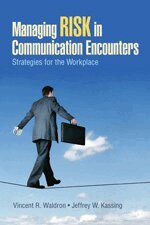
    Managing Risk in Communication Encounters

    Strategies for the Workplace

    AvVincent R. Waldron,Jeffrey (Jeff) W. Kassing

    Häftad, Engelska, 2010

    2 282 kr

    Beställningsvara. Skickas inom 3-6 vardagar. Fri frakt över 249 kr.

    Beskrivning

    The first theory-driven, narrative-based examination of risky communication interactions in the workplace

    "The book does a fine job of incorporating research into a narrative framework that should be accessible for students and individuals in the business community. … The most impressive aspect of the textbook is the use of specific, 'everyday person' narratives to ground the concepts."—Mary Helen Brown, Auburn University

    "The advice provided in the book goes beyond simple advice on what or what not to say, but also advises individuals on how to manage the entire process. The book will be well-received in the classroom setting and by practitioners who encounter difficult interpersonal workplace challenges every day." —Patricia M. Sias, Washington State University

    This book focuses on the types of risky interactions that threaten identities, relationships, and sometimes careers, including voicing dissent, repairing broken relationships, managing privacy, responding to harassment, offering criticism, and communicating emotion. Each chapter is grounded in real-life organizational scenarios, includes recent research, applies a standard theoretical framework, and illustrates a full range of communicative tactics and discourse practices. Throughout the book, authors Vincent R. Waldron and Jeffrey W. Kassing provide examples to spur thinking, raise questions, and help readers understand how organizations benefit when employees communicate in ways that manage risk.

    Key Features

    • Ethically challenging and personally risky work situations are closely examined to help students understand the types of situations they will encounter in their working lives.

    • Vivid examples and narratives illustrate the inevitable tensions that emerge among ethical, relational, and performance obligations in the workplace.

    • The roles of discourse, interaction, and communication tactics in managing risk, constructing role identities, and promoting ethical workplaces are explained.

    • Real-life organizational scenarios and research on the lived experiences of workers help students understand how individual, organizational, and cultural forces shape workplace communication.

    • A theoretical model helps students and scholars integrate existing research, analyze situations, and generate new questions.

    Intended Audience

    Managing Risk in Communication Encounters: Strategies for the Workplace is intended for use as a supplemental text for undergraduate and graduate courses in organizational communication, business and professional communication, leadership communication, managerial communication, and supervisory communication

    Produktinformation

    • Utgivningsdatum:2010-04-08
    • Mått:152 x 228 x 15 mm
    • Vikt:370 g
    • Format:Häftad
    • Språk:Engelska
    • Antal sidor:272
    • Upplaga:1
    • Förlag:SAGE Publications
    • ISBN:9781412966672
    • Utmärkelser:Organizational Communication Division Book of the Year Award, NCA

    Utforska kategorier

    • Referensverk och tvärvetenskap inom Samhälle och politik

    Mer om författaren

    Vincent R. Waldron is Professor of Communication Studies at Arizona State University, where he teaches courses on communication in work and personal relationships. Professor Waldron received his Ph.D. from Ohio State University in 1989. Dr. Waldron’s research explores how employees manage difficult workplace encounters, such as expressing intense emotion, exercising upward influence, and repairing damaged relationships. The author of two previous books on these subjects, Professor Waldron has published his work in such outlets as the Journal of Social and Personal Relationships, Management Communication Quarterly, and Communication Yearbook. Vince Waldron has been recognized as a Professor of the Year by the Carnegie Foundation for the Advancement of Teaching. He is chair-elect of the Interpersonal Communication Division of the National Communication Association. With his wife Kathleen and daughters Emily and Laura, Vince Waldron resides in Phoenix, Arizona. Jeffrey W. Kassing is an Associate Professor of Communication Studies at Arizona State University where he teaches graduate and undergraduate organizational, applied, and environmental communication courses, as well as research methods. He earned his Ph.D. from Kent State University with an emphasis in organizational communication in 1997. Dr. Kassing’s primary line of research concerns how employees express dissent about organizational policies and practices. This work, which began with his dissertation and development of the Organizational Dissent Scale, now spans over a decade and appears in numerous scholarly outlets including Management Communication Quarterly, Communication Quarterly, Communication Studies, The Journal of Business Communication, and The International Encyclopedia of Communication. Before seeking a career as an academic, Dr. Kassing worked as an office manager in the real estate industry, as an area coordinator in residence life at a state college, as sales agent in the bicycle business, and as a professional house painter.

    Recensioner i media

    I would like to have this on the reference list for students to use in my classes. Although this will not be a primary text, I still think it makes a great supplemental book.

    Innehållsförteckning

    • 1. Introduction: A Theoretical Model for Managing Workplace RiskThe Anatomy of Workplace RiskForms of RiskA Communicative Approach to RiskA Risk Negotiation Framework2. Delivering and Seeking FeedbackWhy is Delivering and Seeking Feedback Important?Key Research StudiesNegative Feedback and the Risk Negotiation Cycle3. Managing EmotionWhy is Managing Emotion Important?Key Research StudiesCoping with Emotion and the Risk Negotiation Cycle4. Resisting Bullying and HarassmentWhy is Resisting Bullying and Harassment Important?Key Research StudiesResisting Workplace Bullying and the Risk Negotiation Cycle5. Negotiating Workplace RelationshipsWhy is Negotiating Workplace Relationships Important?Key Research StudiesManaging Workplace Relationships and the Risk Negotiation Cycle6. Monitoring Organization RomanceWhy is Monitoring Organizational Romance Important?Key Research StudiesMonitoring Organizational Romance and the Risk Negotiation Cycle7. Dealing with DifferenceWhy is Dealing with Difference Important?Key Research StudiesDealing with Difference and the Risk Negotiation Cycle8. Expressing DissentWhy is Expressing Dissent Important?Key Research StudiesExpressing Dissent and the Risk Negotiation Cycle9. Proposing New IdeasWhy is Proposing New Ideas Important?Key Research StudiesProposing New Ideas and the Risk Negotiation Cycle10. Responding to Difficult Team MembersWhy is Responding to Difficult Team Members Important?Key Research StudiesResponding to a Difficult Team Member and the Risk Negotiation Cycle11. Conclusion: Risk and Next Generation ChallengesRelational RisksOrganizational RisksSocietal RiskRisk Revisited