• Fri frakt över 249 kr
  • •
  • Snabba leveranser
  • •
  • Billiga böcker
Kundservice

Du är på sajten för privatpersoner.

Företag, bibliotek eller offentlig verksamhet?

Du handlar på classic.bokus.com, där alla dina funktioner finns intakta.
Till classic.bokus.com
Bokus logotyp. Gå till startsidan.
  • Erbjudanden
  • Nyheter
  • Student
  • Topplistor
  • Barn & ungdom
  • Bokus Play
  • E-böcker
  • Pocketböcker
  • Spel & pussel

10% rabatt på allt med kod: NYSTART10 →

Sidfot

Mina sidor

    Hjälp

    • Kundservice
    • Vanliga frågor och svar
    • Frakt och leverans
    • Retur vid ångerrätt
    • Reklamera vara
    • Betalning
    • Köpvillkor
    • Allmänna villkor
    • Information om webbplatsens tillgänglighet

    Om Bokus

    • Om oss
    • Pressrum
    • För studenter
    • För företag
    • För bibliotek och offentlig verksamhet
    • För leverantörer
    • Hållbarhet

    Populärt

    • Aktuella erbjudanden
    • Presentkort
    • Studentlitteratur
    • Nya böcker
    • Topplistor
    • Signerade böcker
    • Engelska böcker

    Inspiration

    • Boktips
    • BookTok
    • Populära bokserier
    • Barnbokskaraktärer
    • Populära författare
    Logotyp för Bokus
    Följ oss på Facebook (extern länk)Följ oss på Instagram (extern länk)Följ oss på YouTube (extern länk)Följ oss på TikTok (extern länk)
    bokus @ CookiesAnpassa cookiesIntegritetspolicyKöpvillkor
    Till Citymail hemsida (extern länk)Till Budbee hemsida (extern länk)Till Postnord hemsida (extern länk)Till Schenker hemsida (extern länk)Till Early Bird hemsida (extern länk)Till Walleys hemsida (extern länk)
    1. Samhälle och politik
    2. Social välfärd och brottslighet
    3. Brottslighet och kriminologi

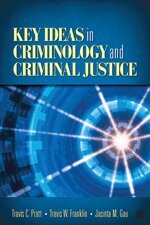
    Key Ideas in Criminology and Criminal Justice

    AvTravis C. Pratt,Jacinta M. Gau

    Häftad, Engelska, 2010

    1 747 kr

    Beställningsvara. Skickas inom 3-6 vardagar. Fri frakt över 249 kr.

    Fler format och utgåvor

    Inbunden

    2 712 kr

    Beskrivning

    Explores the key contributions to the fields of criminology and criminal justice from the late 18th century to today— and the conditions that led to their prominence

    The development of both criminology and criminal justice has been characterized by different theories and ideas that capture academic (and sometimes political) imaginations and send the discipline veering in entirely new directions. Why did these ideas catch on? What about them attracted and held scholars' attention and on occasion caused them to impact policy considerations? Why do they still have value today? These are the questions addressed in Key Ideas in Criminology and Criminal Justice.

    Key Ideas in Criminology and Criminal Justice is an innovative, fascinating treatment of some of the seminal theories in criminology and key policies in criminal justice, offering a detailed and nuanced picture of these core ideas. With a fluid, accessible, and lively writing style, this brief text is organized around major theories, ideas, and movements that mark a turning point in the field, and concludes with a discussion of the future of criminology and criminal justice. Readers will learn about the most salient criminological and criminal justice research and understand its influence on theory and policy. They will also understand the surrounding socio-political conditions from which the ideas sprang and the style and manner in which they were disseminated, both of which helped these scholarly contributions become cornerstones in the fields of criminology and criminal justice.

    Produktinformation

    • Utgivningsdatum:2010-12-21
    • Mått:152 x 228 x 9 mm
    • Vikt:310 g
    • Format:Häftad
    • Språk:Engelska
    • Antal sidor:208
    • Upplaga:1
    • Förlag:SAGE Publications
    • ISBN:9781412970143

    Utforska kategorier

    • Brottslighet och kriminologi inom Samhälle och politik

    Mer om författaren

    Travis C. Pratt received his degrees from Clark College, Washington State University (BA, Political Science; MA, Criminal Justice), and the University of Cincinnati (PhD, Criminal Justice). He has served on the faculty of the School of Criminal Justice at Rutgers University-Newark, was the Director of the Program in Criminal Justice at Washington State University, and a Professor the School of Criminology and Criminal Justice at Arizona State University. He is currently a Fellow with the University of Cincinnati Corrections Institute.His research and publications focus primarily on structural and integrated theories of crime and delinquency (including macro-level, multilevel, and individual-level approaches to the study of criminal/deviant behavior) and correctional policy (both institutional and community corrections). He has published over 100 articles that have appeared in the leading peer-reviewed journals in the field, including: Crime and Justice: A Review of Research; Criminology; Journal of Youth and Adolescence; Journal of Pediatrics; Journal of Quantitative Criminology; Journal of Research in Crime and Delinquency; and, Justice Quarterly. He received the 2006 Ruth Shonle Cavan Outstanding Young Scholar Award from the American Society of Criminology for his research and scholarship. Jacinta M. Gau, Ph.D., is an associate professor in the Department of Criminal Justice at the University of Central Florida. She received her doctorate from Washington State University in 2008. Her primary areas of research are policing and criminal justice policy, and she has a strong quantitative background. Dr. Gau’s work has appeared in journals such as Justice Quarterly, British Journal of Criminology, Criminal Justice and Behavior, Crime & Delinquency, Criminology & Public Policy, Police Quarterly, Policing: An International Journal of Police Strategies & Management, and the Journal of Criminal Justice Education. In addition to Statistics for Criminology and Criminal Justice, she is author of Criminal Justice Policy: Origins and Effectiveness (Oxford University Press) and co-author of Key Ideas in Criminology and Criminal Justice (SAGE Publications). Additionally, she co-edits Race and Justice: An International Journal, published by SAGE. Travis W. Franklin earned his Ph.D. in criminal justice from Washington State University in 2008 and is currently an assistant professor in the College of Criminal Justice at Sam Houston State University. His research interests focus on the effects of race and ethnicity on the processing of offenders through criminal courts, violence in correctional institutions, the causes and correlates of fear of crime, and biological predictors of crime and delinquency. His recent work has appeared in Criminal Justice and Behavior, Journal of Criminal Justice, Feminist Criminology, and Social Justice Research.

    Innehållsförteckning

    • 1. Introduction2. Key Idea: Rational Offending and Rational PunishmentThe Social Context of Criminal PunishmentBeccaria’s ProposalWhy it Caught OnInfluence: The Rise of the Classical School of CriminologyEmpirical Analyses and Critiques of Free Will, Rationality, and Deterrence3. Key Idea: The Science of Criminal BehaviorThe Social Context: A Time Without CriminologyThe Road to LombrosoLombroso and the Body of the CriminalThe Dissemination of Lombroso’s TheoriesCriticisms of Lombroso’s TheoriesLombroso’s Influence4. Key Idea: Understanding Crime and SocietyThe Social Context of the Early Twentieth CenturySocial Disorganization and Anomie/Strain TheoriesRejecting IndividualismThe Legacy of Anomie/Strain and Social Disorganization Theories5. Key Idea: Hirschi’s Social Bond/Social Control TheoryThe Social Context of the 1960sSocial Bond/Social Control TheoryThe Marketing of Social Bond/Social Control TheoryThe Legacy of Social Bond/Social Control Theory6. Key Idea: Rehabilitation is DeadThe Martinson ReportSocial ContextGetting the Word OutThe Influence of the Martinson Report7. Key Idea: Crime Control Through Selective IncapacitationThe Context: Criminology, Criminal Justice Policy, and Society in the 1970sJames Q. Wilson’s Thinking About CrimeWhy it Caught onSelective Incapacitation’s Effect on Criminal Justice and Criminology: Empirical Tests, Empirical Critiques, and Ethical Dilemmas8. Key Idea: The Police Can Control CrimeThe Context of Criminology and PolicingBroken Windows Theory: Revamping the Police RoleHow Broken Windows Theory Reached its AudienceThe Influence of Broken Windows TheoryEmpirical Tests and Critiques of Broken Windows Theory and Policing9. Key Idea: The War on DrugsWinning the War is Easy — Just Say No!The 1980s in ContextThe Magic in “Just Say No”The Impact of “Just Say No”10. Key Idea: Rehabilitation—Not Dead YetThe Principles of Risk, Need, and ResponsivitySocial ContextDisseminating the Principles of Effective RehabilitationThe Impact of Meta-Analysis and the Principles of Effective Rehabilitation11. Key Idea: Crime and the Life CourseThe Criminological Context of the Early 1990sLife Course Theories in CriminologyConstructing Testable TheoriesLife Course Theory Catches On12. Looking Back, Looking Forward: ConclusionsLooking Back: The Glaring Omissions?The Legitimate ContendersLooking Forward: The Future of Criminology and Criminal Justice