• Fri frakt över 249 kr
  • •
  • Snabba leveranser
  • •
  • Billiga böcker
Kundservice

Du är på sajten för privatpersoner.

Företag, bibliotek eller offentlig verksamhet?

Du handlar på classic.bokus.com, där alla dina funktioner finns intakta.
Till classic.bokus.com
Bokus logotyp. Gå till startsidan.
  • Erbjudanden
  • Nyheter
  • Student
  • Topplistor
  • Barn & ungdom
  • Bokus Play
  • E-böcker
  • Pocketböcker
  • Spel & pussel

Må bättre, för mindre! Upp till 50% rabatt på hälsoböcker

Sidfot

Mina sidor

    Hjälp

    • Kundservice
    • Vanliga frågor och svar
    • Frakt och leverans
    • Retur vid ångerrätt
    • Reklamera vara
    • Betalning
    • Köpvillkor
    • Allmänna villkor
    • Information om webbplatsens tillgänglighet

    Om Bokus

    • Om oss
    • Pressrum
    • För studenter
    • För företag
    • För bibliotek och offentlig verksamhet
    • För leverantörer
    • Hållbarhet

    Populärt

    • Aktuella erbjudanden
    • Presentkort
    • Studentlitteratur
    • Nya böcker
    • Topplistor
    • Signerade böcker
    • Engelska böcker

    Inspiration

    • Boktips
    • BookTok
    • Populära bokserier
    • Barnbokskaraktärer
    • Populära författare
    Logotyp för Bokus
    Följ oss på Facebook (extern länk)Följ oss på Instagram (extern länk)Följ oss på YouTube (extern länk)Följ oss på TikTok (extern länk)
    bokus @ CookiesAnpassa cookiesIntegritetspolicyKöpvillkor
    Till Citymail hemsida (extern länk)Till Budbee hemsida (extern länk)Till Postnord hemsida (extern länk)Till Schenker hemsida (extern länk)Till Early Bird hemsida (extern länk)Till Walleys hemsida (extern länk)
    1. Samhälle och politik
    2. Krig och försvar
    3. Militär strategi

    Military Politics and Democracy in the Andes

    AvMaiah Jaskoski

    Inbunden, Engelska, 2013

    567 kr

    Tillfälligt slut

    Beskrivning

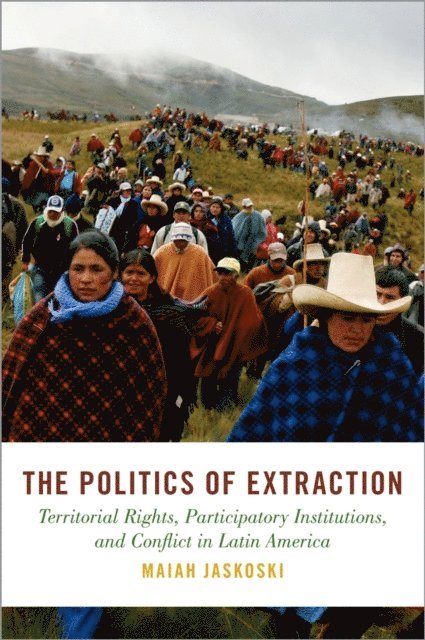
    "Military Politics and Democracy in the Andes" challenges conventional theories regarding military behavior in post-transition democracies. Through a deeply researched comparative analysis of the Ecuadorian and Peruvian armies, Maiah Jaskoski argues that militaries are concerned more with the predictability of their missions than with sovereignty objectives set by democratically elected leaders. Jaskoski gathers data from interviews with public officials, private sector representatives, journalists, and more than 160 Peruvian and Ecuadorian officers from all branches of the military. The results are surprising. Ecuador's army, for example, fearing the uncertainty of border defense against insurgent encroachment in the north, neglected this duty, thereby sacrificing the state's security goals, acting against government orders, and challenging democratic consolidation. Instead of defending the border, the army has opted to carry out policing functions within Ecuador, such as combating the drug trade.Additionally, by ignoring its duty to defend sovereignty, the army is available to contract out its policing services to paying, private companies that, relative to the public, benefit disproportionately from army security. Jaskoski also looks briefly at this theory's implications for military responsiveness to government orders in democratic Bolivia, Colombia, and Venezuela, and in newly formed democracies more broadly.
    Produktinformation

    • Utgivningsdatum:2013-10-10
    • Mått:152 x 229 x 26 mm
    • Vikt:544 g
    • Format:Inbunden
    • Språk:Engelska
    • Antal sidor:322
    • Förlag:Johns Hopkins University Press
    • ISBN:9781421409078

    Utforska kategorier

    • Militär strategi inom Samhälle och politik
    • Politik och statsskick inom Samhälle och politik

    Mer om författaren

    Maiah Jaskoski is an assistant professor of national security affairs at the Naval Postgraduate School in Monterey, California.

    Recensioner i media

    Academically rigorous... the specialized work belongs in college and university libraries with significant holdings in comparative politics and Latin American studies. Choice

    Innehållsförteckning

    • AcknowledgmentsAcronyms and Abbreviations1. Military Mission Performance in Latin AmericaChallenges to Security and Democratic Civil-Military Relations in the AndesExplaining Military Mission Performance in Democratic Latin AmericaCase Selection: A Focus on the Army in Peru and EcuadorThe DataOverview of the Analysis2. Civil-Military Relations in Democratic Peru and EcuadorHigh Constraints on Peru's MilitaryLow Constraints on Ecuador's Military3. Army Mission Performance in Post-Transition Peru and Ecuador, 1980s–1990sSovereignty before PolicingDeviations: Contradictions in Missions and Sovereignty NeglectAlternative Explanations4. Mission Constraint and Neglect of Counterinsurgency: Peru since 2000Staying in the BarracksInsecurity in Sendero ZonesPredictions of the Legitimacy, Professionalism, and Resource Maximization HypothesesArmy InactionRestrictions on Army AutonomyContradiction through Mission ConstraintThe Source of the Senior Cohort's "Need" for AutonomyNeglect of Counterinsurgency as a Way to Maintain Predictability for PatrolsReturn to Assertive CounterinsurgencyNarrow Mission Beliefs and Minimal Police Work5. Mission Overload and Neglect of Border Defense: Ecuador since 2000Neglecting a Porous Border while Policing the InteriorInsecurity in Northern EcuadorPredictions of the Legitimacy, Professionalism, and Resource Maximization HypothesesAssertive PolicingOverwhelming Security ResponsibilitiesPolicing to Avoid ObsolescenceContradiction through Mission OverloadManaging the ContradictionThe Contradiction EscalatesAlternative Explanations: Revisiting Legitimacy6. Battalions for Hire: Private Army Contracts in Peru and EcuadorResource-Hungry Army UnitsLocal Client InfluenceLimits to Client Influence7. Comparative Perspectives on Military Mission PerformanceColombia: Tolerance of Policing amid Ongoing InsurgencyVenezuela: Mission Loss, Organizational Trauma, and Rejection of Police WorkBolivia: Policing despite Organizational TraumaExtreme Executive Control: Trends in Venezuela and BoliviaReflections on Assigning Militaries to Conduct Police WorkAppendix: Field Research MethodologyNotesReferencesIndex