• Fri frakt över 249 kr
  • •
  • Snabba leveranser
  • •
  • Billiga böcker
Kundservice

Du är på sajten för privatpersoner.

Företag, bibliotek eller offentlig verksamhet?

Du handlar på classic.bokus.com, där alla dina funktioner finns intakta.
Till classic.bokus.com
Bokus logotyp. Gå till startsidan.
  • Erbjudanden
  • Nyheter
  • Student
  • Topplistor
  • Barn & ungdom
  • Bokus Play
  • E-böcker
  • Pocketböcker
  • Spel & pussel

10% rabatt på allt med kod: NYSTART10 →

Sidfot

Mina sidor

    Hjälp

    • Kundservice
    • Vanliga frågor och svar
    • Frakt och leverans
    • Retur vid ångerrätt
    • Reklamera vara
    • Betalning
    • Köpvillkor
    • Allmänna villkor
    • Information om webbplatsens tillgänglighet

    Om Bokus

    • Om oss
    • Pressrum
    • För studenter
    • För företag
    • För bibliotek och offentlig verksamhet
    • För leverantörer
    • Hållbarhet

    Populärt

    • Aktuella erbjudanden
    • Presentkort
    • Studentlitteratur
    • Nya böcker
    • Topplistor
    • Signerade böcker
    • Engelska böcker

    Inspiration

    • Boktips
    • BookTok
    • Populära bokserier
    • Barnbokskaraktärer
    • Populära författare
    Logotyp för Bokus
    Följ oss på Facebook (extern länk)Följ oss på Instagram (extern länk)Följ oss på YouTube (extern länk)Följ oss på TikTok (extern länk)
    bokus @ CookiesAnpassa cookiesIntegritetspolicyKöpvillkor
    Till Citymail hemsida (extern länk)Till Budbee hemsida (extern länk)Till Postnord hemsida (extern länk)Till Schenker hemsida (extern länk)Till Early Bird hemsida (extern länk)Till Walleys hemsida (extern länk)
    1. Naturvetenskap och teknik
    2. Matematik och naturvetenskap
    3. Matematik

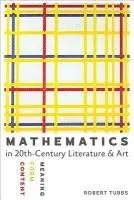
    Mathematics in Twentieth-Century Literature and Art

    Content, Form, Meaning

    AvRobert Tubbs

    Inbunden, Engelska, 2014

    675 kr

    Tillfälligt slut

    Fler format och utgåvor

    Häftad

    420 kr

    Beskrivning

    During the twentieth century, many artists and writers turned to abstract mathematical ideas to help them realize their aesthetic ambitions. Man Ray, Marcel Duchamp, and, perhaps most famously, Piet Mondrian used principles of mathematics in their work. Was it mere coincidence, or were these artists simply following their instincts, which in turn were ruled by mathematical underpinnings, such as optimal solutions for filling a space? If math exists within visual art, can it be found within literary pursuits? In short, just what is the relationship between mathematics and the creative arts? In this provocative, original exploration of mathematical ideas in art and literature, Robert Tubbs argues that the links are much stronger than previously imagined and exceed both coincidence and commonality of purpose. Not only does he argue that mathematical ideas guided the aesthetic visions of many twentieth-century artists and writers, Tubbs further asserts that artists and writers used math in their creative processes even though they seemed to have no affinity for mathematical thinking.In the end, Tubbs makes the case that art can be better appreciated when the math that inspired it is better understood. An insightful tour of the great masters of the last century and an argument that challenges long-held paradigms, Mathematics in Twentieth-Century Literature and Art will appeal to mathematicians, humanists, and artists, as well as instructors teaching the connections among math, literature, and art.

    Produktinformation

    • Utgivningsdatum:2014-09-09
    • Mått:152 x 229 x 18 mm
    • Vikt:363 g
    • Format:Inbunden
    • Språk:Engelska
    • Antal sidor:184
    • Förlag:Johns Hopkins University Press
    • ISBN:9781421413792

    Utforska kategorier

    • Matematik inom Naturvetenskap och teknik
    • Konstteori inom Kultur
    • Litteraturvetenskap inom Skönlitteratur

    Mer om författaren

    Robert Tubbs is an associate professor of mathematics at the University of Colorado-Boulder and author of What Is a Number? Mathematical Concepts and Their Origins, also published by Johns Hopkins.

    Recensioner i media

    For those viewing mathematics and the creative arts as distinctly separate endeavors, Tubbs provides an insightful treatise that proves otherwise... Though the content of Tubbs's book is challenging, it is also accessible and should interest many on both sides of the perceived divide between mathematics and the arts. Choice A fascinating journey through the works of modern art and literature... This book can be seen as a guide to understanding the various movements that emerged within artistic circles in the 20th century. Tubbs does an excellent job of leading the reader through this world of ideas, gently guiding the non-mathematicians through the panorama of advanced mathematics, and mathematicians and those who are artistically naive to an appreciate of the world of modern art and literature... The book serves as a compass to guide the reader to a better understanding of modern art. -- Jay Kapraff LMS Newsletter A beautiful narration... Every chapter is well balanced between the mathematical side and the art side. -- Riccardo Moschetti Zentralblatt Math Books like Mathematics in Twentieth-Century Literature and Art help us get rid of prejudices, and indeed open our eyes to see. -- Capi Corrales-Rodriganez Mathematical Reviews Tubbs's exposition proves so clear and thorough that the mathematical novice reading Mathematics in Twentieth-Century Literature and Art receives an introductory course in the fundamentals of higher mathematics... Reluctant mathematicians will be delighted to discover that Tubbs's mathematical explanations afford new analyses of canonical artworks. Make Literary Magazine

    Innehållsförteckning

    • PrefaceChronology1. Surrealist Writing, Mathematical Surfaces, and New GeometriesMathematical Imagery and ImagesMan Ray and Mathematical SurfacesGeometries, Flat and Curved2. Objects, Axioms, and ConstraintsBlack Squares and AxiomsGeometry without Objects / Literature without Words3. Abstraction in Art, Literature, and MathematicsThe White PaintingsAbstract NumbersStructure4. Literature, the Möbius Strip, and Infinite NumbersConcrete ArtThe Möbius Strip and LiteratureConcrete Mathematics and Infinite Numbers5. Klein Forms and the Fourth DimensionIn the LabyrinthSurfaces, Mysticism, and the Fourth Dimension6. Paths, Graphs, and TextsLiterature and ChoiceMathematical Graph TheoryA Play Based on a Graph7. Poetry, Permutations, and Zeckendorf's TheoremStructured and Programmed PoemsConcrete Poetry and Mathematical Images8. Numbers and MeaningTargets, Numbers, and EquationsNumbers: Imagined and ImaginaryRandomness, Arbitrariness, and Perfect NumbersDada PoetryDisorder and ArtArbitrariness10. The ArtworldNotesBibliographyIndex