• Fri frakt över 249 kr
  • •
  • Snabba leveranser
  • •
  • Billiga böcker
Kundservice

Du är på sajten för privatpersoner.

Företag, bibliotek eller offentlig verksamhet?

Du handlar på classic.bokus.com, där alla dina funktioner finns intakta.
Till classic.bokus.com
Bokus logotyp. Gå till startsidan.
  • Erbjudanden
  • Nyheter
  • Student
  • Topplistor
  • Barn & ungdom
  • Bokus Play
  • E-böcker
  • Pocketböcker
  • Spel & pussel

10% rabatt på allt med kod NYSTART10 →

Sidfot

Mina sidor

    Hjälp

    • Kundservice
    • Vanliga frågor och svar
    • Frakt och leverans
    • Retur vid ångerrätt
    • Reklamera vara
    • Betalning
    • Köpvillkor
    • Allmänna villkor
    • Information om webbplatsens tillgänglighet

    Om Bokus

    • Om oss
    • Pressrum
    • För studenter
    • För företag
    • För bibliotek och offentlig verksamhet
    • För leverantörer
    • Hållbarhet

    Populärt

    • Aktuella erbjudanden
    • Presentkort
    • Studentlitteratur
    • Nya böcker
    • Topplistor
    • Signerade böcker
    • Engelska böcker

    Inspiration

    • Boktips
    • BookTok
    • Populära bokserier
    • Barnbokskaraktärer
    • Populära författare
    Logotyp för Bokus
    Följ oss på Facebook (extern länk)Följ oss på Instagram (extern länk)Följ oss på YouTube (extern länk)Följ oss på TikTok (extern länk)
    bokus @ CookiesAnpassa cookiesIntegritetspolicyKöpvillkor
    Till Citymail hemsida (extern länk)Till Budbee hemsida (extern länk)Till Postnord hemsida (extern länk)Till Schenker hemsida (extern länk)Till Early Bird hemsida (extern länk)Till Walleys hemsida (extern länk)
    1. Skönlitteratur
    2. Litteraturvetenskap
    3. Litteraturvetenskap

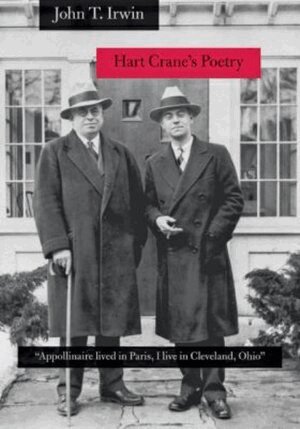
    Hart Crane's Poetry

    "Appollinaire lived in Paris, I live in Cleveland, Ohio"

    AvJohn T. Irwin

    Häftad, Engelska, 2014

    427 kr

    Tillfälligt slut

    Fler format och utgåvor

    Inbunden

    Tillf. slut

    Beskrivning

    In one of his letters Hart Crane wrote, "Appollinaire lived in Paris, I live in Cleveland, Ohio," comparing - misspelling and all - the great French poet's cosmopolitan roots to his own more modest ones in the midwestern United States. Rebelling against the notion that his work should relate to some European school of thought, Crane defiantly asserted his freedom to be himself, a true American writer. John T. Irwin, long a passionate and brilliant critic of Crane, gives readers the first major interpretation of the poet's work in decades. Irwin aims to show that Hart Crane's epic The Bridge is the best twentieth-century long poem in English. Irwin convincingly argues that, compared to other long poems of the century, The Bridge is the richest and most wide-ranging in its mythic and historical resonances, the most inventive in its combination of literary and visual structures, the most subtle and compelling in its psychological underpinnings.Irwin brings a wealth of new and varied scholarship to bear on his critical reading of the work - from art history to biography to classical literature to philosophy - revealing The Bridge to be the near-perfect synthesis of American myth and history that Crane intended. Irwin contends that the most successful entryway to Crane's notoriously difficult shorter poems is through a close reading of The Bridge. Having admirably accomplished this, Irwin analyzes Crane's poems in White Buildings and his last poem, "The Broken Tower," through the larger context of his epic, showing how Crane, in the best of these, worked out the structures and images that were fully developed in The Bridge. Thoughtful, deliberate, and extraordinarily learned, this is the most complete and careful reading of Crane's poetry available. Hart Crane may have lived in Cleveland, Ohio, but, as Irwin masterfully shows, his poems stand among the greatest written in the English language.

    Produktinformation

    • Utgivningsdatum:2014-03-02
    • Mått:178 x 254 x 27 mm
    • Vikt:771 g
    • Format:Häftad
    • Språk:Engelska
    • Antal sidor:440
    • Förlag:Johns Hopkins University Press
    • ISBN:9781421413877

    Utforska kategorier

    • Litteraturvetenskap inom Skönlitteratur
    • Litteraturteori inom Skönlitteratur

    Mer om författaren

    John T. Irwin is the Decker Professor in the Humanities at Johns Hopkins University. His other books include F. Scott Fitzgerald's Fiction: "An Almost Theatrical Innocence"; The Mystery to a Solution: Poe, Borges, and the Analytic Detective Story; and Unless the Threat of Death Is Behind Them: Hard-Boiled Fiction and Film Noir, all published by Johns Hopkins.

    Recensioner i media

    Irwin has written a book of heroic meticulousness which justifies the work of Crane to the mature and the scholarly... A capacious and provocative study. -- Vidyan Ravinthiran Times Literary Supplement Crane and his admirers are beneficiaries of Irwin's fine book, the most learned, perceptive, comprehensive analysis of the work ever published... Essential. Choice A welcome addition to the critical shelf on the poet... the most deeply felt and closely argued case thus far for Hart Crane as not merely an accomplished poet but an impressively learned one at that. -- George Monteiro Sewanee Review John T. Irwin's Hart Crane's Poetry is a late arrival from 2011 that merits notice and returning attention... Irwin does a great service in making this wide-ranging analysis available in a single volume. The Year's Work in English Studies

    Innehållsförteckning

    • Part One: The Bridge1. The Pictorial and the Poetic; The Bridge as a Prophetic Vision of Origins2. The Visual Structure of Prophetic Vision; a Simultaneous Glimpse Before and Behind3. Spengler's Reading of Perspective as a Culture-Symbol4. The Bridge and the Paintings in the Sistine Chapel; Moses and Jesus: Columbus and Whitman; Joseph Stella; El Greco's Agony in the Garden; the Grail; Dionysus and Jesus5. Counterpoint in The Bridge6. Foreshadowing and Lateral Foreshadowing; the Grail Quest; Eliot's The Waste Land7. The Return to Origin; the Total Return to the Womb; the Primal Scene; Vision and Invisibility; the Dual Identification8. The Reversal of the Figures of Father and Mother in "Indiana"; Crane's Dream of the Black Man by the River; Crane's Quarrel with His Father; the Composition of "Black Tambourine"9. Crane's Dream of His Mother's Trunk in the Attic10. Fantasies of Return to the Womb and the Primal Scene; Three Dimensions Reduced to Two as a Sign of Body Transcendence; the Triple Archetype; Goethe's Faust; Plato's Cave Allegory as a Sublimated Womb Fantasy; Helen as Mother; the Influence of Williams and Nietzsche; Demeter, Kore, and the Amerindian Corn Mother11. Building the Virgin; Crane's "To Liberty"; Lazarus's "The New Colossus"; Helen and Psyche; Astraea and the Constellation Virgo; Demeter and Kore; the Virgin Mary and Queen Elizabeth I12. The Education of Henry Adams; Arnold's "Stanzas from the Grande Chartreuse"; Wandering between Two Worlds; Seneca's Medea; Whitman and the Rebound Seed13. "Three Songs"; Golden Hair; "Quaker Hill" and the Motherly Artist; the Return of the Golden Age; Astraea and Atlantis14. Epic Predecessors: Aeneas and Dido; Survival through a Part-Object; Stellar Translation and the Golden-Haired Grain15. The Historical Pocahontas and the Mythical Quetzalcoatl; Prescott, Spence, and D. H. Lawrence as Influences on The Bridge; Waldo Frank's Our America and the Image of Submergence16. Nietzsche and the Return of the Old Gods; Zarathustra and Quetzalcoatl; the Eagle and the Serpent; the Dance17. The Aeneid, Book 6, and "The Tunnel"; "Cutty Sark" and Glaucus in Ovid; Burns's "Tam o' Shanter"; Glaucus in Keats's Endymion18. Time and Eternity in "Cutty Sark"; Stamboul Rose, Atlantis Rose, and Dante's Rose; Moby-Dick and "Cutty Sark"19. The Historical Cutty Sark; Hero and Leander; Jason and the Argo; Dante and the Argo20. Constellations and The Bridge21. Constellations Continued; Panis Angelicus22. Time and Eternity; Temporal Narrative and Spatial Configuration; the Bridge as Memory Place; "Atlantis"; One Arc Synoptic of All Times23. "Atlantis" and the Image of Flight; Shelley's "To a Skylark"; Pater and the Tears of Dionysus24. Love and Light; Love-as-Bridgeship; Pater and Botticelli's Venus; Venus and the Rainbow; Foam-Born; Pyramids and Fire; From Ritual to Romance; Venus and Adonis25. Three Structures; the Visualization of the Womb Fantasy in The Last Judgement; the Transumptive Relationship26. Michelangelo's Self-Portrait; Marsyas and the Suffering ArtistPart Two: White Buildings and "The Broken Tower"1. "Legend," "Black Tambourine," "Emblems of Conduct," "My Grandmother's Love Letters," "Sunday Morning Apples"2. "Praise for an Urn," "Garden Abstract," "Stark Major," "Chaplinesque"3. "Pastorale," "In Shadow," "The Fernery," "North Labrador"4. "Repose of Rivers," "Paraphrase," "Possessions"5. "Lachrymae Christi"6. "Passage"7. "The Wine Menagerie," "Recitative"8. "For the Marriage of Faustus and Helen"9. "At Melville's Tomb," "Voyages I, II, III"10. "Voyages IV, V, VI"11. "The Broken Tower"Notes to Part One: The BridgeWorks CitedIndex