• Fri frakt över 249 kr
  • •
  • Snabba leveranser
  • •
  • Billiga böcker
Kundservice

Du är på sajten för privatpersoner.

Företag, bibliotek eller offentlig verksamhet?

Du handlar på classic.bokus.com, där alla dina funktioner finns intakta.
Till classic.bokus.com
Bokus logotyp. Gå till startsidan.
  • Erbjudanden
  • Nyheter
  • Student
  • Topplistor
  • Barn & ungdom
  • Bokus Play
  • E-böcker
  • Pocketböcker
  • Spel & pussel

10% rabatt på allt med kod NYSTART10 →

Sidfot

Mina sidor

    Hjälp

    • Kundservice
    • Vanliga frågor och svar
    • Frakt och leverans
    • Retur vid ångerrätt
    • Reklamera vara
    • Betalning
    • Köpvillkor
    • Allmänna villkor
    • Information om webbplatsens tillgänglighet

    Om Bokus

    • Om oss
    • Pressrum
    • För studenter
    • För företag
    • För bibliotek och offentlig verksamhet
    • För leverantörer
    • Hållbarhet

    Populärt

    • Aktuella erbjudanden
    • Presentkort
    • Studentlitteratur
    • Nya böcker
    • Topplistor
    • Signerade böcker
    • Engelska böcker

    Inspiration

    • Boktips
    • BookTok
    • Populära bokserier
    • Barnbokskaraktärer
    • Populära författare
    Logotyp för Bokus
    Följ oss på Facebook (extern länk)Följ oss på Instagram (extern länk)Följ oss på YouTube (extern länk)Följ oss på TikTok (extern länk)
    bokus @ CookiesAnpassa cookiesIntegritetspolicyKöpvillkor
    Till Citymail hemsida (extern länk)Till Budbee hemsida (extern länk)Till Postnord hemsida (extern länk)Till Schenker hemsida (extern länk)Till Early Bird hemsida (extern länk)Till Walleys hemsida (extern länk)
    1. Sport, fritid och hobby
    2. Fordonsböcker
    3. Böcker om tåg

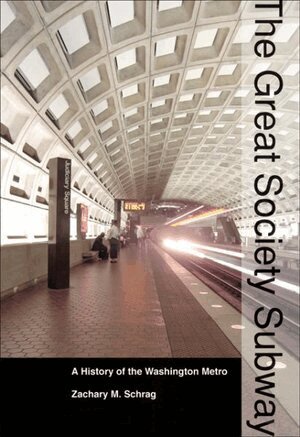
    Great Society Subway

    A History of the Washington Metro

    AvZachary M. Schrag

    Häftad, Engelska, 2014

    Del i serien Creating the North American Landscape

    387 kr

    Beställningsvara. Skickas inom 5-8 vardagar. Fri frakt över 249 kr.

    Beskrivning

    Drivers in the nation's capital face a host of hazards: high-speed traffic circles, presidential motorcades, jaywalking tourists, and bewildering signs that send unsuspecting motorists from the Lincoln Memorial into suburban Virginia in less than two minutes. And parking? Don't bet on it unless you're in the fast lane of the Capital Beltway during rush hour. Little wonder, then, that so many residents and visitors rely on the Washington Metro, the 106-mile rapid transit system that serves the District of Columbia and its inner suburbs. In the first comprehensive history of the Metro, Zachary M. Schrag tells the story of the Great Society Subway from its earliest rumblings to the present day, from Arlington to College Park, Eisenhower to Marion Barry. Unlike the pre-World War II rail systems of New York, Chicago, and Philadelphia, the Metro was built at a time when most American families already owned cars, and when most American cities had dedicated themselves to freeways, not subways. Why did the nation's capital take a different path? What were the consequences of that decision?Using extensive archival research as well as oral history, Schrag argues that the Metro can be understood only in the political context from which it was born: the Great Society liberalism of the Kennedy, Johnson, and Nixon administrations. The Metro emerged from a period when Americans believed in public investments suited to the grandeur and dignity of the world's richest nation. The Metro was built not merely to move commuters, but in the words of Lyndon Johnson, to create "a place where the city of man serves not only the needs of the body and the demands of commerce but the desire for beauty and the hunger for community." Schrag scrutinizes the project from its earliest days, including general planning, routes, station architecture, funding decisions, land-use impacts, and the behavior of Metro riders. The story of the Great Society Subway sheds light on the development of metropolitan Washington, postwar urban policy, and the promises and limits of rail transit in American cities.

    Produktinformation

    • Utgivningsdatum:2014-09-26
    • Mått:178 x 254 x 23 mm
    • Vikt:658 g
    • Format:Häftad
    • Språk:Engelska
    • Serie:Creating the North American Landscape
    • Antal sidor:376
    • Förlag:Johns Hopkins University Press
    • ISBN:9781421415772

    Utforska kategorier

    • Böcker om tåg inom Sport, fritid och hobby

    Mer om författaren

    Zachary M. Schrag is a professor of history at George Mason University.

    Recensioner i media

    Extensively researched, cleverly structured, and finely written, this book stands out for the way it provides an integral, comprehensive account of a key urban service. -- Georg Leidenberger American Historical Review In this superbly-written book, Zachary Schrag... explains how this achievement came about and what its impact is... A joy to read. -- Gregory L. Thompson Technology and Culture The author makes us privy to the thinking that went into the system's design. -- Dennis Drabelle Washington Post Book World Schrag does a thorough job with his subject. -- Rachel DiCarlo Washington Times A timely look at how the Metro got where it is today. Civil Engineering It's a fascinating look at a modern transit triumph. Trains A graceful, fact-packed history of the genesis, development, and current state of the Washington Metro system. H-DC The Great Society Subway is a great book for students of contemporary transit history. -- Alexander D. Mitchell Railfan and Railroad An excellent book... a welcome and readable addition to the literature of how we construct the societies we inhabit. -- Alex Marshall Regional Plan Association Spotlight An exhaustively researched, engagingly written study of the planning, designing, building, and operating of the Washington Metro. -- Sy Adler Journal of American History [Schrag] shows the interrelationship of citizens' hopes and fears, visionaries' ideas, politicians' need to succeed, engineers' practical requirements, and the ebb and flow of affecting events over time. It is a fascinating story well told... a love story by an historian for his city and its people. -- William W. Millar Journal of the American Planning Association A masterful new book... Schrag's The Great Society Subway gives an eloquent and hopeful explanation of how this marvelous system came to be, and backs it up with an enormous amount of evidence and keen historical perspective. Washington History A meticulously researched account. -- Phil Hervey Urban Land Schrag has written a valuable study of the role of infrastructure in shaping the modern, urban world, and he aptly shows both the possibiities and limitations of major public investments... insights especially illuminating. -- J. Lawrence Lee CRM: Journal of Heritage Stewardship A welcome and readable addition to the literature of how we construct the societies we inhabit. -- Alex Marshall Hartford Courant Without question high drama... I strongly recommend that you put down the latest Baldacci mystery and ready this very well written, comprehensive, and entertaining book... one terrific book that belongs on lots of shelves, from planners to historians to rail buffs to politicians. -- Konrad J. Perlman Journal of Planning Literature A remarkable book. It has drama, it has pathos, it has passion, it has literary grace. -- Bob Post Journal of Transport History In clear and engaging prose, Schrag interweaves facts with a wide range of pragmatic, political, and aesthetic matters with discussions of those who posed and resolved the issues. -- Pamela Scott Journal of Social History In clear and engaging prose, Schrag interweaves facts with a wide range of pragmatic, political, and aesthetic matters with discussions of those who posed and resolved the issues. -- Pamela Scott Journal of the Society of Architectural Historians

    Innehållsförteckning

    • AcknowledgmentsAbbreviationsIntroduction1. The City, 1791–19552. The Plans, 1955–19653. The Stations, 1965–19674. The Region, 1966–19675. The Bridge, 1966–19716. The Builders, 1972–19767. The Money, 1972–19808. The District9. The Suburbs10. The RidersConclusionNotesIndex