• Fri frakt över 249 kr
  • •
  • Snabba leveranser
  • •
  • Billiga böcker
Kundservice

Du är på sajten för privatpersoner.

Företag, bibliotek eller offentlig verksamhet?

Du handlar på classic.bokus.com, där alla dina funktioner finns intakta.
Till classic.bokus.com
Bokus logotyp. Gå till startsidan.
  • Erbjudanden
  • Nyheter
  • Student
  • Topplistor
  • Barn & ungdom
  • Bokus Play
  • E-böcker
  • Pocketböcker
  • Spel & pussel

10% rabatt på allt med kod NYSTART10 →

Sidfot

Mina sidor

    Hjälp

    • Kundservice
    • Vanliga frågor och svar
    • Frakt och leverans
    • Retur vid ångerrätt
    • Reklamera vara
    • Betalning
    • Köpvillkor
    • Allmänna villkor
    • Information om webbplatsens tillgänglighet

    Om Bokus

    • Om oss
    • Pressrum
    • För studenter
    • För företag
    • För bibliotek och offentlig verksamhet
    • För leverantörer
    • Hållbarhet

    Populärt

    • Aktuella erbjudanden
    • Presentkort
    • Studentlitteratur
    • Nya böcker
    • Topplistor
    • Signerade böcker
    • Engelska böcker

    Inspiration

    • Boktips
    • BookTok
    • Populära bokserier
    • Barnbokskaraktärer
    • Populära författare
    Logotyp för Bokus
    Följ oss på Facebook (extern länk)Följ oss på Instagram (extern länk)Följ oss på YouTube (extern länk)Följ oss på TikTok (extern länk)
    bokus @ CookiesAnpassa cookiesIntegritetspolicyKöpvillkor
    Till Citymail hemsida (extern länk)Till Budbee hemsida (extern länk)Till Postnord hemsida (extern länk)Till Schenker hemsida (extern länk)Till Early Bird hemsida (extern länk)Till Walleys hemsida (extern länk)
    1. Skönlitteratur
    2. Litteraturvetenskap

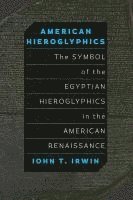
    American Hieroglyphics

    The Symbol of the Egyptian Hieroglyphics in the American Renaissance

    AvJohn T. Irwin

    Häftad, Engelska, 2016

    669 kr

    Beställningsvara. Skickas inom 5-8 vardagar. Fri frakt över 249 kr.

    Beskrivning

    The discovery of the Rosetta Stone and the subsequent decipherment of Egyptian hieroglyphics captured the imaginations of nineteenth-century American writers and provided a focal point for their speculations on the relationships between sign, symbol, language, and meaning. Through fresh readings of classic works by Emerson, Thoreau, Whitman, Poe, Hawthorne, and Melville, John T. Irwin's American Hieroglyphics examines the symbolic mode associated with the pictographs. Irwin demonstrates how American Symbolist literature of the period was motivated by what he calls "hieroglyphic doubling," the use of pictographic expression as a medium of both expression and interpretation. Along the way, he touches upon a wide range of topics that fascinated people of the day, including the journey to the source of the Nile and ideas about the origin of language.

    Produktinformation

    • Utgivningsdatum:2016-11-10
    • Mått:152 x 229 x 28 mm
    • Vikt:544 g
    • Format:Häftad
    • Språk:Engelska
    • Antal sidor:384
    • Förlag:Johns Hopkins University Press
    • ISBN:9781421421155

    Utforska kategorier

    • Litteraturvetenskap inom Skönlitteratur
    • Litteraturvetenskap inom Skönlitteratur
    • Litteraturteori inom Skönlitteratur

    Mer om författaren

    John T. Irwin is the Decker Professor in the Humanities emeritus at Johns Hopkins University. His books include F. Scott Fitzgerald's Fiction: "An Almost Theatrical Innocence"; Hart Crane's Poetry: "Appollinaire lived in Paris, I live in Cleveland, Ohio"; The Mystery to a Solution: Poe, Borges, and the Analytic Detective Story; and Unless the Threat of Death Is Behind Them: Hard-Boiled Fiction and Film Noir.

    Innehållsförteckning

    • PrefacePart I: Emerson, Thoreau, and WhitmanChapter 1. Champollion and the Historical Background; Emerson's Hieroglyphical EmblemsChapter 2. Thoreau: The Single, Basic Form — Patenting a LeafChapter 3. Whitman: Hieroglyphic Bibles and Phallic SongsPart II: PoeChapter 4. The Hieroglyphics and the Quest for Origins: The Myth of Hieroglyphic DoublingChapter 5. Ends and Origins: The Voyage to the Polar Abyss and the Journey to the Source of the Nile; The Survival of the ManuscriptChapter 6. Certainty and Credibility — Self-Evidence and Self-Reference; Nietzsche and Tragedy — Whitman and Opera; The Open RoadChapter 7. Writing Self / Written Self; The Dark Double; The Overwhelming of the Vessel Chapter 8. Cannibalism and Sacrifice; Metaphors of the Body — Transfiguration, Transubstantiation, Resurrection, and AscensionChapter 9. Narcissus and the Illusion of DepthChapter 10. Self-Recognition; Deciphering a Mnemic Inscription; Historical Amnesia and Personal AnamnesisChapter 11. Repetition; Symbolic Death and Rebirth; The Infinite and Indefinite; The Mechanism of ForeshadowingChapter 12. The Unfinished Narrative; The Cavern Inscription on Tsalal; Survival in an ImageChapter 13. The White Shadow; Imaging the Indefinite; Reading the Spirit from the Letter; The Finality of Revenge; The Alogical Status of the SelfChapter 14. The Return to Oneness; Breaking the Crypt; The Limits of Interpretation; The Ultimate CertaintyPart III: Hawthorne and MelvilleChapter 15. Hawthorne: The Ambiguity of the Hieroglyphics; The Unstable Self and Its Roles; Mirror Image and Phonetic Veil; The Feminine Role of the Artist; Veil and Phallus; The Book as Partial ObjectChapter 16. Melville: The Indeterminate Ground; A Conjunction of Fountain and Vortex; The Myth of Isis and Osiris; Master Oppositions; The Doubleness of the Self and the Illusion of Consistent Character; Dionysus and Apollo; Mask and Phallus; The Chain of Partial ObjectsEpilogueNotesIndex