• Fri frakt över 249 kr
  • •
  • Snabba leveranser
  • •
  • Billiga böcker
Kundservice

Du är på sajten för privatpersoner.

Företag, bibliotek eller offentlig verksamhet?

Du handlar på classic.bokus.com, där alla dina funktioner finns intakta.
Till classic.bokus.com
Bokus logotyp. Gå till startsidan.
  • Erbjudanden
  • Nyheter
  • Student
  • Topplistor
  • Barn & ungdom
  • Bokus Play
  • E-böcker
  • Pocketböcker
  • Spel & pussel

10% rabatt på allt med kod NYSTART10 →

Sidfot

Mina sidor

    Hjälp

    • Kundservice
    • Vanliga frågor och svar
    • Frakt och leverans
    • Retur vid ångerrätt
    • Reklamera vara
    • Betalning
    • Köpvillkor
    • Allmänna villkor
    • Information om webbplatsens tillgänglighet

    Om Bokus

    • Om oss
    • Pressrum
    • För studenter
    • För företag
    • För bibliotek och offentlig verksamhet
    • För leverantörer
    • Hållbarhet

    Populärt

    • Aktuella erbjudanden
    • Presentkort
    • Studentlitteratur
    • Nya böcker
    • Topplistor
    • Signerade böcker
    • Engelska böcker

    Inspiration

    • Boktips
    • BookTok
    • Populära bokserier
    • Barnbokskaraktärer
    • Populära författare
    Logotyp för Bokus
    Följ oss på Facebook (extern länk)Följ oss på Instagram (extern länk)Följ oss på YouTube (extern länk)Följ oss på TikTok (extern länk)
    bokus @ CookiesAnpassa cookiesIntegritetspolicyKöpvillkor
    Till Citymail hemsida (extern länk)Till Budbee hemsida (extern länk)Till Postnord hemsida (extern länk)Till Schenker hemsida (extern länk)Till Early Bird hemsida (extern länk)Till Walleys hemsida (extern länk)
    1. Skönlitteratur
    2. Litteraturvetenskap

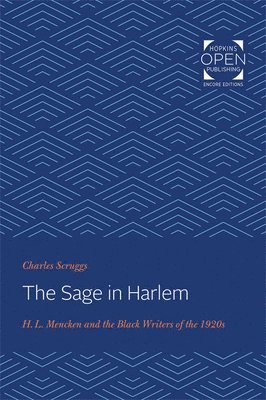
    Sage in Harlem

    H. L. Mencken and the Black Writers of the 1920s

    AvCharles Scruggs

    Häftad, Engelska, 2020

    419 kr

    Beställningsvara. Skickas inom 5-8 vardagar. Fri frakt över 249 kr.

    Beskrivning

    Originally published in 1984. The Sage in Harlem establishes H. L. Mencken as a catalyst for the blossoming of black literary culture in the 1920s and chronicles the intensely productive exchange of ideas between Mencken and two generations of black writers: the Old Guard who pioneered the Harlem Renaissance and the Young Wits who sought to reshape it a decade later. From his readings of unpublished letters and articles from black publications of the time, Charles Scruggs argues that black writers saw usefulness in Mencken's critique of American culture, his advocacy of literary realism, and his satire of America. They understood that realism could free them from the pernicious stereotypes that had hounded past efforts at honest portraiture, and that satire could be the means whereby the white man might be paid back in his own coin. Scruggs contends that the content of Mencken's observations, whether ludicrously narrow or dazzlingly astute, was of secondary importance to the Harlem intellectuals. It was the honesty, precision, and fearlessness of his expression that proved irresistible to a generation of artists desperate to be taken seriously. The writers of the Harlem Renaissance turned to Mencken as an uncompromising—and uncondescending—commentator whose criticisms were informed by deep interest in African American life but guided by the same standards he applied to all literature, whatever its source. The Sage in Harlem demonstrates how Mencken, through the example of his own work, his power as editor of the American Mercury, and his dedication to literary quality, was able to nurture the developing talents of black authors from James Weldon Johnson to Richard Wright.

    Produktinformation

    • Utgivningsdatum:2020-01-26
    • Mått:152 x 229 x 13 mm
    • Vikt:318 g
    • Format:Häftad
    • Språk:Engelska
    • Antal sidor:228
    • Förlag:Johns Hopkins University Press
    • ISBN:9781421431383

    Utforska kategorier

    • Litteraturvetenskap inom Skönlitteratur

    Mer om författaren

    Charles Scruggs is a professor of American literature at the University of Arizona and author of Sweet Home: Invisible Cities in the Afro-American Novel.

    Innehållsförteckning

    • AcknowledgmentsChapter 1. Why Mencken?Chapter 2. Mencken and "The Colored Brother"Chapter 3. The Age of Satire: The Teacher and His PupilsChapter 4. The Dream of the Secular City: Mencken Locke, and the "Little American Renaissance"Chapter 5. Et Tu Mencken? The End of the RomanceChapter 6. The Negro Novel and the Limits of RealismChapter 7. EpilogueNotesIndex