• Fri frakt över 249 kr
  • •
  • Snabba leveranser
  • •
  • Billiga böcker
Kundservice

Du är på sajten för privatpersoner.

Företag, bibliotek eller offentlig verksamhet?

Du handlar på classic.bokus.com, där alla dina funktioner finns intakta.
Till classic.bokus.com
Bokus logotyp. Gå till startsidan.
  • Erbjudanden
  • Nyheter
  • Student
  • Topplistor
  • Barn & ungdom
  • Bokus Play
  • E-böcker
  • Pocketböcker
  • Spel & pussel

10% rabatt på allt med kod NYSTART10 →

Sidfot

Mina sidor

    Hjälp

    • Kundservice
    • Vanliga frågor och svar
    • Frakt och leverans
    • Retur vid ångerrätt
    • Reklamera vara
    • Betalning
    • Köpvillkor
    • Allmänna villkor
    • Information om webbplatsens tillgänglighet

    Om Bokus

    • Om oss
    • Pressrum
    • För studenter
    • För företag
    • För bibliotek och offentlig verksamhet
    • För leverantörer
    • Hållbarhet

    Populärt

    • Aktuella erbjudanden
    • Presentkort
    • Studentlitteratur
    • Nya böcker
    • Topplistor
    • Signerade böcker
    • Engelska böcker

    Inspiration

    • Boktips
    • BookTok
    • Populära bokserier
    • Barnbokskaraktärer
    • Populära författare
    Logotyp för Bokus
    Följ oss på Facebook (extern länk)Följ oss på Instagram (extern länk)Följ oss på YouTube (extern länk)Följ oss på TikTok (extern länk)
    bokus @ CookiesAnpassa cookiesIntegritetspolicyKöpvillkor
    Till Citymail hemsida (extern länk)Till Budbee hemsida (extern länk)Till Postnord hemsida (extern länk)Till Schenker hemsida (extern länk)Till Early Bird hemsida (extern länk)Till Walleys hemsida (extern länk)

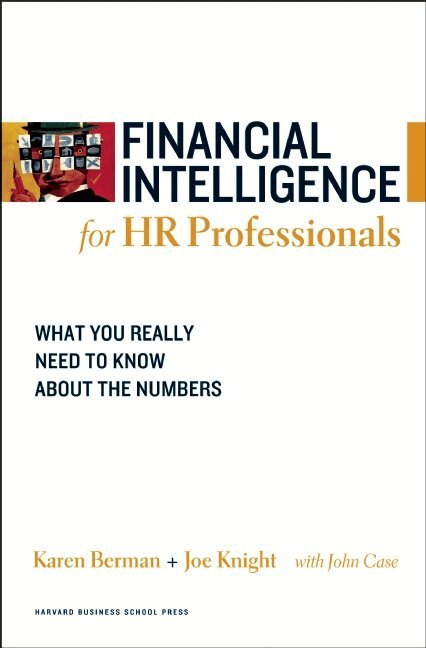
    Financial Intelligence for HR Professionals

    What You Really Need to Know About the Numbers

    AvKaren Berman,Joe Knight

    Häftad, Engelska, 2008

    Del i serien Harvard Financial Intelligence

    372 kr

    Tillfälligt slut

    Beskrivning

    As an HR manager, you're expected to use financial data to make decisions, allocate resources, and budget expenses. But if you're like many human resource practitioners, you may feel uncertain or uncomfortable incorporating financials into your day-to-day work. Using the groundbreaking formula they introduced in their book Financial Intelligence: A Manager's Guide to Knowing What the Numbers Really Mean, Karen Berman and Joe Knight present the essentials of finance specifically for HR experts. Drawing on their work training tens of thousands of managers and employees at leading organizations worldwide, the authors provide a deep understanding of the basics of financial management and measurement, along with hands-on activities to practice what you are reading.You'll discover: * Why the assumptions behind financial data matter * What your company's income statement, balance sheet, and cash flow statement really reveal * Which financials may be needed when you're developing a human capital strategy * How to calculate return on investment * Ways to use financial information to better support your business units and do your own job * How to instill financial intelligence throughout your team Authoritative and accessible, Financial Intelligence for HR Professionals, empowers you to "talk numbers" confidently with your boss, colleagues, and direct reports -- and understand how the financials impact your part of the business.

    Produktinformation

    • Utgivningsdatum:2008-04-22
    • Mått:155 x 234 x 23 mm
    • Vikt:400 g
    • Format:Häftad
    • Språk:Engelska
    • Serie:Harvard Financial Intelligence
    • Antal sidor:320
    • Förlag:Harvard Business Review Press
    • ISBN:9781422119136

    Mer om författaren

    Karen Berman and Joe Knight founded the Business Literacy Institute. They train managers at some of America's biggest and best-known companies. John Case has written or collaborated on several successful books. He has also written for Inc., Harvard Business Review, and other business publications.

    Innehållsförteckning

    • Preface: What is Financial Intelligence? xi PART ONE The Art Of Finance (and why it matters) 1. You Can't Always Trust the Numbers 2. Spotting Assumptions, Estimates, and Biases 3. Why Increase Your Financial Intelligence? Part One Toolbox PART TWO The (Many) Peculiarities Of The Income Statement 4. Profit Is an Estimate 5. Cracking the Code of the Income Statement 6. Revenue: The Issue Is Recognition 7. Costs and Expenses: No Hard-and-Fast Rules 8. The Many Forms of Profit Part Two Toolbox PART THREE The Balance Sheet Reveals The Most 9. Understanding Balance Sheet Basics 10. Assets: More Estimates and Assumptions (Except for Cash) 11. On the Other Side: Liabilities and Equity 12. Why the Balance Sheet Balances 13. The Income Statement Affects the Balance Sheet Part Three Toolbox PART FOUR Cash Is King 14. Cash Is a Reality Check 15. Profit ? Cash (And You Need Both) 16. The Language of Cash Flow 17. How Cash Connects with Everything Else 18. Why Cash Matters Part Four Toolbox PART FIVE RATIOS: Learning What the Numbers Are Really Telling You 19. The Power of Ratios 20. Profitability Ratios: The Higher the Better (Mostly) 21. Leverage Ratios: The Balancing Act 22. Liquidity Ratios: Can We Pay Our Bills? 23. Efficiency Ratios: Making the Most of Your Assets Part Five Toolbox PART SIX How to Calculate (and Really Understand) Return on Investment 24. The Building Blocks of ROI 25. Figuring ROI: The Nitty-Gritty Part Six Toolbox PART SEVEN Applied Financial Intelligence: Working Capital Management 26. The Magic of Managing the Balance Sheet 27. Your Balance Sheet Levers 28. Homing In on Cash Conversion Part Seven Toolbox PART EIGHT Creating A Financially Intelligent Department (And Organization) 29. Financial Literacy and Corporate Performance 30. Financial Literacy Strategies Appendix: Putting it into Practice Notes Acknowledgments Index About the Authors