• Fri frakt över 249 kr
  • •
  • Snabba leveranser
  • •
  • Billiga böcker
Kundservice

Du är på sajten för privatpersoner.

Företag, bibliotek eller offentlig verksamhet?

Du handlar på classic.bokus.com, där alla dina funktioner finns intakta.
Till classic.bokus.com
Bokus logotyp. Gå till startsidan.
  • Erbjudanden
  • Nyheter
  • Student
  • Topplistor
  • Barn & ungdom
  • Bokus Play
  • E-böcker
  • Pocketböcker
  • Spel & pussel

10% rabatt på allt med kod NYSTART10 →

Sidfot

Mina sidor

    Hjälp

    • Kundservice
    • Vanliga frågor och svar
    • Frakt och leverans
    • Retur vid ångerrätt
    • Reklamera vara
    • Betalning
    • Köpvillkor
    • Allmänna villkor
    • Information om webbplatsens tillgänglighet

    Om Bokus

    • Om oss
    • Pressrum
    • För studenter
    • För företag
    • För bibliotek och offentlig verksamhet
    • För leverantörer
    • Hållbarhet

    Populärt

    • Aktuella erbjudanden
    • Presentkort
    • Studentlitteratur
    • Nya böcker
    • Topplistor
    • Signerade böcker
    • Engelska böcker

    Inspiration

    • Boktips
    • BookTok
    • Populära bokserier
    • Barnbokskaraktärer
    • Populära författare
    Logotyp för Bokus
    Följ oss på Facebook (extern länk)Följ oss på Instagram (extern länk)Följ oss på YouTube (extern länk)Följ oss på TikTok (extern länk)
    bokus @ CookiesAnpassa cookiesIntegritetspolicyKöpvillkor
    Till Citymail hemsida (extern länk)Till Budbee hemsida (extern länk)Till Postnord hemsida (extern länk)Till Schenker hemsida (extern länk)Till Early Bird hemsida (extern länk)Till Walleys hemsida (extern länk)
    1. Samhälle och politik
    2. Samhälle och kultur
    3. Kultur och medier
    4. Referensverk och tvärvetenskap

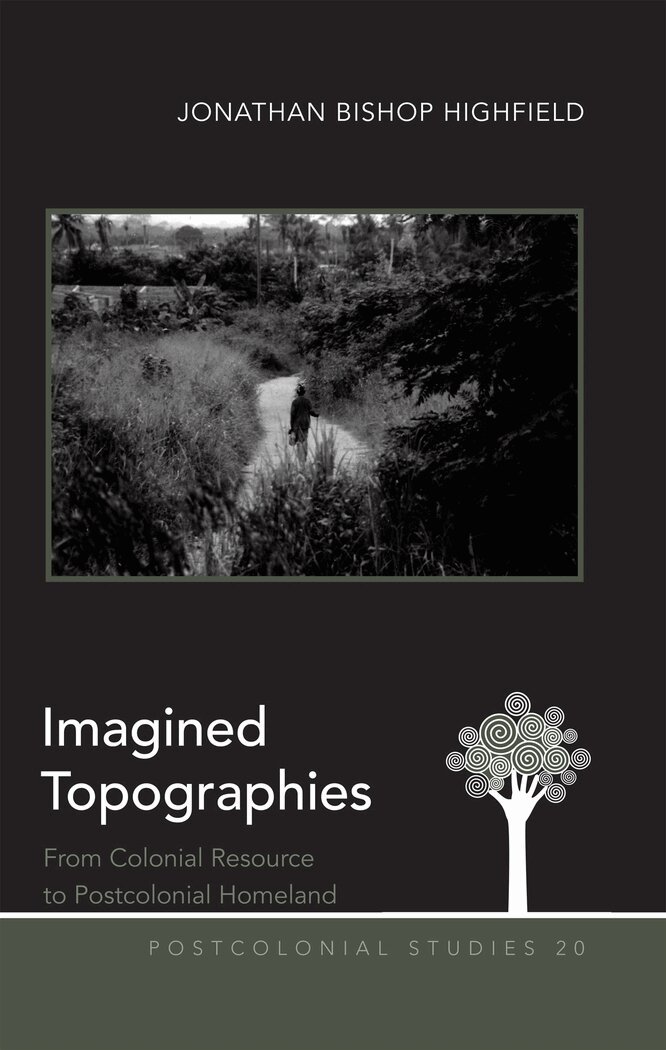
    Imagined Topographies

    From Colonial Resource to Postcolonial Homeland

    AvJonathan Bishop Highfield

    Inbunden, Engelska, 2012

    Del 20 i serien Postcolonial Studies

    1 082 kr

    Beställningsvara. Skickas inom 5-8 vardagar. Fri frakt över 249 kr.

    Beskrivning

    One important legacy of colonialism is the separation of a culture from the land upon which its people live. Populations are displaced; topographical objects are renamed, and the land becomes a resource to be exploited. Starting with three landscapes viewed as threatening by the Europeans who colonized them, Imagined Topographies examines the ways artists, writers, and musicians distill new meaning in formerly colonized spaces through the articulation of landscapes that are homelands, not commodities. In the Irish bog Seamus Heaney explores legacies of violence, John Dunne looks at rural poverty and religious faith, and Catherine Harper creates art connecting landscape and gender. Influenced by the Amazon, Wilson Harris creates dense multi-layered Guyanese epics, Karen Tei Yamashita plays with the telenovela to explore the role of multinational corporations in deforestation, and in recordings Douglas Quin combines the natural world with the technological, raising questions of connected cultural and natural loss. The two landscapes of Australia, the empty land of the colonizers and the fertile land known by the original inhabitants, are explored in the novels of David Malouf, while Peter Carey turns to the animal world to define the Australian national character, and the people of Ramingining, in films and a website created in collaboration with the filmmaker Rolf de Heer, intervene in the Australian land rights struggle. Challenging the dominant perceptions of land in these regions, artists, musicians, and writers create new visions of landscapes tied to cultures where social and ecological justice offer choices other than emigration and habitat destruction.

    Produktinformation

    • Utgivningsdatum:2012-10-31
    • Mått:155 x 230 x 16 mm
    • Vikt:380 g
    • Format:Inbunden
    • Språk:Engelska
    • Serie:Postcolonial Studies
    • Antal sidor:181
    • Förlag:Peter Lang Publishing Inc
    • ISBN:9781433119873

    Utforska kategorier

    • Referensverk och tvärvetenskap inom Samhälle och politik
    • Konstböcker inom Kultur
    • Litteraturvetenskap inom Skönlitteratur

    Mer om författaren

    Jonathan Bishop Highfield, Professor of English at Rhode Island School of Design, received his PhD from the University of Iowa. His work on postcolonial ecocriticism has appeared as chapters in Environment at the Margins: Literary and Environmental Studies in Africa (2011), Postcolonial Green: Environmental Politics and World Narratives (2010), Trauma, Resistance, Reconstruction in Post-1994 South African Writing (2010), and Fact and Fiction (2008). He has published essays in Antipodes, Atlantic Studies, Canadian Journal of Irish Studies, The International Journal of Environmental, Cultural, Economic and Social Sustainability, The Jonestown Report, Kunapipi, Passages, and Rupkatha. He is also the co-editor (with Kwadwo Opoku-Agyemang and Dora Edu Buandoh) of The State of the Art(s): African Studies and American Studies in Comparative Perspective (2006).

    Recensioner i media

    «‘Imagined Topographies’ is in every sense a vital work of materialist scholarship, alive to the way landscapes act as imaginative repositories for stories and meanings. Working across the arts, Jonathan Bishop Highfield is an astute interpreter of the complex topographies of colonial dispossession and creative repossession. This is an impressive, essential book that straddles postcolonial, visual, and environmental studies.» (Rob Nixon, Author of ‘Slow Violence and the Environmentalism of the Poor’)«With the lyrics of Bob Marley as signposts urging us to reflect on our existential condition and with a range of poets and writers, ‘Imagined Topographies’ takes us into some of the unanswered issues of coloniality and its traces upon our contemporary moment. Reminding us that colonial power is about conquest and dispossession and that decolonization is a time yet to arrive, this book takes us on a journey from Ireland to Guyana and Australia. The reading of Wilson Harris is original and we are treated to insights into how landscape repossessed becomes home. The text broadens the field of postcolonial theory and should be read.» (Anthony Bogues, Harmon Family Professor of Africana Studies, Brown University; Author of ‘Empire of Liberty: Power, Desire, and Freedom’)