• Fri frakt över 249 kr
  • •
  • Snabba leveranser
  • •
  • Billiga böcker
Kundservice

Du är på sajten för privatpersoner.

Företag, bibliotek eller offentlig verksamhet?

Du handlar på classic.bokus.com, där alla dina funktioner finns intakta.
Till classic.bokus.com
Bokus logotyp. Gå till startsidan.
  • Erbjudanden
  • Nyheter
  • Student
  • Topplistor
  • Barn & ungdom
  • Bokus Play
  • E-böcker
  • Pocketböcker
  • Spel & pussel

10% rabatt på allt med kod: NYSTART10 →

Sidfot

Mina sidor

    Hjälp

    • Kundservice
    • Vanliga frågor och svar
    • Frakt och leverans
    • Retur vid ångerrätt
    • Reklamera vara
    • Betalning
    • Köpvillkor
    • Allmänna villkor
    • Information om webbplatsens tillgänglighet

    Om Bokus

    • Om oss
    • Pressrum
    • För studenter
    • För företag
    • För bibliotek och offentlig verksamhet
    • För leverantörer
    • Hållbarhet

    Populärt

    • Aktuella erbjudanden
    • Presentkort
    • Studentlitteratur
    • Nya böcker
    • Topplistor
    • Signerade böcker
    • Engelska böcker

    Inspiration

    • Boktips
    • BookTok
    • Populära bokserier
    • Barnbokskaraktärer
    • Populära författare
    Logotyp för Bokus
    Följ oss på Facebook (extern länk)Följ oss på Instagram (extern länk)Följ oss på YouTube (extern länk)Följ oss på TikTok (extern länk)
    bokus @ CookiesAnpassa cookiesIntegritetspolicyKöpvillkor
    Till Citymail hemsida (extern länk)Till Budbee hemsida (extern länk)Till Postnord hemsida (extern länk)Till Schenker hemsida (extern länk)Till Early Bird hemsida (extern länk)Till Walleys hemsida (extern länk)
    1. Psykologi och pedagogik
    2. Psykologi
    3. Psykologiska teorier och skolor

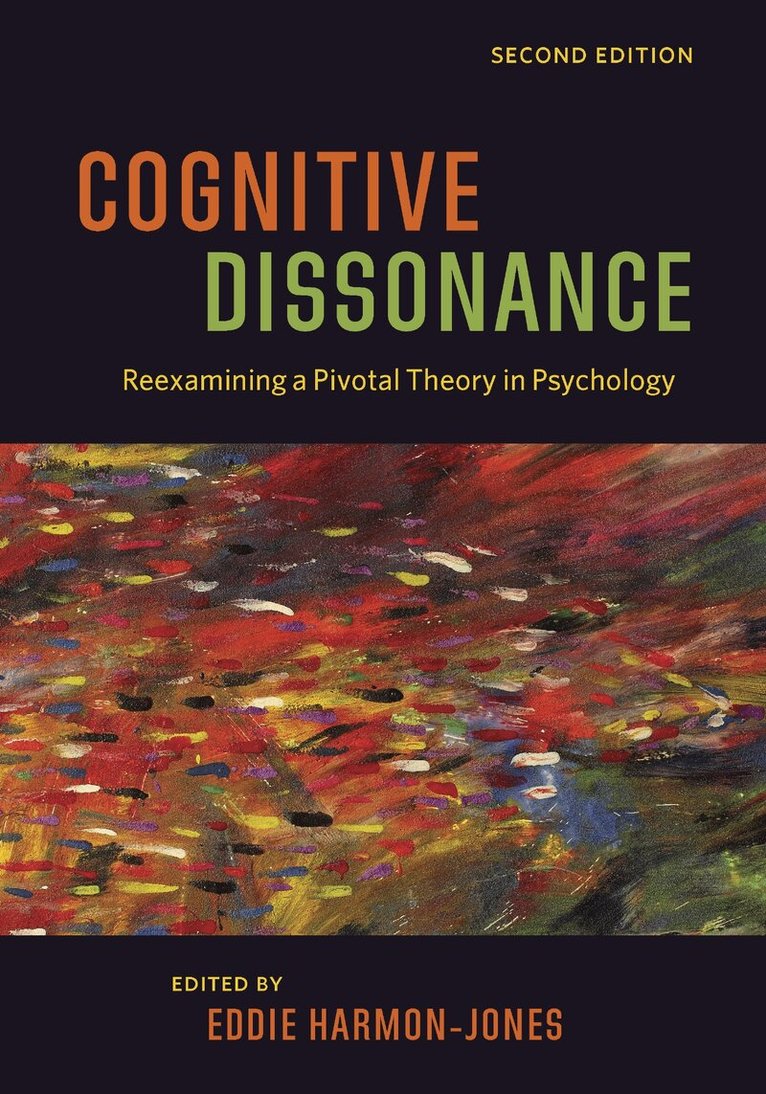
    Cognitive Dissonance

    Reexamining a Pivotal Theory in Psychology

    AvEddie Harmon-Jones

    Häftad, Engelska, 2019

    553 kr

    Beställningsvara. Skickas inom 5-8 vardagar. Fri frakt över 249 kr.

    Beskrivning

    2 9 Outstanding Academic TitleWhat mental process occurs when a person does something she knows is unhealthy? When an honest person tells a amp quot white lie, amp quot what happens to his or her sense of integrity? If we must choose between two equally attractive options, why does our value judgement of the options change after the choice has been made?In 954 Dr. Leon Festinger first posited a theory of cognitive dissonance to describe the psychological phenomenon that occurs in these situations. In the years since, cognitive dissonance has become a central pillar of psychological theory, as was documented in the first edition of this book.  In this new and fully-updated edition, editor Eddie Harmon-Jones brings the study of cognitive dissonance into the twenty-first century.  Contributors survey recent discoveries about the role dissonance plays in a variety of information processes, as well as connections between dissonance processes and other motivational processes.  Other authors introduce mathematical and action-based models that summarize how dissonance works.  Evidence describing the neural correlates of dissonance are also provided, helping demonstrate the biological foundations of the theory.

    Produktinformation

    • Utgivningsdatum:2019-03-12
    • Mått:178 x 251 x 13 mm
    • Vikt:572 g
    • Format:Häftad
    • Språk:Engelska
    • Antal sidor:303
    • Upplaga:2
    • Förlag:American Psychological Association
    • ISBN:9781433830105

    Utforska kategorier

    • Psykologiska teorier och skolor inom Psykologi och pedagogik
    • Kognitiv psykologi inom Psykologi och pedagogik

    Mer om författaren

    Eddie Harmon-Jones, Ph.D, is a Professor of Psychology at the University of New South Wales, Sydney. He received his Ph.D. in Psychology from the University of Arizona in 995 and has been teaching at UNSW since 2 2. Dr. Harmon-Jones is a well-known expert in the field of social neuroscience, cognitive dissonance, and the motivating aspects of emotions. He is widely published and has earned numerous honors for his contributions to the field. Dr. Harmon-Jones lives in Sydney, New South Wales, Australia. Visit http://www.socialemotiveneuroscience.org/, and follow eddiehj 8.

    Recensioner i media

    2 9 Outstanding Academic Titleamp ldquo Cognitive Dissonance is a must-read for anyone studying social psychology. Now in its second edition, this work continues to show the utility of Festinger amp rsquo s seminal theory but also modernizes it and, perhaps, expands on it amp hellip . Highly recommended. amp rdquo -Choice Cognitive Dissonance is a must-read for anyone studying social psychology. Now in its second edition, this work continues to show the utility of Festinger's seminal theory but also modernizes it and, perhaps, expands on it...Highly recommended.(Choice)

    Innehållsförteckning

    • ContributorsForeword to the First EditionForeword to the Second EditionPreface  Chapter : An Introduction to Cognitive Dissonance Theory and an Overview of Current Perspectives on the TheoryEddie Harmon-Jones and Judson MillsPart I: Perspectives Employing the Original Version of the Theory Chapter 2: Improving the 957 Version of Dissonance TheoryJudson MillsChapter 3: A Radical Point of View on Dissonance TheoryJean-Leon Beauvois and Robert-Vincent JouleChapter 4: Understanding the Motivation Underlying Dissonance Effects: The Action-Based ModelEddie Harmon-Jones and Cindy Harmon-JonesChapter 5: What Is Cognitive Consistency, and Why Does It Matter?Bertram Gawronski and Skylar M. BrannonChapter : Dissonance Now: How Accessible Discrepancies Moderate Distress and Diverse DefensesIan McGregor, Ian R. Newby-Clark, and Mark P. ZannaPart II: The Role of the Self in Dissonance Chapter 7: Dissonance, Hypocrisy, and the Self-ConceptElliot AronsonChapter 8: Self-Affirmation Theory: An Update and AppraisalJoshua Aronson, Geoffrey Cohen, and Paul R. NailChapter 9: In Search of the Motivation for Dissonance Reduction: The Drive to Lessen Aversive ConsequencesJoel CooperPart III: Mathematical Models, Neural Activations, and Affective Responses Chapter : Modeling Cognitive Dissonance as a Parallel Constraint Satisfaction Network With LearningStephen J. Read and Brian M. MonroeChapter : Neural Basis of Cognitive DissonanceKeise Izuma and Kou MurayamaChapter 2: Moving Beyond Attitude Change in the Study of Dissonance-Related Processes: An Update on the Role of DiscomfortPatricia G. Devine, John M. Tauer, Kenneth E. Barron, Andrew J. Elliot, Kristen M. Vance, and Eddie Harmon-Jones  Appendix A: Social Communication and Cognition: A Very Preliminary and Highly Tentative DraftLeon Festinger ( 954)Appendix B: Reflections on Cognitive Dissonance: 3 Years LaterLeon Festinger ( 987)Appendix C: Historical Note on Festinger amp rsquo s Tests of Dissonance TheoryJudson MillsIndexAbout the Editor