• Fri frakt över 249 kr
  • •
  • Snabba leveranser
  • •
  • Billiga böcker
Kundservice

Du är på sajten för privatpersoner.

Företag, bibliotek eller offentlig verksamhet?

Du handlar på classic.bokus.com, där alla dina funktioner finns intakta.
Till classic.bokus.com
Bokus logotyp. Gå till startsidan.
  • Erbjudanden
  • Nyheter
  • Student
  • Topplistor
  • Barn & ungdom
  • Bokus Play
  • E-böcker
  • Pocketböcker
  • Spel & pussel

10% rabatt på allt med kod NYSTART10 →

Sidfot

Mina sidor

    Hjälp

    • Kundservice
    • Vanliga frågor och svar
    • Frakt och leverans
    • Retur vid ångerrätt
    • Reklamera vara
    • Betalning
    • Köpvillkor
    • Allmänna villkor
    • Information om webbplatsens tillgänglighet

    Om Bokus

    • Om oss
    • Pressrum
    • För studenter
    • För företag
    • För bibliotek och offentlig verksamhet
    • För leverantörer
    • Hållbarhet

    Populärt

    • Aktuella erbjudanden
    • Presentkort
    • Studentlitteratur
    • Nya böcker
    • Topplistor
    • Signerade böcker
    • Engelska böcker

    Inspiration

    • Boktips
    • BookTok
    • Populära bokserier
    • Barnbokskaraktärer
    • Populära författare
    Logotyp för Bokus
    Följ oss på Facebook (extern länk)Följ oss på Instagram (extern länk)Följ oss på YouTube (extern länk)Följ oss på TikTok (extern länk)
    bokus @ CookiesAnpassa cookiesIntegritetspolicyKöpvillkor
    Till Citymail hemsida (extern länk)Till Budbee hemsida (extern länk)Till Postnord hemsida (extern länk)Till Schenker hemsida (extern länk)Till Early Bird hemsida (extern länk)Till Walleys hemsida (extern länk)
    1. Psykologi och pedagogik
    2. Psykologi
    3. Socialpsykologi och gruppsykologi

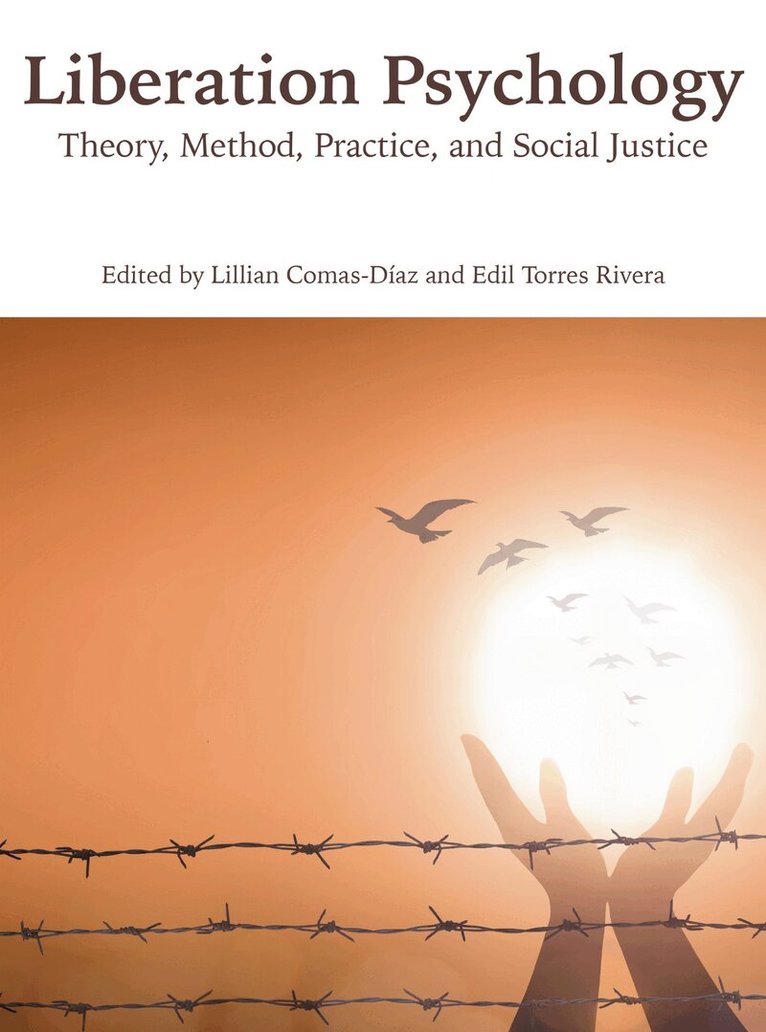
    Liberation Psychology

    Theory, Method, Practice, and Social Justice

    AvLillian Comas-Díaz,Edil Torres Rivera

    Häftad, Engelska, 2020

    Del i serien Cultural, Racial, and Ethnic Psychology Series

    765 kr

    Beställningsvara. Skickas inom 5-8 vardagar. Fri frakt över 249 kr.

    Beskrivning

    This book guides readers through the origins, development, and key concepts of liberation psychology its methods, including participatory action research its manifestation in clinical practice its potential future applications and its relation to social activism and social justice movements.Liberation psychology challenges traditional Western‑based psychology by offering an emancipatory approach to understanding and addressing oppression among individuals and groups. This book provides an understanding of liberation psychology that enhances the work of all students, researchers, and practitioners in psychology by raising awareness of discrimination, inequality, and issues related to intersectionality affirming cultural identities fighting oppression and promoting social change to help alleviate human suffering and support fairness, equality, and justice.The insights provided into liberation psychology's concepts of critical consciousness, empowerment, and social justice action can enhance the well‑being of individuals and improve lives.

    Produktinformation

    • Utgivningsdatum:2020-07-28
    • Mått:178 x 254 x 16 mm
    • Vikt:574 g
    • Format:Häftad
    • Språk:Engelska
    • Serie:Cultural, Racial, and Ethnic Psychology Series
    • Antal sidor:314
    • Förlag:American Psychological Association
    • ISBN:9781433832086

    Utforska kategorier

    • Socialpsykologi och gruppsykologi inom Psykologi och pedagogik

    Mer om författaren

    Lillian Comas-Diaz, PhD, is a clinical psychologist in private practice and a clinical professor in the Department of Psychiatry and Behavioral Sciences at George Washington University. The author of over a hundred publications, Dr. Comas-D amp iacute az is also the coeditor of Latina Psychologists: Thriving in the Cultural Borderlands, Womanist and Mujerista Psychologies, and Psychological Health of Women of Color. Dr. Comas-D amp iacute az is the founding editor of Cultural Diversity and Ethnic Minority Psychology, the official journal of the Society for the Psychological Study of Ethnic Minority Issues (Division 45 of the American Psychological Association). She is an associate editor of the American Psychologist.Edil Torres Rivera, PhD, is a professor in the Department of Counseling, Educational Leadership, Educational and School Psychology and Director of the Latinx Studies program at Wichita State University, Kansas. His primary research focuses include complexity and the use of indigenous healing techniques as a necessary element in psychological work with ethnic minority populations in the United States. He serves on the editorial board of the Journal for Social Action in Counseling and Psychology and is the editor of the Interamerican Journal of Psychology.

    Recensioner i media

    This volume is a stunning antidote for the current moment-an edited volume of radical social theory, participatory methods, and critical practice rooted in the courageous history of liberation theory: a decolonizing of psychology and ethical re-imagination of psychotherapy. This book is a reparation gift to those that psychology has harmed and a resource for those of us who believe that social justice and psychology must embrace. Lillian Comas-D amp iacute az and Edil Torres Rivera are treasures to psychology. This volume will radicalize graduate and undergraduate education in precisely the ways we need. Thank you, Lillian and Edil! - Michelle Fine, PhD, Distinguished Professor of Critical Psychology, The Graduate Center, City University of New York The coeditors are liberation psychology scholar amp ndash practitioners, continuously broadening multicultural perspectives about systems, individuals, and communities. This book is a testament to the centrality of liberation psychology and social justice consciousness in all of psychology. - Patricia Arredondo, EdD, NCC, President, Arredondo Advisory Group, Phoenix, AZ Liberation Psychology: Theory, Method, Practice, and Social Justice will make you pause, reflect, and envision a psychology that views the experience of the oppressed through the eyes of their ancestors instead of the prism of their colonizers. This impressive volume is grounded in science, practice, and the power of activism. Truly a timely, comprehensive, and indispensable resource for professionals and students in and outside of psychology. - Hector Y. Adames, PsyD, Associate Professor, The Chicago School of Professional Psychology, Chicago, IL; Co-Director, IC-RACE (Immigration, Critical Race, And Cultural Equity) Lab This exciting book weaves together a compelling set of critical, decolonial perspectives that represent a major  intervention in psychology while also having important implications for other fields. Social scientists and their students interested in theory, method, and practice for promoting community engagement, healing social suffering, and inspiring intersectional action for social justice should definitely read this book. - Faye V. Harrison, Professor of African American Studies & Anthropology, University of Illinois at Urbana-Champaign; Editor of Decolonizing Anthropology: Moving Further Toward an Anthropology for Liberation and author of Outsider Within: Reworking Anthropology for the Global Age

    Innehållsförteckning

    • Series ForewordFrederick T. L. LeongForeword: How APA Has Promoted Social JusticeMelba J. T. VasquezIntroductionEdil Torres Rivera and Lillian Comas-D amp iacute az  Part I. Liberation Psychology Theory  . Liberation Psychology: Origins and Development Mark Burton and Raquel Guzzo 2. Concepts of Liberation Psychology Edil Torres Rivera 3. Liberation Psychology and Racism Ra amp uacute l Qui amp ntilde ones-Rosado   Part II. Liberation Psychology Method  4. From Freud to Fanon to Freire: Psychoanalysis as a Liberation Method Daniel Gaztambide 5. Liberation Psychology of and for Transformative Justice: Centering Acompa amp ntilde amiento in Participatory Action Research Jesica Siham Fern amp aacute ndez . Feminist Participatory Action Research: Coconstructing Liberation Psychological Praxis Through Dialogic Relationality and Critical Reflexivity M. Brinton Lykes and Gabriela T amp aacute vara  Part III. Liberation Psychology Clinical Practice  7. TestimoniosAlejandro Cervantes 8. Urban Liberation: Postcolonial Intersectional Feminism and Developing a Socially Conscious Therapeutic Practice Chakira M. Haddock-Lazala 9. Liberation Psychotherapy Lillian Comas-D amp iacute az  Part IV. Liberation Psychology and Special Populations  . Black Minds Matter: Applying Liberation Psychology to Black Americans Thema Bryant-Davis and Shavonne J. Moore-Lobban . Liberation Psychology and LGBTQ+ Communities: Naming Colonization, Uplifting Resilience, and Reclaiming Ancient His-stories, Her-stories, and T-stories Anneliese A. Singh, Brean amp rsquo a Parker, Anushka R. Aqil, and Falon Thacker 2. Transnational Feminist Liberation Psychology: Decolonizing Border Crossings Kathryn L. Norsworthy and Ouyporn Khuankaew  Part V. Liberation Psychology Social Action  3. Liberation Psychology, Creativity, and Arts-Based Activism and Artivism: Culturally Meaningful Methods Connecting Personal Development and Social Change Ester R. Shapiro 4. Liberation, Inspiration, and Critical Consciousness: Preparing the Next Generation of Practitioners Carrie Casta amp ntilde eda-Sound, Daryl M. Rowe, Nahaal Binazir, and Marlene L. Cabrera  Conclusion. Liberation Psychology-Crossing Borders Into New Frontiers Lillian Comas-D amp iacute az and Edil Torres Rivera