• Fri frakt över 249 kr
  • •
  • Snabba leveranser
  • •
  • Billiga böcker
Kundservice

Du är på sajten för privatpersoner.

Företag, bibliotek eller offentlig verksamhet?

Du handlar på classic.bokus.com, där alla dina funktioner finns intakta.
Till classic.bokus.com
Bokus logotyp. Gå till startsidan.
  • Erbjudanden
  • Nyheter
  • Student
  • Topplistor
  • Barn & ungdom
  • Bokus Play
  • E-böcker
  • Pocketböcker
  • Spel & pussel

10% rabatt på allt med kod: NYSTART10 →

Sidfot

Mina sidor

    Hjälp

    • Kundservice
    • Vanliga frågor och svar
    • Frakt och leverans
    • Retur vid ångerrätt
    • Reklamera vara
    • Betalning
    • Köpvillkor
    • Allmänna villkor
    • Information om webbplatsens tillgänglighet

    Om Bokus

    • Om oss
    • Pressrum
    • För studenter
    • För företag
    • För bibliotek och offentlig verksamhet
    • För leverantörer
    • Hållbarhet

    Populärt

    • Aktuella erbjudanden
    • Presentkort
    • Studentlitteratur
    • Nya böcker
    • Topplistor
    • Signerade böcker
    • Engelska böcker

    Inspiration

    • Boktips
    • BookTok
    • Populära bokserier
    • Barnbokskaraktärer
    • Populära författare
    Logotyp för Bokus
    Följ oss på Facebook (extern länk)Följ oss på Instagram (extern länk)Följ oss på YouTube (extern länk)Följ oss på TikTok (extern länk)
    bokus @ CookiesAnpassa cookiesIntegritetspolicyKöpvillkor
    Till Citymail hemsida (extern länk)Till Budbee hemsida (extern länk)Till Postnord hemsida (extern länk)Till Schenker hemsida (extern länk)Till Early Bird hemsida (extern länk)Till Walleys hemsida (extern länk)
    1. Psykologi och pedagogik
    2. Pedagogik
    3. Pedagogisk psykologi

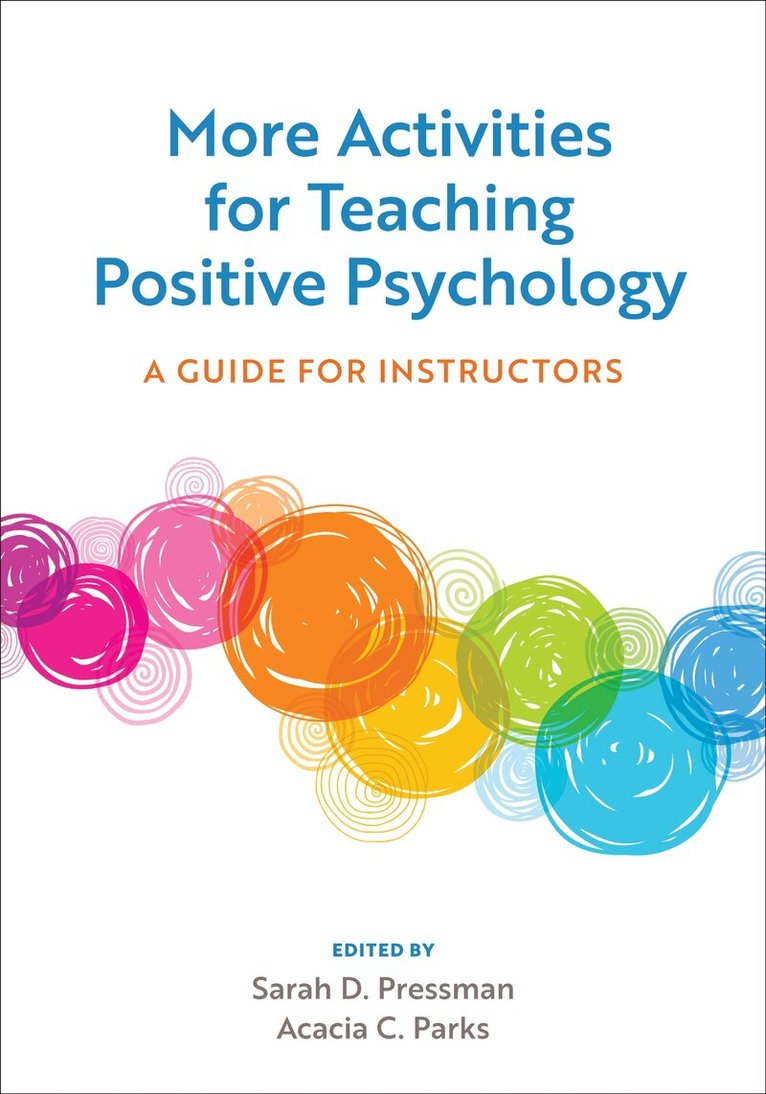
    More Activities for Teaching Positive Psychology

    A Guide for Instructors

    AvSarah D. Pressman,Acacia C. Parks

    Häftad, Engelska, 2024

    472 kr

    Beställningsvara. Skickas inom 5-8 vardagar. Fri frakt över 249 kr.

    Beskrivning

    More Activities for Teaching Positive Psychology features brand new expert-informed resources for teachers and coaches.  Building on the success of the first volume, More Activities for Teaching Positive Psychology is an indispensable resource for instructors and coaches aiming to bring the dynamic field of positive psychology to life. This practical workbook offers 3 innovative activities, organized into five thematic sections, ensuring that you can easily find the perfect exercise to complement your curriculum and captivate your students. Featuring chapters from leading researchers and educators worldwide, this volume includes activities designed to enhance well-being, foster gratitude, cultivate self-compassion, and build resilience. It also explores fresh areas such as the impact of facial expressions, the role of technology and nature in promoting happiness, and critical analyses of positive psychology methods.  Each activity comes with step-by-step instructions, discussion prompts, and supplementary materials to facilitate deep understanding and engagement. The thematic organization allows for easy integration of activities that align with your lecture topics, covering areas such as positive cognitions, social connections, and positive psychology across diverse contexts. Comprehensive support, including background readings and example scripts, ensures seamless implementation in your course. Whether you amp rsquo re an experienced positive psychology instructor or new to the field, More Activities for Teaching Positive Psychology offers a treasure trove of tools and ideas to make your classroom vibrant, interactive, and deeply impactful.

    Produktinformation

    • Utgivningsdatum:2024-10-15
    • Mått:178 x 254 x 24 mm
    • Vikt:684 g
    • Format:Häftad
    • Språk:Engelska
    • Antal sidor:378
    • Förlag:American Psychological Association
    • ISBN:9781433839283

    Utforska kategorier

    • Pedagogisk psykologi inom Psykologi och pedagogik
    • Socialpsykologi och gruppsykologi inom Psykologi och pedagogik
    • Psykologiska teorier och skolor inom Psykologi och pedagogik

    Mer om författaren

    Sarah D. Pressman, PhD, is a professor of psychological science and associate dean of undergraduate education at the University of California, Irvine. She received her BSc from Mount Allison University in biopsychology, her MS and PhD from Carnegie Mellon University in social, personality, and health psychology, and she completed postdoctoral training in cardiovascular behavioral medicine at the University of Pittsburgh Medical Center. Dr. Pressman's expertise is on the interrelations between positive psychological factors, stress, and health, and she has received numerous awards (e.g., from the American Psychological Association Division 38 and the American Psychosomatic Society) for her contributions in these areas. Her work on positive psychology relevant topics has been cited over 95 times (h-index 35) and has been widely featured in popular outlets like the Wall Street Journal, CNN, NPR, and The New York Times. She was a contributor to the first book, Activities for Teaching Positive Psychology, and used various activities from the initial book extensively in her own positive psychology courses. Beyond that, she is considered a world expert on the importance of positive emotions for physical well-being and has been invited to speak at dozens of national and international meetings for this purpose. Finally, Dr. Pressman is an award-winning and well-rated instructor with experience teaching thousands of students about positive psychology and related courses over the last dozen years.Acacia C. Parks, PhD, received her BA in psychology from Reed College and her PhD in psychology from the University of Pennsylvania, where she received training in psychological assessment as well as cognitive-behavioral therapy for mood and anxiety disorders. Her research and practice focuses on self-help methods for increasing well-being via digital technology and books, with an emphasis on self-reported emotional outcomes, but also objective and observable outcomes, such as changes in workplace behavior, physiological indicators, etc. Her research has helped build the foundations for how to translate scientific well-being interventions to the general public, and her expertise in this area is affirmed by over 5,5 citations of her articles in scientific journals (h-index 23), three edited books, and years of associate editorship at the Journal of Positive Psychology. As lead consultant at Liquid Amber, she is a digital health executive and scientific advisor with deep knowledge of scientific and regulatory strategy in digital therapeutics, as well as clinical product design, including coaching strategy. Prior to her work in industry, she was an associate professor of psychology at Hiram College, where she taught courses in positive psychology, abnormal psychology, research methodology, and critical writing. For the past 2 years, she has made it her mission to bring evidence-based, destigmatized health care to the public.

    Recensioner i media

    Drs. Sarah Pressman and Acacia Parks, award-winning leaders in the field of positive psychology and health, have curated a brilliant, evidence-based resource that gives teachers feasible, engaging, and educational ways to introduce students to the basic tenets of positive psychology. What sets this great book apart is the excellence, thoughtfulness, and diversity of the interventions. There is something for everyone here to help, heal, and lead students to flourishing and to the good life. - Elaine O'Brien, PhD, MAPP, former Assistant Professor, Philadelphia College of Osteopathic Medicine, Philadelphia, PA; Kinesiologist; coauthor of The Power of Play: Optimize Your Joy Potential; author of Splash Dance: What a Feeling! Aqua Fitness Meets Positive Psychology Honestly, I amp rsquo m excited to get my copy I found so many things I want to use next year! Each chapter is an ideal mix of experiential activities and the scholarship behind them. - Cynthia L. S. Pury, PhD, Professor, Department of Psychology, Clemson University, Clemson, SC If you amp rsquo re teaching or giving workshops on well-being, you hope to inspire a room full of people to explore, discover, and learn. This book is the fuel to help you do just that. - Todd B. Kashdan, PhD, Professor of Psychology, George Mason University, Fairfax, VA; author of The Upside of Your Dark Side and The Art of Insubordination: How to Dissent and Defy Effectively Edited by two respected researchers in the field of positive psychology, this activity book provides easy onboarding for those new to the teaching of positive constructs while adding to the repertoire of those who are more seasoned in the field. As the number of classes in positive psychology grows, the need for creative and varied classroom activities grows as well. Pressman and Parks deliver exactly that with this comprehensive and updated resource. - Jennifer Teramoto Pedrotti, PhD, Associate Vice President for DEI Academic Initiatives, California Polytechnic State University, San Luis Obispo More Activities for Teaching Positive Psychology: A Guide for Instructors offers state-of-the-art activities based on the latest evidence-informed theories of the science of positive psychology. As a professor of positive psychology and cofounder of the first PhD and research-based master amp rsquo s degree programs in positive psychology, I give my absolute highest endorsement of this new volume to anyone teaching positive psychology in a university setting, as well as to those teaching and applying positive psychology in workplaces, schools, communities, therapy and coaching, and health and well-being care settings across the globe. - Stewart I. Donaldson, PhD, Distinguished University Professor, Claremont Graduate University, Claremont, CA The field is increasingly crowded with positive psychology textbooks, but More Activities for Teaching Positive Psychology stands out from the rest by offering experiments, activities, and exercises that help learners understand how and why positive psychology can be so powerful in their lives. Now with this new work, Pressman and Parks give us even more to love. The activities will be helpful not just for professors but also for researchers and practitioners to take the science of positive psychology beyond the classroom. Indispensable in a world where positivity is so sorely needed. - Judith T. Moskowitz, PhD, MPH, Professor of Medical Social Sciences, Northwestern University, Feinberg School of Medicine, Evanston, IL

    Innehållsförteckning

    • ContributorsPrefacePart I. Living the Research: Positive Psychology Methods, Applications, and Critical Analysis in the ClassroomChapter . Conversational Pods: Enriching the Learning of Positive Psychology Through Dialogue and ConnectionMargarita TarragonaChapter 2. Authentic Embodied Positive Emotions: An Experiential Introduction to the Broaden-and-Build TheoryPatty Van Cappellen and Barbara L. FredricksonChapter 3. Duchenne Smiles amp ndash Windows to the SoulKennon M. SheldonChapter 4. Exploring Language as an Unobtrusive Measure of Positive Psychosocial CharacteristicsPeggy L. KernChapter 5. How Can Life Stories Provide Insights for Positive Psychology?Jordan A. BookerChapter . Who Can I Trust? Evaluating Sources of Information Related to HappinessZachary A. Silver and Laurie R. SantosChapter 7. Evaluating Positive Psychology AppsJustine Bautista and Stephen M. SchuellerChapter 8. Using Smartphones to Teach About Self-Report Bias and Accuracy in Well-Being ResearchKostadin Kushlev and Hannah MaslingPart II. Changing and Tracking Psychological Well-BeingChapter 9. The Virtual Gratitude VisitRobert A. EmmonsChapter . Awe OutingEmiliana Simon-Thomas and Dacher KeltnerChapter . Happiness is in our Nature: Exploring Predicted and Emotional Responses to the Natural EnvironmentJessica E. Desrochers and John M. ZelenskiChapter 2. The Treasure Chest: An Immersive Guided Imagery Meditation on Sacred MomentsSerena Wong and Kenneth I. PargamentChapter 3. Is It Possible to Design and Live a Perfectly Happy Day?Jaime L. KurtzChapter 4. Uplifts in Daily LifePatrick Klaiber and Nancy L. SinChapter 5. Learning to Use Your Strengths DailyJoanne F. ZingerPart III. Positive Cognitions: Evaluations, Expectancies, and Expe​riencesChapter . Whose Life is Meaningful?Samantha J. HeintzelmanChapter 7. Engaging in an Activity With Passion: How the Situation Affects our MindsetJany St-Cyr, Virginie Paquette, and Robert J. VallerandChapter 8. Flow in Daily LifeAjit Singh Mann, Patrick Robinson, and Jeanne NakamuraChapter 9. Promoting Hope Through Goal SettingMatthew W. GallagherPart IV. Social ConnectionsChapter 2 . Self-CompassionAshley L. Kuchar and Kristin D. NeffChapter 2 . Acts of Kindness: The Well-Being Benefits of Prosocial Versus Self-Focused BehaviorsJohn K. Coffey and S. Katherine Nelson-CoffeyChapter 22. Increasing Your Interdependent HappinessHidefumi Hitokoto and Yukiko UchidaChapter 23. Building High Quality ConnectionsJane Dutton, Arne Carlsen, and Sally MaitlisChapter 24. Identifying Positively Energizing LeadersKim CameronPart V. Implementing Positive Psychology Across Contexts: Culture, Stress, and HealthChapter 25. How Ideal Affect Shapes Judgments of and Responses to SmilesElizabeth Blevins and Jeanne TsaiChapter 2 . Fear of HappinessLiudmila TitovaChapter 27. Promoting Positive Psychological Character Strengths in Diverse Meso and Macro SettingsLaura Kohn-Wood, Guerdiana Thelomar, and Brittney R. DavisChapter 28. Self-Affirmation for Stress ProtectionKennedy M. Blevins, Sarah D. Pressman, and David K. ShermanChapter 29. Using Positive Coping Strategies to Boost ResilienceEmma L. Grisham and Marie P. CrossChapter 3 . Healthy Foods for Happiness: A Mini-InterventionTamlin S. Conner and Jack R. H. Cooper