• Fri frakt över 249 kr
  • •
  • Snabba leveranser
  • •
  • Billiga böcker
Kundservice

Du är på sajten för privatpersoner.

Företag, bibliotek eller offentlig verksamhet?

Du handlar på classic.bokus.com, där alla dina funktioner finns intakta.
Till classic.bokus.com
Bokus logotyp. Gå till startsidan.
  • Erbjudanden
  • Nyheter
  • Student
  • Topplistor
  • Barn & ungdom
  • Bokus Play
  • E-böcker
  • Pocketböcker
  • Spel & pussel

10% rabatt på allt med kod: NYSTART10 →

Sidfot

Mina sidor

    Hjälp

    • Kundservice
    • Vanliga frågor och svar
    • Frakt och leverans
    • Retur vid ångerrätt
    • Reklamera vara
    • Betalning
    • Köpvillkor
    • Allmänna villkor
    • Information om webbplatsens tillgänglighet

    Om Bokus

    • Om oss
    • Pressrum
    • För studenter
    • För företag
    • För bibliotek och offentlig verksamhet
    • För leverantörer
    • Hållbarhet

    Populärt

    • Aktuella erbjudanden
    • Presentkort
    • Studentlitteratur
    • Nya böcker
    • Topplistor
    • Signerade böcker
    • Engelska böcker

    Inspiration

    • Boktips
    • BookTok
    • Populära bokserier
    • Barnbokskaraktärer
    • Populära författare
    Logotyp för Bokus
    Följ oss på Facebook (extern länk)Följ oss på Instagram (extern länk)Följ oss på YouTube (extern länk)Följ oss på TikTok (extern länk)
    bokus @ CookiesAnpassa cookiesIntegritetspolicyKöpvillkor
    Till Citymail hemsida (extern länk)Till Budbee hemsida (extern länk)Till Postnord hemsida (extern länk)Till Schenker hemsida (extern länk)Till Early Bird hemsida (extern länk)Till Walleys hemsida (extern länk)
    1. Filosofi och religion
    2. Filosofi
    3. Filosofiska discipliner

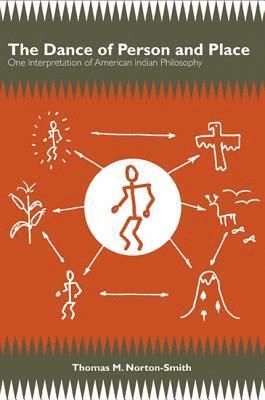
    Dance of Person and Place

    One Interpretation of American Indian Philosophy

    AvThomas M. Norton-Smith

    Inbunden, Engelska, 2010

    Del i serien SUNY series in Living Indigenous Philosophies

    1 076 kr

    Tillfälligt slut

    Fler format och utgåvor

    Häftad

    Tillf. slut

    Beskrivning

    Uses the concept of "worldmaking" to provide an introduction to American Indian philosophy.Ever since first contact with Europeans, American Indian stories about how the world is have been regarded as interesting objects of study, but also as childish and savage, philosophically curious and ethically monstrous. Using the writings of early ethnographers and cultural anthropologists, early narratives told or written by Indians, and scholarly work by contemporary Native writers and philosophers, Shawnee philosopher Thomas Norton-Smith develops a rational reconstruction of American Indian philosophy as a dance of person and place. He views Native philosophy through the lens of a culturally sophisticated constructivism grounded in the work of contemporary American analytic philosopher Nelson Goodman, in which stories (or "world versions") satisfying certain criteria construct actual worlds-words make worlds. Ultimately, Norton-Smith argues that the Native stories construct real worlds as robustly as their Western counterparts, and, in so doing, he helps to bridge the chasm between Western and American Indian philosophical traditions.

    Produktinformation

    • Utgivningsdatum:2010-04-29
    • Mått:152 x 229 x 18 mm
    • Vikt:372 g
    • Format:Inbunden
    • Språk:Engelska
    • Serie:SUNY series in Living Indigenous Philosophies
    • Antal sidor:180
    • Förlag:State University of New York Press
    • ISBN:9781438431338

    Utforska kategorier

    • Filosofiska discipliner inom Filosofi och religion

    Mer om författaren

    Thomas M. Norton-Smith is Associate Professor of Philosophy at Kent State University Stark.

    Recensioner i media

    "…a deft and self-aware exemplification of the task of cross-cultural comparison … The writing is accessible and shows a deft and helpful interplay between abstract language and concrete illustrative material." — The Pluralist"Norton-Smith does a good job illustrating how worlds are created through language and how language itself contains philosophy." — H-Net Reviews (H-Environment)"…Norton-Smith offers an insightful discussion of Native American epistemological concepts … This book is an excellent exercise for all philosophy students as an expansion of worldviews and an examination of Western epistemological foundations and biases. It also offers an insightful discussion of indigenous philosophy for both philosophy and indigenous scholars … Highly recommended." ― CHOICE"The author opens a unique and exciting avenue for philosophical discourse by demonstrating a method of inquiry that provides a new way of interpreting Native thinking, a method that not only promotes Native philosophical systems but allows for greater communication between Western and Native philosophers." — Lorraine Mayer, author of Cries from a Métis Heart"Challenging and provocative, this book is a great step forward in the conversation of academic Indigenous philosophy." — Brian Yazzie Burkhart, Pitzer College

    Innehållsförteckning

    • List of IllustrationsForewordAcknowledgments1. Common Themes in American Indian PhilosophyFirst IntroductionsFour Common Themes: A First LookConstructing an Actual American Indian World2. Nelson Goodman’s ConstructivismSetting the StageFact, Fiction, and FeedersOntological PluralismTrue Versions and Well-Made WorldsNonlinguistic Versions and the Advancement of Understanding3. True Versions and Cultural BiasConstructive Realism: Variations on a Theme by GoodmanTrue Versions and Cultural BiasAn American Indian Well-Made Actual World4. Relatedness, Native Knowledge, and Ultimate AcceptabilityNative Knowledge and Relatedness as a World-Ordering PrincipleNative Knowledge and TruthNative Knowledge and VerificationNative Knowledge and Ultimate Acceptability5. An Expansive Conception of PersonsA Western Conception of PersonsNative Conceptions of Animate Beings and PersonsAn American Indian Expansive Conception of Persons6. The Semantic Potency of PerformanceOpening Reflections and Reminders About PerformancesSymbols and Their PerformanceThe Shawnee Naming CeremonyGifting as a World-Constructing PerformanceClosing Remarks About the Semantic Potency of Performances7. Circularity as a World-Ordering PrincipleGoodman Briefly RevisitedTime, Events, and History or Space, Place, and Nature?Circularity as a World-Ordering PrincipleCircularity and Sacred PlacesClosing Remarks About Circularity as a World-Ordering Principle8. The Dance of Person and PlaceAmerican Indian Philosophy as a Dance of Person and PlaceConsequences, Speculations, and Closing ReflectionsNotesBibliographyIndex