• Fri frakt över 249 kr
  • •
  • Snabba leveranser
  • •
  • Billiga böcker
Kundservice

Du är på sajten för privatpersoner.

Företag, bibliotek eller offentlig verksamhet?

Du handlar på classic.bokus.com, där alla dina funktioner finns intakta.
Till classic.bokus.com
Bokus logotyp. Gå till startsidan.
  • Erbjudanden
  • Nyheter
  • Student
  • Topplistor
  • Barn & ungdom
  • Bokus Play
  • E-böcker
  • Pocketböcker
  • Spel & pussel

10% studentrabatt med kod TERM26

Sidfot

Mina sidor

    Hjälp

    • Kundservice
    • Vanliga frågor och svar
    • Frakt och leverans
    • Retur vid ångerrätt
    • Reklamera vara
    • Betalning
    • Köpvillkor
    • Allmänna villkor
    • Information om webbplatsens tillgänglighet

    Om Bokus

    • Om oss
    • Pressrum
    • För studenter
    • För företag
    • För bibliotek och offentlig verksamhet
    • För leverantörer
    • Hållbarhet

    Populärt

    • Aktuella erbjudanden
    • Presentkort
    • Studentlitteratur
    • Nya böcker
    • Topplistor
    • Signerade böcker
    • Engelska böcker

    Inspiration

    • Boktips
    • BookTok
    • Populära bokserier
    • Barnbokskaraktärer
    • Populära författare
    Logotyp för Bokus
    Följ oss på Facebook (extern länk)Följ oss på Instagram (extern länk)Följ oss på YouTube (extern länk)Följ oss på TikTok (extern länk)
    bokus @ CookiesAnpassa cookiesIntegritetspolicyKöpvillkor
    Till Citymail hemsida (extern länk)Till Budbee hemsida (extern länk)Till Postnord hemsida (extern länk)Till Schenker hemsida (extern länk)Till Early Bird hemsida (extern länk)Till Walleys hemsida (extern länk)
    1. Filosofi och religion
    2. Filosofi
    3. Filosofiska discipliner

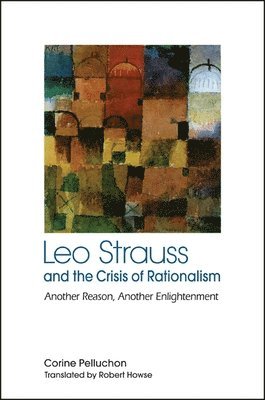
    Leo Strauss and the Crisis of Rationalism

    Another Reason, Another Enlightenment

    AvCorine Pelluchon

    Inbunden, Engelska, 2014

    Del i serien SUNY series in the Thought and Legacy of Leo Strauss

    1 076 kr

    Tillfälligt slut

    Fler format och utgåvor

    Häftad

    Tillf. slut

    Beskrivning

    Examines the German and Jewish sources of Strauss's thought and the extent to which his philosophy can shed light on the crisis of liberal democracy.How can Leo Strauss's critique of modernity and his return to tradition, especially Maimonides, help us to save democracy from its inner dangers? In this book, Corine Pelluchon examines Strauss's provocative claim that the conception of man and reason in the thought of the Enlightenment is self-destructive and leads to a new tyranny. Writing in a direct and lucid style, Pelluchon avoids the polemics that have characterized recent debates concerning the links between Strauss and neoconservatives, particularly concerns over Strauss's relation to the extreme right in Germany. Instead she aims to demystify the origins of Strauss's thought and present his relationship to German and Jewish thought in the early twentieth century in a manner accessible not just to the small circles devoted to the study of Strauss, but to a larger public. Strauss's critique of modernity is, she argues, constructive; he neither condemns modernity as a whole nor does he desire a retreat back to the Ancients, where slaves existed and women were not considered citizens. The question is to know whether we can learn something from the Ancients and from Maimonides-and not merely about them.

    Produktinformation

    • Utgivningsdatum:2014-02-01
    • Mått:152 x 229 x 17 mm
    • Vikt:572 g
    • Format:Inbunden
    • Språk:Engelska
    • Serie:SUNY series in the Thought and Legacy of Leo Strauss
    • Antal sidor:319
    • Förlag:State University of New York Press
    • ISBN:9781438449678
    • Översättare:Robert Howse

    Utforska kategorier

    • Filosofiska discipliner inom Filosofi och religion

    Mer om författaren

    Corine Pelluchon is Full Professor in Philosophy at the University of Franche-Comté in France. In addition to her book on Leo Strauss, which was awarded the François Furet Prize in 2006, she has written several other books. Robert Howse is Lloyd C. Nelson Professor of International Law at New York University School of Law and the author of Leo Strauss: Man of Peace.

    Innehållsförteckning

    • Translator’s NoteIntroductionThe Crisis of RationalismTwo Historical Shocks and a ThreatThe Crisis of Political PhilosophyModern Rationalism as the Destruction of ReasonThe Archeology and Overcoming of NihilismPart I. The Dissection of the Modern Religious Consciousness Introduction: The Perplexity of the Modern Religious Consciousness1. Enlightenment and Anti-EnlightenmentThe Jacobi QuestionThe Pantheism DebateThe Critique of Natural ReligionThere Is No Such Thing as Moderate EnlightenmentThe Rejection of the Kantian SolutionThe Controversy over the French RevolutionThe Crisis of the TraditionThe Science of Judaism and the Dialectic of AssimilationThe Discontinuity of the Ancients and ModernsThe Aporias of Zionism 2. Critique of Religion and Biblical CriticismThe Critique of Religion and Revelation in HobbesEpicureanismThe Interpretation of the BibleSocinianism and the Radical EnlightmentThe Need to Reconsider the Radical EnlightenmentSpinoza’s Particular Contribution to the Critique of ReligionPersecution and the Art of WritingThe Religion of the Ignorant and WeakBiblical Criticism (Bibelswissenschaft)The Social Function of ReligionThe Universal Religion and the "Christianity" of SpinozaThe Ambiguity of SpinozaThe Limits of Secular MoralityThe Enlightenment of SpinozaThe Legacy of the Critique of ReligionThe Critique of Revelation Has Not Destroyed the Interest in RevelationThe Challenge of PhilosophyThe Debt of the New Orthodoxy to the Enlightenment and Religious Liberalism3. The Return to the TraditionRationalism and MysticismAllegory and SymbolReason and ExperienceThe Human Experience of the AbsoluteReligion and PhilosophyEthics and SpiritualityRedemption and PoliticsThe Jewish Enlightenment of MaimonidesCohen and StraussFrom Morality to PoliticsThe Rational Critique of ReasonPart II. The Dissections of Modern Political Consciousness Introduction: The Foundations of Modern Political Thought1. The First Wave of ModernityMachiavelli, the Originator of the Modern EnlightenmentThe End of the Renaissance Humanist IdealPower, the Mastery of Men, and the Mastery of NaturePhilosophy, Propaganda, and BarbarismHobbes or the Founding of the Modern StatePolitical ScienceVanity and FearIndividualism, Liberalism, and AbsolutismFrom War to CommerceThe Crisis of Liberalism: The Dialogue between Strauss and SchmittFrom the Rechtsstaat to the Total State in the Era of TechnologyWar and the Affirmation of the PoliticalDecisionism and Political PhilosophyResoluteness in Heidegger2. The Second and Third Waves of ModernityThe Rousseauian MovementThe Paradoxes of RousseauSociety and the RichRevolution, and History, and the General WillModern Tyranny, Marxism, and CapitalismThe Dialogue between Strauss and KojevePhilosophy and PoliticsLocke’s LiberalismThe Contemporary Form of TyrannyNihilism according to Nietzsche and after NietzscheThe Repetition of Antiquity at the Peak of ModernityThe Law as Denaturing and the Religious Atheism of NietzscheThe Radicalism of the Straussian Critique of Christianity3. Political Philosophy as First PhilosophyThe Return to SocratesPolitical Philosophy as the Fulfillment of PhenomenologyThe Conflict between Poetry and PhilosophyWisdom and ModerationThe Medieval EnlightenmentThe Platonism of Farabi and MaimonidesThe Enlightenment of MaimonidesThe Natural Conditions of ProphecyEsoteric Teaching and the EnlightenmentThe Task for Thinking and the Rebirth of PhilosophyPhenomenology and the Meaning of the LawThe Concepti