• Fri frakt över 249 kr
  • •
  • Snabba leveranser
  • •
  • Billiga böcker
Kundservice

Du är på sajten för privatpersoner.

Företag, bibliotek eller offentlig verksamhet?

Du handlar på classic.bokus.com, där alla dina funktioner finns intakta.
Till classic.bokus.com
Bokus logotyp. Gå till startsidan.
  • Erbjudanden
  • Nyheter
  • Student
  • Topplistor
  • Barn & ungdom
  • Bokus Play
  • E-böcker
  • Pocketböcker
  • Spel & pussel

10% rabatt på allt med kod NYSTART10 →

Sidfot

Mina sidor

    Hjälp

    • Kundservice
    • Vanliga frågor och svar
    • Frakt och leverans
    • Retur vid ångerrätt
    • Reklamera vara
    • Betalning
    • Köpvillkor
    • Allmänna villkor
    • Information om webbplatsens tillgänglighet

    Om Bokus

    • Om oss
    • Pressrum
    • För studenter
    • För företag
    • För bibliotek och offentlig verksamhet
    • För leverantörer
    • Hållbarhet

    Populärt

    • Aktuella erbjudanden
    • Presentkort
    • Studentlitteratur
    • Nya böcker
    • Topplistor
    • Signerade böcker
    • Engelska böcker

    Inspiration

    • Boktips
    • BookTok
    • Populära bokserier
    • Barnbokskaraktärer
    • Populära författare
    Logotyp för Bokus
    Följ oss på Facebook (extern länk)Följ oss på Instagram (extern länk)Följ oss på YouTube (extern länk)Följ oss på TikTok (extern länk)
    bokus @ CookiesAnpassa cookiesIntegritetspolicyKöpvillkor
    Till Citymail hemsida (extern länk)Till Budbee hemsida (extern länk)Till Postnord hemsida (extern länk)Till Schenker hemsida (extern länk)Till Early Bird hemsida (extern länk)Till Walleys hemsida (extern länk)
    1. Filosofi och religion
    2. Filosofi
    3. Filosofiska discipliner

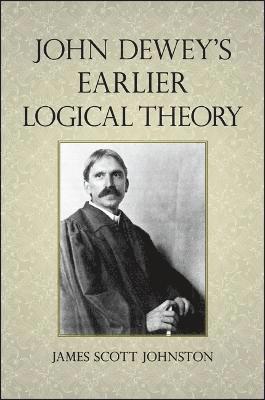
    John Dewey's Earlier Logical Theory

    AvJames Scott Johnston

    Inbunden, Engelska, 2014

    1 076 kr

    Tillfälligt slut

    Fler format och utgåvor

    Häftad

    449 kr

    Beskrivning

    Analysis of Dewey's pre-1916 work on logic and its relationship to his better-known 1938 book on the topic.When John Dewey's logical theory is discussed, the focus is invariably on his 1938 book Logic: The Theory of Inquiry. His earlier logical works are seldom referenced except in relation to that later work. As a result, Dewey's earlier logical theory is cut off from his later work, and this later work receives a curiously ahistorical gloss. Examining the earlier works from Studies in Logical Theory to Essays in Experimental Logic, James Scott Johnston provides an unparalleled account of the development of Dewey's thinking in logic, examining various themes and issues Dewey felt relevant to a systematic logical theory. These include the context in which logical theory operates, the ingredients of logical inquiry, the distinctiveness of an instrumentalist logical theory, and the benefit of logical theory to practical concerns-particularly ethics and education. Along the way, and complicating the standard picture of Dewey's logic being indebted to Charles S. Peirce, William James, and Charles Darwin, Johnston argues that Hegel is ultimately a more important influence.

    Produktinformation

    • Utgivningsdatum:2014-12-01
    • Mått:152 x 229 x 14 mm
    • Vikt:581 g
    • Format:Inbunden
    • Språk:Engelska
    • Antal sidor:272
    • Förlag:State University of New York Press
    • ISBN:9781438453453

    Utforska kategorier

    • Filosofiska discipliner inom Filosofi och religion

    Mer om författaren

    James Scott Johnston is Associate Professor of Education and Philosophy at Memorial University in Canada. He is the author of Deweyan Inquiry: From Education Theory to Practice and Inquiry and Education: John Dewey and the Quest for Democracy, both published by SUNY Press.

    Recensioner i media

    "...an interesting and thought-provoking book that opens new pathways for understanding Dewey's philosophy." — European Journal of Pragmatism and American Philosophy

    Innehållsförteckning

    • IntroductionRapid History of Dewey’s LogicRapid Review of Dewey’s Earlier LogicReview of interpretations of Dewey’s Earlier LogicChapter Summaries1. Dewey’s Logical Education: From Early Essays to Essays in Experimental Logic IntroductionPart One: Dewey’s Motives for Logical TheoryPart Two: Dewey’s Logical Education 1882–1902Part Three: Dewey’s Logical Education 1903–19152. Dewey’s Logical Education: The Influence of HegelPart One: The Hegel Scholarship on DeweyPart Two: The Question Concerning HegelPart Three: Dewey on HegelPart Four: What Dewey Takes from Hegel3. Dewey’s Earliest Views on Logic"Is Logic a Dualistic Science?" (1890)"The Logic of Verification" (1890)"The Present Position of Logical Theory" (1891)"Some Stages of Logical Thought" (1900)Conclusion4. Studies in Logical Theory (1903)The PrefaceThe Relationship of Thought and its Subject-MatterThe Antecedents and Stimuli of ThinkingData and MeaningsThe Objects of ThoughtConclusion5. Practical LogicsLectures on "The Logic of Ethics" (1900)"Logical Conditions of a Scientific Treatment of Morality" (1903)How We Think (1910)Conclusion6. Essays in Experimental Logic (1916)The IntroductionMiscellaneous Essays"The Logic of Judgments of Practice"Conclusion7. From Essays in Experimental Logic (1916) to Logic: The Theory of Inquiry (1938)IntroductionThe Existential Matrices of InquiryScientific and Social InquiryPropositions and Inferences in InquiryNotesBibliographyIndex