• Fri frakt över 249 kr
  • •
  • Snabba leveranser
  • •
  • Billiga böcker
Kundservice

Du är på sajten för privatpersoner.

Företag, bibliotek eller offentlig verksamhet?

Du handlar på classic.bokus.com, där alla dina funktioner finns intakta.
Till classic.bokus.com
Bokus logotyp. Gå till startsidan.
  • Erbjudanden
  • Nyheter
  • Student
  • Topplistor
  • Barn & ungdom
  • Bokus Play
  • E-böcker
  • Pocketböcker
  • Spel & pussel

10% rabatt på allt med kod: NYSTART10 →

Sidfot

Mina sidor

    Hjälp

    • Kundservice
    • Vanliga frågor och svar
    • Frakt och leverans
    • Retur vid ångerrätt
    • Reklamera vara
    • Betalning
    • Köpvillkor
    • Allmänna villkor
    • Information om webbplatsens tillgänglighet

    Om Bokus

    • Om oss
    • Pressrum
    • För studenter
    • För företag
    • För bibliotek och offentlig verksamhet
    • För leverantörer
    • Hållbarhet

    Populärt

    • Aktuella erbjudanden
    • Presentkort
    • Studentlitteratur
    • Nya böcker
    • Topplistor
    • Signerade böcker
    • Engelska böcker

    Inspiration

    • Boktips
    • BookTok
    • Populära bokserier
    • Barnbokskaraktärer
    • Populära författare
    Logotyp för Bokus
    Följ oss på Facebook (extern länk)Följ oss på Instagram (extern länk)Följ oss på YouTube (extern länk)Följ oss på TikTok (extern länk)
    bokus @ CookiesAnpassa cookiesIntegritetspolicyKöpvillkor
    Till Citymail hemsida (extern länk)Till Budbee hemsida (extern länk)Till Postnord hemsida (extern länk)Till Schenker hemsida (extern länk)Till Early Bird hemsida (extern länk)Till Walleys hemsida (extern länk)
    1. Filosofi och religion
    2. Religion och tro
    3. Religion: allmänt

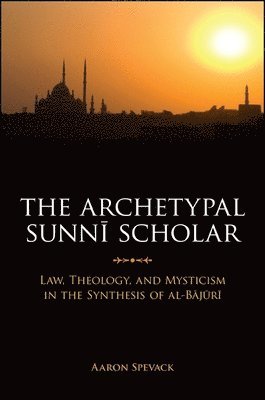
    Archetypal Sunnī Scholar

    Law, Theology, and Mysticism in the Synthesis of al-Bājūri

    AvAaron Spevack

    Inbunden, Engelska, 2014

    1 076 kr

    Tillfälligt slut

    Fler format och utgåvor

    Häftad

    Tillf. slut

    Beskrivning

    Considers the work of nineteenth-century theologian Ibrahim al-Bajuri and contests the notion of intellectual decline in Islamic thought from the thirteenth through nineteenth centuries.This is a rare study of a late premodern Islamic thinker, Ibrahim al- Bājūrī, a nineteenth-century scholar and rector of Cairo's al-Azhar University. Aaron Spevack explores al- Bājūrī's legal, theological, and mystical thought, highlighting its originality and vibrancy in relation to the millennium of scholarship that preceded and informed it, and also detailing its continuing legacy. The book makes a case for the normativity of the Gabrielian Paradigm, the study of law, rational theology, and Sufism, in the person of al- Bājūrī. Soon after his death in 1860, this typical pattern of scholarship would face significant challenges from modernists, reformers, and fundamentalists. Spevack challenges beliefs that rational theology, syllogistic logic, and Sufism were not part of the predominant conception of orthodox scholarship and shows this scholarly archetype has not disappeared as an ideal. In addition, the book contests prevailing beliefs in academic and Muslim circles about intellectual decline from the thirteenth through nineteenth centuries.

    Produktinformation

    • Utgivningsdatum:2014-10-01
    • Mått:152 x 229 x 11 mm
    • Vikt:499 g
    • Format:Inbunden
    • Språk:Engelska
    • Antal sidor:220
    • Förlag:State University of New York Press
    • ISBN:9781438453712

    Utforska kategorier

    • Religion: allmänt inom Filosofi och religion
    • Islam inom Filosofi och religion

    Mer om författaren

    Aaron Spevack is Assistant Professor of Religion at Colgate University. He translated and annotated Ghazali on the Principles of Islamic Spirituality: Selections from The Forty Foundations of Religion—Annotated and Explained.

    Recensioner i media

    "Reading against the Orientalist model of Islamic intellectual tradition, which was preoccupied with the notions of independence, creativity and progress, this book offers an alternative approach to nineteenth-century Islamic scholarship, focusing on the normative or ideal platform that Muslim scholars like al- Bājūrī wished to preserve. The book also serves as a reminder … that the categorical devaluation of postclassical Islamic scholarship produced by early Orientalist scholars and Muslim reformists alike, does not adequately reflect the Islamic legal, theological, and mystical tradition. A more sympathetic reading of nineteenth-century Islamic scholarship, such as Spevack's, may perhaps open up multiple trajectories of Islamic tradition that will give us a better understanding of the Islamic world today." — Islamic Law and Society"Spevack's trailblazing book is a lucid survey and deep analysis of the works and ideas of al-Bājūrī. Spevack shows precisely how al-Bājūrī served as an 'archetypal' Sunnī scholar. In the process, he succeeds in evoking the subtlety, sophistication, and dynamism of the postclassical Islamic traditions of theology, mysticism, and jurisprudence." — Robert Wisnovsky, McGill University"Here is a readable and comprehensive introduction to the intellectual production of one of the last giants of the Sunnī legal tradition in the nineteenth century. Sensitive to the scholar's strong affiliation with a millennium-long tradition, this introduction will be appreciated by seasoned scholars and newcomers alike." — Ahmad Atif Ahmad, University of California, Santa Barbara"Spevack's book is an important corrective to Eurocentric narratives of the nineteenth century that focus solely on Islamic thinkers whose main concern is with European 'modernity' and its challenges while breezily ignoring the continuing tradition of madrasah scholarship in the modern period." — Khaled El-Rouayheb, Harvard University

    Innehållsförteckning

    • AcknowledgmentsIntroduction1. Al-Bājūrī’s Life and ScholarshipA Traditional Shaykh al-Azhar in an Era of Attempted ReformAl-Bājūrī’s CharacterAl-Bājūrī’s WorksAl-Bājūrī’s Commentaries and Their PredecessorsAl-Bājūrī’s Literary Sources and the Commentary Tradition2. Al-Bājūrī’s View of Religion and Method in the Egyptian MilieuThe Archetype and MethodThe Gabrielian Paradigm: Al-Bājūrī’s View of the Three Dimensions of IslamThe Ijmā’-Ikhtilāf SpectrumThe Egyptian Milieu3. Al-Bājūrī in Dialogue with His Archetypal PredecessorsAl-Bājūrī’s Theological PredecessorsAl-Bājūrī’s Predecessors in LawAl-Bājūrī’s Sufi PredecessorsThe Independent Jurist-Theologian-Sufis and Their Affiliations4. Al-Bājūrī’s Legal, Theological, and Mystical ThoughtAl-Bājūrī on Law: Ijtihād and TaqlīdAl-Bājūrī on Sufism: Its Goals, Methods, and Explanations or ExclamationsAl-Bājūrī on the Rational Sciences5. Legacy and ConclusionAl-Bājūrī’s LegacyConclusionNotesBibliographyIndex