• Fri frakt över 249 kr
  • •
  • Snabba leveranser
  • •
  • Billiga böcker
Kundservice

Du är på sajten för privatpersoner.

Företag, bibliotek eller offentlig verksamhet?

Du handlar på classic.bokus.com, där alla dina funktioner finns intakta.
Till classic.bokus.com
Bokus logotyp. Gå till startsidan.
  • Erbjudanden
  • Nyheter
  • Student
  • Topplistor
  • Barn & ungdom
  • Bokus Play
  • E-böcker
  • Pocketböcker
  • Spel & pussel

Må bättre, för mindre! Upp till 50% rabatt på hälsoböcker

Sidfot

Mina sidor

    Hjälp

    • Kundservice
    • Vanliga frågor och svar
    • Frakt och leverans
    • Retur vid ångerrätt
    • Reklamera vara
    • Betalning
    • Köpvillkor
    • Allmänna villkor
    • Information om webbplatsens tillgänglighet

    Om Bokus

    • Om oss
    • Pressrum
    • För studenter
    • För företag
    • För bibliotek och offentlig verksamhet
    • För leverantörer
    • Hållbarhet

    Populärt

    • Aktuella erbjudanden
    • Presentkort
    • Studentlitteratur
    • Nya böcker
    • Topplistor
    • Signerade böcker
    • Engelska böcker

    Inspiration

    • Boktips
    • BookTok
    • Populära bokserier
    • Barnbokskaraktärer
    • Populära författare
    Logotyp för Bokus
    Följ oss på Facebook (extern länk)Följ oss på Instagram (extern länk)Följ oss på YouTube (extern länk)Följ oss på TikTok (extern länk)
    bokus @ CookiesAnpassa cookiesIntegritetspolicyKöpvillkor
    Till Citymail hemsida (extern länk)Till Budbee hemsida (extern länk)Till Postnord hemsida (extern länk)Till Schenker hemsida (extern länk)Till Early Bird hemsida (extern länk)Till Walleys hemsida (extern länk)
    1. Skönlitteratur
    2. Litteraturvetenskap
    3. Litteraturteori

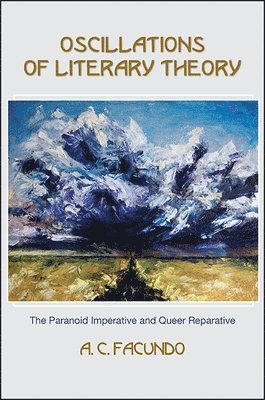
    Oscillations of Literary Theory

    The Paranoid Imperative and Queer Reparative

    AvA. C. Facundo

    Inbunden, Engelska, 2016

    Del i serien SUNY series, Transforming Subjects: Psychoanalysis, Culture, and Studies in Education

    1 238 kr

    Tillfälligt slut

    Fler format och utgåvor

    Häftad

    Tillf. slut

    Beskrivning

    Revises key psychoanalytic concepts that influence interpretive practices in the humanities and formulates a new approach to reading fiction.Oscillations of Literary Theory offers a new psychoanalytic approach to reading literature queerly, one that implicates queer theory without depending on explicit representations of sex or queer identities. By focusing on desire and identifications, A. C. Facundo argues that readers can enjoy the text through a variety of rhythms between two (eroticized) positions: the paranoid imperative and queer reparative. Facundo examines the metaphor of rupture as central to the logic of critique, particularly the project to undo conventional formations of identity and power. To show how readers can rebuild their relational worlds after the rupture, Facundo looks to the themes of the desire for omniscience, the queer pleasure of the text, loss and letting go, and the vanishing points that structure thinking. Analyses of Nabokov's Lolita, Danielewski's House of Leaves, Findley's The Wars, and Ishiguro's Never Let Me Go are included, which model this new approach to reading.

    Produktinformation

    • Utgivningsdatum:2016-12-01
    • Mått:152 x 229 x 13 mm
    • Vikt:463 g
    • Format:Inbunden
    • Språk:Engelska
    • Serie:SUNY series, Transforming Subjects: Psychoanalysis, Culture, and Studies in Education
    • Antal sidor:242
    • Förlag:State University of New York Press
    • ISBN:9781438463094

    Utforska kategorier

    • Litteraturteori inom Skönlitteratur
    • Litteraturvetenskap inom Skönlitteratur

    Mer om författaren

    A. C. Facundo is an independent scholar, who received a PhD in English from York University in Toronto and continued as a Social Sciences and Humanities Research Council postdoctoral fellow at the University at Buffalo, State University of New York.

    Recensioner i media

    "Armed with a full repertoire of psychoanalytic resources, Facundo navigates the paranoid-reparative debate in literary studies with greater finesse than any critic I've read. Reframing current critical impasses, Oscillations of Literary Theory makes substantial contributions to narrative theory and aesthetics by illuminating their crucial connections with sexuality and pleasure. Facundo offers us here nothing less than a new method of reading queerly." — Tim Dean, University of Illinois, Urbana-Champaign"This book seeks to understand hermeneutic imperatives and flights from these in terms of paranoid and reparative drives (as distinct from affect). It is a bold and ambitious project, but Facundo brings to it an exceptional array of skills. I am impressed by the author's close, subtle, and very canny readings of both theoretical and literary texts and by her demonstration of the complexity, variety, and centrality of ideas and operations of paranoia and the reparative in writings from Freud to the present. Oscillations revitalizes psychoanalytic criticism in its distinctly queer relation to psychoanalysis, a relation that yields surprising and refreshing insights." — Stephen M. Barber, coeditor of Regarding Sedgwick: Essays on Queer Culture and Critical Theory

    Innehållsförteckning

    • AcknowledgmentsIntroduction: Queering Omniscience1. The Death Drive and the Life Drive RevisitedI. "To Push" the Drives: Sigmund Freud’s Productive SpeculationsII. Economic Binding as the Death Drive: The Critique of TotalitarianismIII. Dynamic Binding as the Life Drive: Reparative Formations2. "A Tempest in a Test Tube": The Paranoid Imperative of Scientia Sexualis and Psychoanalysis in Vladimir Nabokov’s Lolita I. IntroductionII. The Weaves of Scientia Sexualis III. Parody and Psychoanalysis as a Practice of ReadingIV. The Loss of Lolita, the Unbinding of EnlightenmentV. Conclusion3. "An Ethics of Failure": Visual Literalization as a Queer Vanishing Point in Mark Danielewski’s House of Leaves I. IntroductionII. What is Queer about Failure?III. Visual Literalization IV. Failure and the ReparativeV. Conclusion4. "Kill Your Children": Queer Temporalities and Failed Identification in Timothy Findley’s The Wars I. IntroductionII. The Life Drive in WarIII. Narrative RemediationIV. Queer Temporalities and Failed IdentificationV. Conclusion5. Reading the Queer Reparative in Kazuo Ishiguro’s Never Let Me Go I. IntroductionII. Mourning TotalityIII. Childhood: Objects and PhantasyIV. Adolescence: Phantasy TheoriesV. Childhood Redux: Art and the Thinking SubjectVI. ConclusionConclusionNotesBibliographyIndex