• Fri frakt över 249 kr
  • •
  • Snabba leveranser
  • •
  • Billiga böcker
Kundservice

Du är på sajten för privatpersoner.

Företag, bibliotek eller offentlig verksamhet?

Du handlar på classic.bokus.com, där alla dina funktioner finns intakta.
Till classic.bokus.com
Bokus logotyp. Gå till startsidan.
  • Erbjudanden
  • Nyheter
  • Student
  • Topplistor
  • Barn & ungdom
  • Bokus Play
  • E-böcker
  • Pocketböcker
  • Spel & pussel

Må bättre, för mindre! Upp till 50% rabatt på hälsoböcker

Sidfot

Mina sidor

    Hjälp

    • Kundservice
    • Vanliga frågor och svar
    • Frakt och leverans
    • Retur vid ångerrätt
    • Reklamera vara
    • Betalning
    • Köpvillkor
    • Allmänna villkor
    • Information om webbplatsens tillgänglighet

    Om Bokus

    • Om oss
    • Pressrum
    • För studenter
    • För företag
    • För bibliotek och offentlig verksamhet
    • För leverantörer
    • Hållbarhet

    Populärt

    • Aktuella erbjudanden
    • Presentkort
    • Studentlitteratur
    • Nya böcker
    • Topplistor
    • Signerade böcker
    • Engelska böcker

    Inspiration

    • Boktips
    • BookTok
    • Populära bokserier
    • Barnbokskaraktärer
    • Populära författare
    Logotyp för Bokus
    Följ oss på Facebook (extern länk)Följ oss på Instagram (extern länk)Följ oss på YouTube (extern länk)Följ oss på TikTok (extern länk)
    bokus @ CookiesAnpassa cookiesIntegritetspolicyKöpvillkor
    Till Citymail hemsida (extern länk)Till Budbee hemsida (extern länk)Till Postnord hemsida (extern länk)Till Schenker hemsida (extern länk)Till Early Bird hemsida (extern länk)Till Walleys hemsida (extern länk)
    1. Filosofi och religion
    2. Filosofi

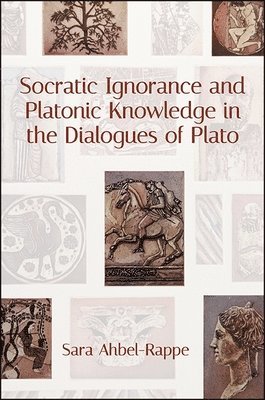
    Socratic Ignorance and Platonic Knowledge in the Dialogues of Plato

    AvSara Ahbel-Rappe

    Häftad, Engelska, 2019

    Del i serien SUNY series in Western Esoteric Traditions

    596 kr

    . Fri frakt över 249 kr.

    Fler format och utgåvor

    Inbunden

    Tillf. slut

    Beskrivning

    Argues that Socrates' fundamental role in the dialogues is to guide us toward self-inquiry and self-knowledge.In this highly original and provocative book, Sara Ahbel-Rappe argues that the Platonic dialogues contain an esoteric Socrates who signifies a profound commitment to self-knowledge and whose appearances in the dialogues are meant to foster the practice of self-inquiry. According to Ahbel-Rappe, the elenchus, or inner examination, and the thesis that virtue is knowledge, are tools for a contemplative practice that teaches us how to investigate the mind and its objects directly. In other words, the Socratic persona of the dialogues represents wisdom, which is distinct from and serves as the larger space in which Platonic knowledge-ethics, epistemology, and metaphysics-is constructed. Ahbel-Rappe offers complete readings of the Apology, Charmides, Alcibiades I, Euthyphro, Lysis, Phaedrus, Theaetetus, and Parmenides, as well as parts of the Republic. Her interpretation challenges two common approaches to the figure of Socrates: the thesis that the dialogues represent an "early" Plato who later disavows his reliance on Socratic wisdom, and the thesis that Socratic ethics can best be expressed by the construct of eudaimonism or egoism.

    Produktinformation

    • Utgivningsdatum:2019-01-02
    • Mått:152 x 226 x 20 mm
    • Vikt:431 g
    • Format:Häftad
    • Språk:Engelska
    • Serie:SUNY series in Western Esoteric Traditions
    • Antal sidor:296
    • Förlag:State University of New York Press
    • ISBN:9781438469263

    Utforska kategorier

    • Filosofi inom Filosofi och religion

    Mer om författaren

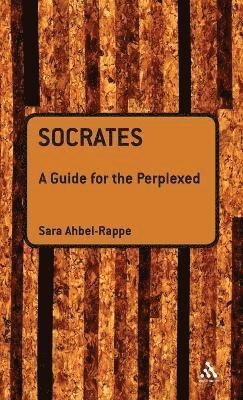
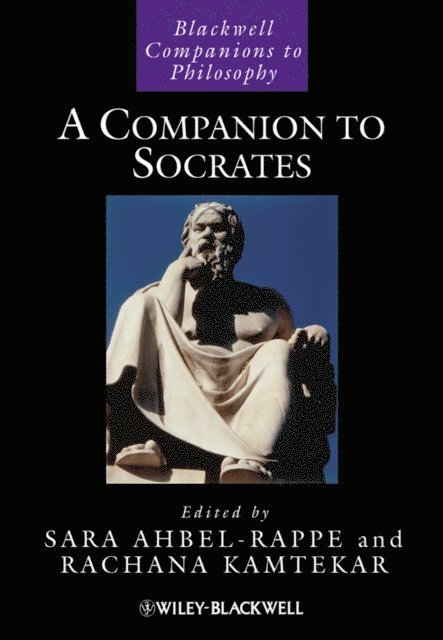
    Sara Ahbel-Rappe is Professor of Greek and Latin at the University of Michigan. She is the author of Socrates: A Guide for the Perplexed and Reading Neoplatonism: Non-discursive Thinking in the Texts of Plotinus, Proclus, and Damascius; translator of Damascius's Problems and Solutions Concerning First Principles; and coeditor (with Rachana Kamtekar) of A Companion to Socrates.

    Recensioner i media

    "Socrates stands at the root of our Western philosophical traditions. But, as becomes clear in this revolutionary book, the fullness of Socrates's presence, his life, and his wisdom, have been overlooked in our scholarship, and so has the continued tradition of Socratic wisdom as represented by the later Platonic thinkers … Ahbel-Rappe reveals an existential dimension of the Socratic tradition that is essential for anyone interested not only in the origins of Platonism but in what made Platonism the most compelling philosophic tradition of the ancient world." — Gnosis"…Ahbel-Rappe's book … should be regarded as an attempt to revolutionize the way we envision and engage Platonic and Socratic philosophy. Unabashedly overturning and flouting developmentalist approaches to Plato, Ahbel-Rappe invites readers to see not merely the continuity between Plato and his depiction of Socrates in the so-called early dialogues but also their complementarity, i.e. the mutual co-belonging and co-determination between the Socratic way of life and Plato's metaphysics. In doing so, she advances a nuanced, esoteric reading of Socrates that is neither Straussian nor in accord with the Tubingen school (though she does not reject these forms of esotericism in Plato)." — Polis"The questions that Rappe raises are interesting and her analyses are thought-provoking … I found the book stimulating, as it encourages the reader to reflect anew about the numerous facets of the Socrates persona." — Michael Erler, Journal of the History of Philosophy"…[Ahbel-Rappe] provides something of a manifesto for understanding the figure of Socrates in Plato's Dialogues against dominant interpretations … Refreshing for its firm articulation of an esoteric reading of Socrates and its comparison with elements of Eastern thought, this volume breaks new ground in an otherwise well-tilled area of classical philosophy." — CHOICE

    Innehållsförteckning

    • Preface: Socrates as an Esoteric Figure Acknowledgments Introduction: Socratic Ignorance and Platonic Knowledge 1. Socratic Philosophy 2. Socratic Receptions 3. Socrates and Self‑Knowledge 4. Euthydemus: Native and Foreign 5. Alcibiades I: The Mirror of Socrates 6. Lysis: The Aporetic Identity of the First Friend 7. From Virtues to Forms in the Phaedrus 8. Theaetetus: Socrates’s Interrogation of Platonic Knowledge 9. "He Who Is Wisest among You": Socratic Ignorance between the Parmenides and the Apology Conclusion. The Socratic Paradigm Notes Works Cited Index