• Fri frakt över 249 kr
  • •
  • Snabba leveranser
  • •
  • Billiga böcker
Kundservice

Du är på sajten för privatpersoner.

Företag, bibliotek eller offentlig verksamhet?

Du handlar på classic.bokus.com, där alla dina funktioner finns intakta.
Till classic.bokus.com
Bokus logotyp. Gå till startsidan.
  • Erbjudanden
  • Nyheter
  • Student
  • Topplistor
  • Barn & ungdom
  • Bokus Play
  • E-böcker
  • Pocketböcker
  • Spel & pussel

10% rabatt på allt med kod NYSTART10 →

Sidfot

Mina sidor

    Hjälp

    • Kundservice
    • Vanliga frågor och svar
    • Frakt och leverans
    • Retur vid ångerrätt
    • Reklamera vara
    • Betalning
    • Köpvillkor
    • Allmänna villkor
    • Information om webbplatsens tillgänglighet

    Om Bokus

    • Om oss
    • Pressrum
    • För studenter
    • För företag
    • För bibliotek och offentlig verksamhet
    • För leverantörer
    • Hållbarhet

    Populärt

    • Aktuella erbjudanden
    • Presentkort
    • Studentlitteratur
    • Nya böcker
    • Topplistor
    • Signerade böcker
    • Engelska böcker

    Inspiration

    • Boktips
    • BookTok
    • Populära bokserier
    • Barnbokskaraktärer
    • Populära författare
    Logotyp för Bokus
    Följ oss på Facebook (extern länk)Följ oss på Instagram (extern länk)Följ oss på YouTube (extern länk)Följ oss på TikTok (extern länk)
    bokus @ CookiesAnpassa cookiesIntegritetspolicyKöpvillkor
    Till Citymail hemsida (extern länk)Till Budbee hemsida (extern länk)Till Postnord hemsida (extern länk)Till Schenker hemsida (extern länk)Till Early Bird hemsida (extern länk)Till Walleys hemsida (extern länk)
    1. Naturvetenskap och teknik
    2. Matematik och naturvetenskap
    3. Biologi
    4. Djurens beteende

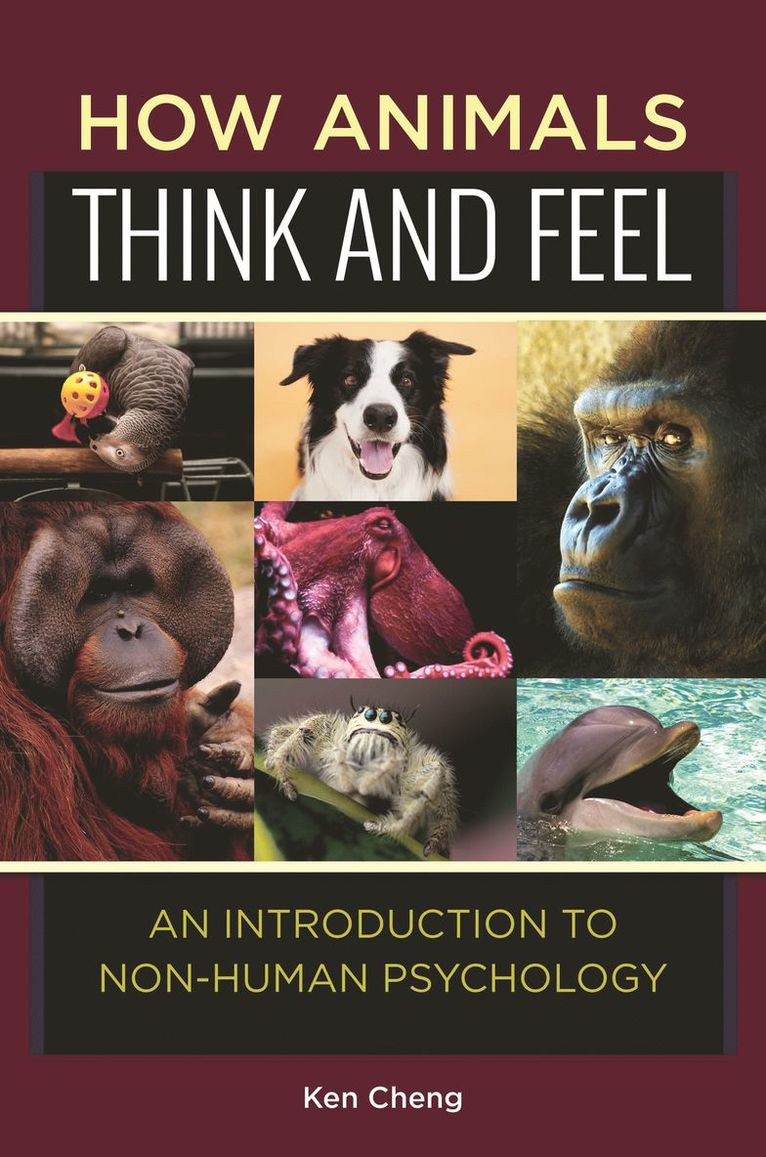
    How Animals Think and Feel

    An Introduction to Non-Human Psychology

    AvKen Cheng

    Inbunden, Engelska, 2016

    771 kr

    Beställningsvara. Skickas inom 10-15 vardagar. Fri frakt över 249 kr.

    Fler format och utgåvor

    E-bok

    830 kr

    E-bok

    807 kr

    Beskrivning

    This highly accessible book explains key scientific findings in the areas of animal cognition, emotion, and behavior in easy-to-understand language.Why do dogs get separation anxiety? Can a chimpanzee recognize itself in a mirror? Do animals in a zoo get neurotic? Do animals actually have emotions, or are humans simply anthropomorphizing them? How Animals Think and Feel: An Introduction to Non-Human Psychology answers these interesting questions and many more in its examination of animal psychology—particularly non-human primates (our closest relatives) and companion animals (the animals with which we spend the most time).Readers will learn about the history of the study of animals as well as the methodologies and applications of animal research, examples of higher-level thought and problem solving in animals, learning and memory, emotion, and basic behaviors such as feeding and mating. Chapters examine specific animal species or groups in greater depth to address particular behaviors and discuss characteristic traits. The book also includes sidebars that offer additional high-interest, ready-reference content; a bibliography of print and electronic sources for further study; and a glossary of unfamiliar terms.

    Produktinformation

    • Utgivningsdatum:2016-10-03
    • Mått:164 x 236 x 24 mm
    • Vikt:620 g
    • Format:Inbunden
    • Språk:Engelska
    • Antal sidor:312
    • Förlag:Bloomsbury Publishing Plc
    • ISBN:9781440837142

    Utforska kategorier

    • Djurens beteende inom Naturvetenskap och teknik
    • Djurböcker inom Djur och Natur

    Mer om författaren

    Ken Cheng, PhD, is professor of biological sciences at Macquarie University, Sydney, Australia.

    Recensioner i media

    Overall, this volume fills an important gap in the field by providing an approachable introduction to these topics for psychology students. Summing Up: Recommended. Lower- and upper-division undergraduates; general readers.

    Innehållsförteckning

    • PrefaceChapter 1—IntroductionEvolutionScientific Study of Animal BehaviorTinbergen's Four WhysPART I: ANIMAL COGNITIONChapter 2—Sensory and Perceptual ProcessesTransductionRange of Sensory WorldsPerceptual OrganizationPerceptual ProcessesConclusionChapter 3—Basic LearningWhy Learn?Nonassociative LearningAssociative Learning: Classical ConditioningAssociative Learning: Operant ConditioningLatent LearningThe Misbehavior of Animals: Constraints on LearningConclusionChapter 4—Spatial Cognition and BehaviorPath IntegrationTerrestrial LandmarksGeometrySome Neurobiology of Spatial CognitionCognitive MapDebate: Do Insects Use Cognitive Maps?Global NavigationConclusionChapter 5—TimingCircadian ClocksArranging Behaviors in Circadian TimeInterval TimingMultiple Oscillators for TimingConclusionChapter 6—Numerical CognitionAnalog Magnitude System: Approximate CountsObject-Tracking System: One, Two, Three, Too ManyTraining Animals to CountConclusionChapter 7—EmotionsEmotions and MotivationEmotions in Comparative PerspectiveWhat about Emotions in Invertebrate Animals?Emotions, Consciousness, and EthicsConclusionChapter 8—Animal CommunicationSignals and CuesWide Range of SignalsFunctions of SignalsAttention SignalsCamouflage SignalsIdentity SignalsMimicryAggressive MimicrySignals of Quality: Sexual Selection at WorkAlarm Calls: Warning SignalsDebate: How Important Is the Actual Information Conveyed through Animal Communication?Cognitive Processes in CommunicationConclusionChapter 9—Complex CognitionPhysical CognitionEpisodic-Like MemoryProspective CognitionMetacognitionDebate: Do Animals Have Metacognition?Self-Recognition: The Mirror TestSocial LearningTheory of MindConclusionPART II: CASE STUDIES OF SELECTED ANIMALSChapter 10—HoneybeesEusocial LifestyleHoneybee CognitionColony Collapse: A Multifaceted SyndromeConclusionChapter 11—Jumping SpidersBest Arthropod EyesMyrmarachne: Ant-Mimicking Jumping SpidersPortia: Stalker Playing Mind GamesConclusionChapter 12—CephalopodsColeoid Nervous Systems: Embodied IntelligenceLearning in CephalopodsPlay in OctopusesSkin Coloration: Masters of DisguiseConclusionChapter 13—CorvidsClark's NutcrackersNew Caledonian CrowsWestern Scrub JaysConclusionChapter 14—ParrotsKeaAlex the African Grey ParrotConclusionChapter 15—DolphinsNumerical SenseTool UseCulturePlanning and Prospective CognitionCooperation and AltruismImitationArtificial "Language"ConclusionChapter 16—DogsWEIRD Human and WHOC DogsDomestication of the Dog: Coevolution of Uncertain OriginCanid Play and Wild JusticeSensitivity to HumansWord Learning in Two Dogs: A Record for NonprimatesConclusionChapter 17—Great ApesPrimates and Great Apes: Some Basic BiologyManual Skills and Clever ForagingBrain and Intelligence in PrimatesNim, Kanzi, and Ape LanguageNimKanziConclusionChapter 18—What about Humans?Brief SummaryWhat about Humans?Debate: What Is Special about Humans?GlossaryReferences and Other Interesting MaterialsAbout the Author and ContributorsIndex