• Fri frakt över 249 kr
  • •
  • Snabba leveranser
  • •
  • Billiga böcker
Kundservice

Du är på sajten för privatpersoner.

Företag, bibliotek eller offentlig verksamhet?

Du handlar på classic.bokus.com, där alla dina funktioner finns intakta.
Till classic.bokus.com
Bokus logotyp. Gå till startsidan.
  • Erbjudanden
  • Nyheter
  • Student
  • Topplistor
  • Barn & ungdom
  • Bokus Play
  • E-böcker
  • Pocketböcker
  • Spel & pussel

10% rabatt på allt med kod NYSTART10 →

Sidfot

Mina sidor

    Hjälp

    • Kundservice
    • Vanliga frågor och svar
    • Frakt och leverans
    • Retur vid ångerrätt
    • Reklamera vara
    • Betalning
    • Köpvillkor
    • Allmänna villkor
    • Information om webbplatsens tillgänglighet

    Om Bokus

    • Om oss
    • Pressrum
    • För studenter
    • För företag
    • För bibliotek och offentlig verksamhet
    • För leverantörer
    • Hållbarhet

    Populärt

    • Aktuella erbjudanden
    • Presentkort
    • Studentlitteratur
    • Nya böcker
    • Topplistor
    • Signerade böcker
    • Engelska böcker

    Inspiration

    • Boktips
    • BookTok
    • Populära bokserier
    • Barnbokskaraktärer
    • Populära författare
    Logotyp för Bokus
    Följ oss på Facebook (extern länk)Följ oss på Instagram (extern länk)Följ oss på YouTube (extern länk)Följ oss på TikTok (extern länk)
    bokus @ CookiesAnpassa cookiesIntegritetspolicyKöpvillkor
    Till Citymail hemsida (extern länk)Till Budbee hemsida (extern länk)Till Postnord hemsida (extern länk)Till Schenker hemsida (extern länk)Till Early Bird hemsida (extern länk)Till Walleys hemsida (extern länk)
    1. Samhälle och politik
    2. Samhälle och kultur
    3. Kultur och medier
    4. Referensverk och tvärvetenskap

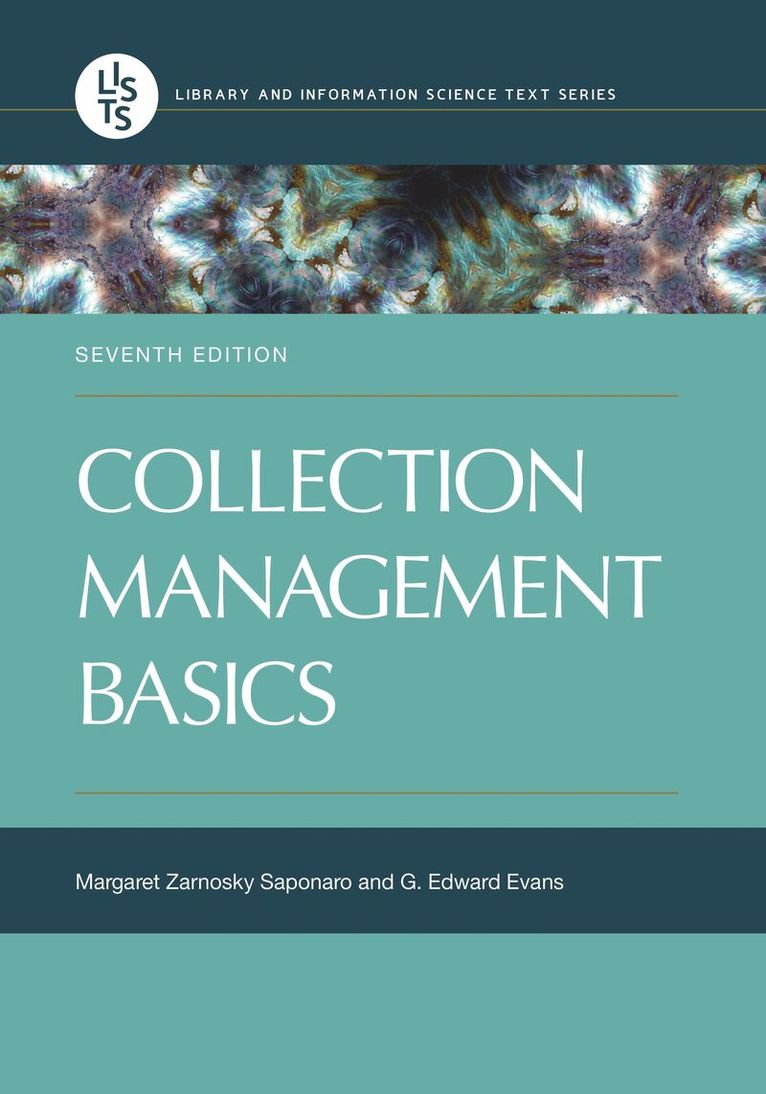
    Collection Management Basics

    AvMargaret Zarnosky Saponaro,G. Edward Evans

    Häftad, Engelska, 2019

    Del i serien Library and Information Science Text Series

    870 kr

    Beställningsvara. Skickas inom 5-8 vardagar. Fri frakt över 249 kr.

    Fler format och utgåvor

    E-bok

    818 kr

    E-bok

    818 kr

    Häftad

    682 kr

    Inbunden

    1 531 kr

    Beskrivning

    If the heart of the library is its collection, this textbook provides the keys to the heart of your library. Alongside standards of basic principles and processes, you'll find practical guidance on everything from acquisitions to preservation.Managing collections in today's libraries is more complicated and challenging than ever. Electronic formats, new options for collaboration and sharing, and the drive to use data for evaluation purposes are just a few of the changes now driving collection management.This updated edition of a classic text addresses changes in the field and provides a thorough overview of what collection development specialists now need to know to effectively and efficiently manage processes that range from selection and assessment to sharing resources, handling challenges, weeding, and preservation. Readers will find increased coverage of technical services, intellectual freedom and censorship, and collection policy development, as well as budget development and tracking, joint purchasing, and negotiating with vendors. Updates on e-resources, user needs assessment (including data visualization), and disaster management, along with suggestions for further reading, are also included. Engagingly written and easy to understand, this is a valuable text for students preparing for careers in public, academic, school, and special libraries. It will additionally serve as a training resource and professional refresher for practitioners.

    Produktinformation

    • Utgivningsdatum:2019-05-24
    • Mått:172 x 252 x 24 mm
    • Vikt:700 g
    • Format:Häftad
    • Språk:Engelska
    • Serie:Library and Information Science Text Series
    • Antal sidor:432
    • Upplaga:7
    • Förlag:Bloomsbury Publishing Plc
    • ISBN:9781440859649

    Utforska kategorier

    • Referensverk och tvärvetenskap inom Samhälle och politik

    Mer om författaren

    Margaret Zarnosky Saponaro, MLS, is director of collection development strategies at the University of Maryland Libraries.G. Edward Evans, PhD, an author and consultant, taught at the Graduate School of Librarianship and Information Science at UCLA and was associate academic vice president for libraries and information resources at Loyola Marymount. He is coauthor of the previous edition of this text.

    Recensioner i media

    Whether you are a new librarian or an experienced one starting over with a new collection, this latest edition remains a foundational tool.

    Innehållsförteckning

    • IllustrationsPreface1—INTRODUCTIONWhat Is Collection Management?Access to InformationAccess and ValueAccess Philosophy and StaffAccess and LiteracyBlended CollectionsAccess and CollaborationNew ApproachesPoints to Keep in MindReferences2—INTELLECTUAL FREEDOM AND ETHICSLibraries, the First Amendment, and Intellectual FreedomEthics, Personal Beliefs, Biases, and Collection ManagementSelf-CensorshipBeing ChallengedAccess—FilteringBibliotherapy—Readers' Advisory ActivitiesPoints to Keep in MindReferences3—COLLECTION MANAGEMENTComponents of Collection ManagementCollection Management and Library TypesInstitutional LibrariesPublic LibrariesSchool LibrariesSpecial LibrariesStandards and GuidelinesEmerging Trends in Collection ManagementFloating CollectionsTaking on Collection Management ResponsibilitiesPoints to Keep in MindReferences4—COLLECTION MANAGEMENT POLICIESWhat Is a Collection Management Policy?Creating a PolicyStages of the Policy Development ProcessWhat to IncludeDetails of a Basic PolicySubject Areas CollectedSelection ResponsibilityHow to SelectGifts and Deselection (Weeding)Deselection/DiscardsCollection Assessment/EvaluationComplaintsElectronic ResourcesGetting the Policy ApprovedPoints to Keep in MindReferences5—ASSESSING USER NEEDSConcepts and TermsWhy Spend the Time and Effort on Service Community Studies?Practical AspectsCommon Types of Data CollectedData Collecting and Analysis TechniquesKey Informants—GatekeepersFocus Groups and Community ForumsSocial IndicatorsField SurveysExamples by Type of LibraryAcademic LibrariesPublic LibrariesSchool Library Media CentersSpecial Libraries/Information CentersData VisualizationPoints to Keep in MindReferences6—SELECTING MATERIALSEngaging in Selection ActivitiesInstitutional Setting and User InterestsResources to ConsultWhat Is in the Collection/What Is LackingLanguageQualityReviewsStarting Points for ReviewsOther Quality FactorsCost IssuesVariations in Selection by Library TypeAcademic Libraries—Community CollegesCollege LibrariesUniversity LibrariesPublic LibrariesSchool Library Media CentersSpecial LibrariesQuality or DemandPoints to Keep in MindReferences7—COLLECTION MANAGEMENT AND TECHNICAL SERVICESTechnical Services FunctionsCataloging and Metadata ServicesMetadataAcquisitionsSerials ControlPhysical ProcessingBindery/RepairShipping and ReceivingTechnical Services WorkflowCollection Management and Technical ServicesPoints to Keep in MindReferences8—ACQUISITIONSAcquiring MaterialsAcquisition MethodsFirm OrdersStanding OrdersApproval PlansDemand-Driven and Evidence-Based AcquisitionsBlanket OrdersSubscriptionsLeasesGiftsExchangesVendor SelectionWhat the Firm StocksVendor Technological CapabilitiesSpeed of DeliveryFinancial ConsiderationsAdditional Vendors' ServicesCustomer Service ConsiderationsVendor EvaluationRetail OutletsOut-of-Print and Antiquarian DealersFiscal ManagementEstimating CostsAllocating the BudgetFinancial RecordsEncumberingStewardshipAuditsPoints to Keep in MindReferences9—ASSESSING COLLECTIONS AND THE LIBRARYCollection Assessment MethodologiesCollection-Centered MethodsList CheckingExpert Opinion (Impressionistic Assessment)Comparative Use StatisticsUsing Standards as an Assessment MethodUse-Centered MethodsCirculation StudiesCustomer PerceptionsUse of ILL StatisticsBibliometric StudiesDeselection—WeedingPublic LibrariesSchool Library Media CentersSpecial LibrariesAcademic LibrariesBarriers to DeselectionDeselection CriteriaStoragePoints to Keep in MindReferences10—COOPERATION, COLLABORATION, AND CONSORTIA ISSUESBackgroundSharing Collection ItemsShared Collection BuildingSharing Collection StorageReasons for Engaging in Joint VenturesCollaboration on the Personal LevelMaking Collaborative Projects WorkGroup Decision MakingPoints to Keep in MindReferences11—PRINT AND MEDIAProducers of Library Collection ResourcesTypes of ProducersMedia FormatsMedia IssuesAudio FormatsVideoOther Material FormatsMaps and GlobesGames, Toys, and PuzzlesGraphic NovelsPrints and PhotographsFormat Selection ConsiderationsPoints to Keep in MindReferences12—SERIALSWhat Is a Serial?Government InformationSerial ProducersSelection ModelsIdentifying SerialsE-SerialsDo E-Serials Save Libraries Money?Managing SerialsCanceling Serials and Other E-ResourcesUsage DataSerial Management ToolsPoints to Keep in MindReferences13—E-RESOURCES AND TECHNOLOGY ISSUESDifferences Between Traditional and E-ResourcesSelection IssuesContentLimitationsCostPeople IssuesTechnical IssuesAssessment OptionsCancellation or Loss of ServiceE-FormatseBookseReadersGoogle Books ProjectAlternatives to Google BooksOnline Music/AudioVideoWeb ResourcesInstitutional RepositoriesOpen AccessData SetsPoints to Keep in MindReferences14—PRESERVATION ISSUESLibraries and Cultural PatrimonyPreserving the Investment in the CollectionProper HandlingEnvironmental ControlSecurityDisaster PreparednessDigital PreservationConservationPoints to Keep in MindReferences15—LEGAL ISSUES AND COLLECTION MANAGEMENTCopyright Laws and LibrariesFair Use and CopyingDigital Millennium Copyright Act (DMCA)EnforcementDigital Rights Management (DRM)Gifts and the IRSAmericans with Disabilities Act and Collection ManagementPrivacyPoints to Keep in MindReferencesIndex