• Fri frakt över 249 kr
  • •
  • Snabba leveranser
  • •
  • Billiga böcker
Kundservice

Du är på sajten för privatpersoner.

Företag, bibliotek eller offentlig verksamhet?

Du handlar på classic.bokus.com, där alla dina funktioner finns intakta.
Till classic.bokus.com
Bokus logotyp. Gå till startsidan.
  • Erbjudanden
  • Student
  • Topplistor
  • Barn & ungdom
  • Bokus Play
  • E-böcker
  • Ljudböcker
  • Pocketböcker
  • Spel och pussel

5% studentrabatt – använd koden KURSBOK27 →

Sidfot

Mina sidor

    Hjälp

    • Kundservice
    • Vanliga frågor och svar
    • Frakt och leverans
    • Retur vid ångerrätt
    • Reklamera vara
    • Betalning
    • Köpvillkor
    • Allmänna villkor
    • Information om webbplatsens tillgänglighet

    Om Bokus

    • Om oss
    • Pressrum
    • För studenter
    • För företag
    • För bibliotek och offentlig verksamhet
    • För leverantörer
    • Hållbarhet

    Populärt

    • Aktuella erbjudanden
    • Presentkort
    • Studentlitteratur
    • Nya böcker
    • Topplistor
    • Signerade böcker
    • Engelska böcker

    Inspiration

    • Boktips
    • BookTok
    • Barnbokskaraktärer
    • Populära författare
    Logotyp för Bokus
    Följ oss på Facebook (extern länk)Följ oss på Instagram (extern länk)Följ oss på YouTube (extern länk)Följ oss på TikTok (extern länk)
    bokus @ CookiesAnpassa cookiesIntegritetspolicyKöpvillkor
    Till Citymail hemsida (extern länk)Till Budbee hemsida (extern länk)Till Postnord hemsida (extern länk)Till Schenker hemsida (extern länk)Till Early Bird hemsida (extern länk)Till Walleys hemsida (extern länk)
    1. Samhälle och politik
    2. Politik och statsskick
    3. Politiska ideologier och rörelser
    4. Konservatism och högerideologier

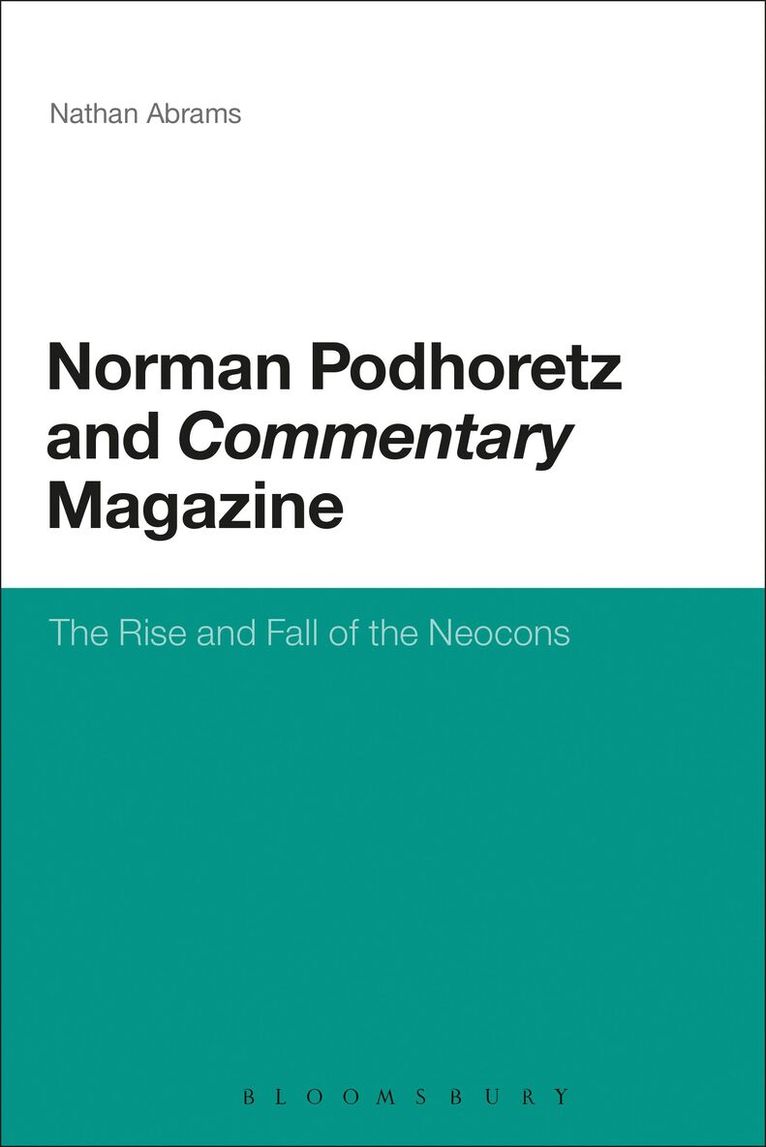
    Norman Podhoretz and Commentary Magazine

    The Rise and Fall of the Neocons

    AvNathan Abrams

    Häftad, Engelska, 2012

    546 kr

    Beställningsvara. Skickas inom 10-15 vardagar. Fri frakt över 249 kr.

    Fler format och utgåvor

    E-bok

    589 kr

    Inbunden

    2 079 kr

    Beskrivning

    What does the term "neoconservative" mean? Who are we talking about and where did they come from? Abrams answers those very questions through a detailed and critical study of neoconservatism's leading thinker, Norman Podhoretz, and the magazine he edited for 35 years, Commentary. Podhoretz has been described as "the conductor of the neocon orchestra" and through Commentary Podhoretz powerfully shaped neoconservatism. Rich in research, the book is based upon a wide range of sources, including archival and other material never before published in the context of Commentary magazine, including Podhoretz's private papers. It argues that much of what has been said about neoconservatism is the product of willful distortion and exaggeration both by the neoconservatives themselves and their many enemies. From this unique perspective, Abrams examines the origins, rise, and fall of neoconservatism. In understanding Podhoretz, a figure often overlooked, this book sheds light on the origins, ideas, and intellectual pedigree of neoconservatism.

    Produktinformation

    • Utgivningsdatum:2012-01-05
    • Mått:156 x 234 x 22 mm
    • Vikt:550 g
    • Format:Häftad
    • Språk:Engelska
    • Antal sidor:376
    • Förlag:Continuum Publishing Corporation
    • ISBN:9781441126580

    Utforska kategorier

    • Konservatism och högerideologier inom Samhälle och politik

    Mer om författaren

    Dr. Nathan Abrams is a Senior Lecturer and Director of Graduate Studies at the School of Creative Studies and Media, Bangor University, UK. He is the author of 3 books and many journal articles.

    Recensioner i media

    "...there is still more to say about Commentary magazine, one of the small-circulation journals with outsize influence that defined the post-World War II intellectual, political and artistic preoccupations, and about Norman Podhoretz, its larger-than-life former editor and a founder of neoconservatism." (The New York Times) "While the neoconservative movement was correctly understood as being highly influential in the second Bush administration, it remains, according to Abrams, poorly understood, in part because of willful distortion and exaggeration both by the neoconservatives themselves as well as their many enemies and detractors. He aims to improve our understanding through a case study of the movement's "foremost intellectual," Norman Podhoretz, and the magazine he edited for 35 years, Commentary. He focuses on how Commentary dealt with those issues that he argues caused Podhoretz and others to break with liberalism and become neoconservatives: Judaism and American policy towards Israel; US foreign policy and American anti-communism; and the civil rights movement and race relations, including Jewish-black relations and debates over affirmative action. He also addresses cultural issues such as homosexuality, religion and politics, feminism, and abortion, and considers the legacy of Podhoretz in terms of the moral and ethical responsibilities of the intellectual's vocation, especially when intellectuals get involved in politics." (Eithne O'Leyne, BOOK NEWS, Inc.)"

    Innehållsförteckning

    • Introduction; Chapter One: Taking Over; Examines Podhoretz's early life and career from 1930 to the 1960s, with a special focus on how he sought to change Commentary after taking on its editorship in 1960.; Chapter Two: The Revised Standard Version; Looks at the inaccurate evaluations of both Podhoretz and Commentary and how the events of the 60s helped neoconservatism to emerge. Argues that in the 60s, Podhoretz turned the magazine into a source of anti-liberal and anti-black conservatism, but did not change key fundamentals about the magazine.; Chapter Three: War; Examines Podhoretz's shift in the 1970s toward neoconservatism in his war against the New Left and the counterculture, which he collectively called "the movement."; Chapter Four: Resurrection; Looks at how Podhoretz, as a result of his fight with "the movement," recycled ideas from the past, returning Commentary to a very similar position as when he took it over.; Chapter Five: Empire; Focuses on Podhoretz and Commentary's zenith, when the magazine featured the major ideologues of the "Reagan Revolution." Demonstrates the influence of the magazine on the Reaganite agenda.; Chapter Six: Decline; Traces the crumbling of Podhoretz's influence.; Chapter Seven: Fall; Looks at the decline, in terms of influence and readership, of both Podhoretz and neoconservatism, a process capped by the election of President Clinton in 1992. Examines how neoconservatism became a mild variant of the more orthodox and familiar conservative mainstream, which has been called 'paleoconservatism,' and which differs markedly from the original neoconservatism of the 1970s and 1980s.; Chapter Eight: After the Fall; Looks at Podhoretz, the movement, and the magazine after Podhoretz left Commentary in 1995. Since then, Podhoretz has acted as the Republican Presidential candidate Rudolph Giuliani's foreign policy advisor, and is now editor-at-large at Commentary. Examines the neocons' influence on George W. Bush's policies since 2001, and prospects for the future.; Conclusion; Summarizes Podhoretz's career and its impact on our understanding of neoconservatism.