• Fri frakt över 249 kr
  • •
  • Snabba leveranser
  • •
  • Billiga böcker
Kundservice

Du är på sajten för privatpersoner.

Företag, bibliotek eller offentlig verksamhet?

Du handlar på classic.bokus.com, där alla dina funktioner finns intakta.
Till classic.bokus.com
Bokus logotyp. Gå till startsidan.
  • Erbjudanden
  • Nyheter
  • Student
  • Topplistor
  • Barn & ungdom
  • Bokus Play
  • E-böcker
  • Pocketböcker
  • Spel & pussel

Må bättre, för mindre! Upp till 50% rabatt på hälsoböcker

Sidfot

Mina sidor

    Hjälp

    • Kundservice
    • Vanliga frågor och svar
    • Frakt och leverans
    • Retur vid ångerrätt
    • Reklamera vara
    • Betalning
    • Köpvillkor
    • Allmänna villkor
    • Information om webbplatsens tillgänglighet

    Om Bokus

    • Om oss
    • Pressrum
    • För studenter
    • För företag
    • För bibliotek och offentlig verksamhet
    • För leverantörer
    • Hållbarhet

    Populärt

    • Aktuella erbjudanden
    • Presentkort
    • Studentlitteratur
    • Nya böcker
    • Topplistor
    • Signerade böcker
    • Engelska böcker

    Inspiration

    • Boktips
    • BookTok
    • Populära bokserier
    • Barnbokskaraktärer
    • Populära författare
    Logotyp för Bokus
    Följ oss på Facebook (extern länk)Följ oss på Instagram (extern länk)Följ oss på YouTube (extern länk)Följ oss på TikTok (extern länk)
    bokus @ CookiesAnpassa cookiesIntegritetspolicyKöpvillkor
    Till Citymail hemsida (extern länk)Till Budbee hemsida (extern länk)Till Postnord hemsida (extern länk)Till Schenker hemsida (extern länk)Till Early Bird hemsida (extern länk)Till Walleys hemsida (extern länk)
    1. Samhälle och politik
    2. Politik och statsskick
    3. Statsvetenskap och politisk teori

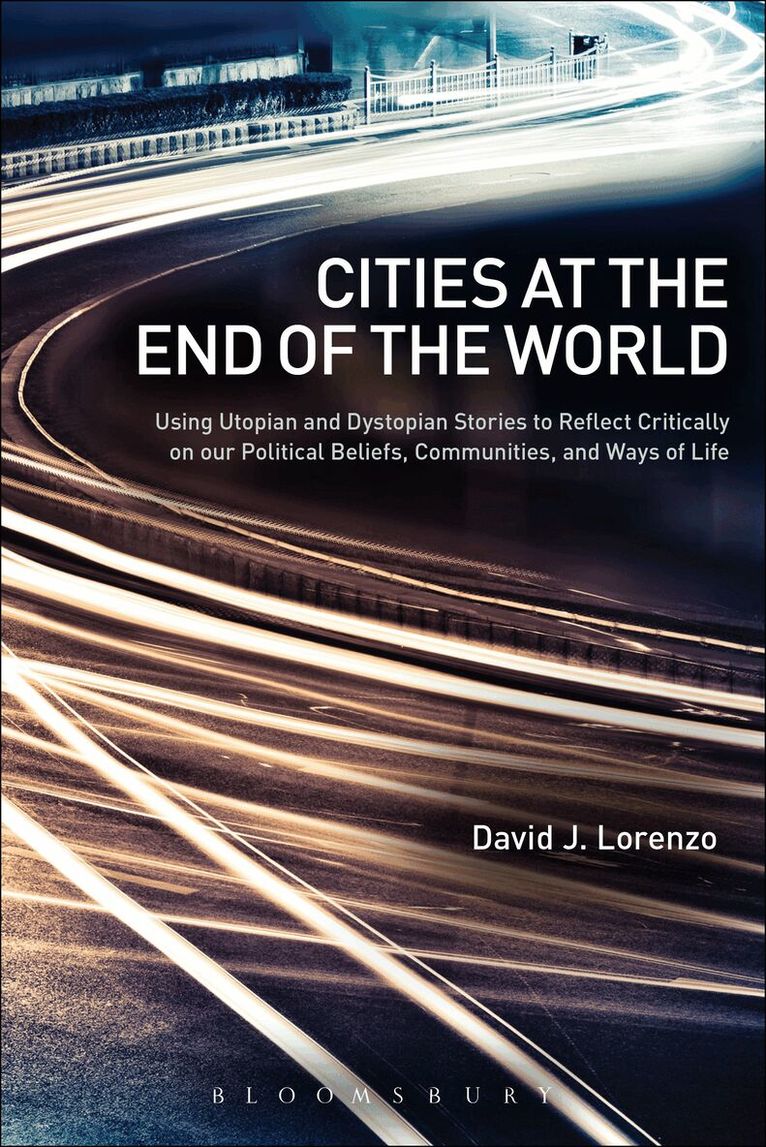
    Cities at the End of the World

    Using Utopian and Dystopian Stories to Reflect Critically on our Political Beliefs, Communities, and Ways of Life

    AvDavid J. Lorenzo

    Inbunden, Engelska, 2014

    Del i serien Bloomsbury 3PL

    1 950 kr

    Beställningsvara. Skickas inom 10-15 vardagar. Fri frakt över 249 kr.

    Fler format och utgåvor

    E-bok

    589 kr

    E-bok

    589 kr

    Häftad

    548 kr

    Beskrivning

    This book undertakes a critical examination of contemporary political problems through discussions of three utopian and three dystopian texts.Selected stories from Morris, Orwell, More, Bellamy, Neville, and Zamyatin are used to generate questions about fundamental economic, political, and social problems, human nature, and conceptions of the good life. This unique work is an exceptional resource for all students of political philosophy and utopian literature, as well as for general readers interested in political affairs.

    Produktinformation

    • Utgivningsdatum:2014-07-03
    • Mått:152 x 229 x 21 mm
    • Vikt:478 g
    • Format:Inbunden
    • Språk:Engelska
    • Serie:Bloomsbury 3PL
    • Antal sidor:240
    • Förlag:Bloomsbury Publishing Plc
    • ISBN:9781441141552

    Utforska kategorier

    • Statsvetenskap och politisk teori inom Samhälle och politik

    Mer om författaren

    David J. Lorenzo received his Ph.D. from Yale University and is an Associate Professor, College of International Affairs, National Chengchi University, Taipei, Taiwan (ROC).

    Recensioner i media

    In Cities at the End of the World David Lorenzo tackles key themes of utopian and dystopian writing, such as the relationship of the individual and society, the inherent tensions in the human pursuit of knowledge and happiness, and the role of the state in balancing personal desires against equality, justice and order. His focus on what we might be able to learn from his findings meanwhile follows the spirit of the authors he studies: by exploring alternative societies he calls on us to address contemporary problems. Combining acute analysis with accessibility Lorenzo’s work has much to offer, not just to scholars and general readers, but to political decision makers as well.

    Innehållsförteckning

    • 1. Introduction2. Utopia (Thomas More)3. Isle of Pines (Henry Neville)4. Looking Backward (Edward Bellamy)5. News from Nowehere (William Morris)6. We (Evgeni Zamyatin)7. Nineteen Eighty-Four (George Orwell)8. ConclusionBibliographyIndex