• Fri frakt över 249 kr
  • •
  • Snabba leveranser
  • •
  • Billiga böcker
Kundservice

Du är på sajten för privatpersoner.

Företag, bibliotek eller offentlig verksamhet?

Du handlar på classic.bokus.com, där alla dina funktioner finns intakta.
Till classic.bokus.com
Bokus logotyp. Gå till startsidan.
  • Erbjudanden
  • Student
  • Topplistor
  • Barn & ungdom
  • Bokus Play
  • E-böcker
  • Ljudböcker
  • Pocketböcker
  • Spel och pussel

Pocketfynda! Hundratals böcker för 49 kr/st →

Sidfot

Mina sidor

    Hjälp

    • Kundservice
    • Vanliga frågor och svar
    • Frakt och leverans
    • Retur vid ångerrätt
    • Reklamera vara
    • Betalning
    • Köpvillkor
    • Allmänna villkor
    • Information om webbplatsens tillgänglighet

    Om Bokus

    • Om oss
    • Pressrum
    • För studenter
    • För företag
    • För bibliotek och offentlig verksamhet
    • För leverantörer
    • Hållbarhet

    Populärt

    • Aktuella erbjudanden
    • Presentkort
    • Studentlitteratur
    • Nya böcker
    • Topplistor
    • Signerade böcker
    • Engelska böcker

    Inspiration

    • Boktips
    • BookTok
    • Barnbokskaraktärer
    • Populära författare
    Logotyp för Bokus
    Följ oss på Facebook (extern länk)Följ oss på Instagram (extern länk)Följ oss på YouTube (extern länk)Följ oss på TikTok (extern länk)
    bokus @ CookiesAnpassa cookiesIntegritetspolicyKöpvillkor
    Till Citymail hemsida (extern länk)Till Budbee hemsida (extern länk)Till Postnord hemsida (extern länk)Till Schenker hemsida (extern länk)Till Early Bird hemsida (extern länk)Till Walleys hemsida (extern länk)
    1. Filosofi och religion
    2. Filosofi

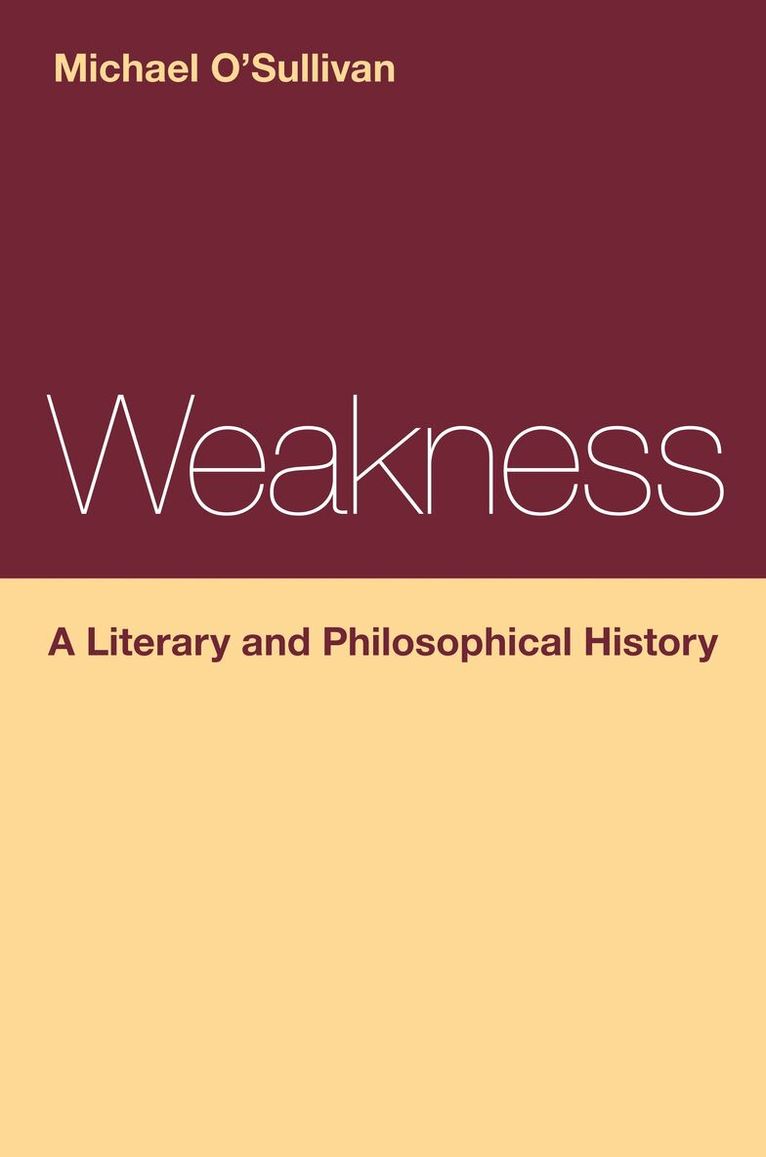
    Weakness: A Literary and Philosophical History

    AvMichael O'Sullivan

    Inbunden, Engelska, 2012

    2 233 kr

    Beställningsvara. Skickas inom 10-15 vardagar. Fri frakt över 249 kr.

    Fler format och utgåvor

    E-bok

    677 kr

    E-bok

    677 kr

    Häftad

    628 kr

    Beskrivning

    This study charts a history of weakness in a selection of canonical works in literature and philosophy. Examining the nature of weakness has inspired some of the most influential aesthetic and philosophical portraits of the human condition. By reading a selection of canonical literary and philosophical texts, Michael O'Sullivan charts a history of responses to the experience and exploration of weakness. Beginning with Plato and Aristotle, this first book-length study of the concept explores weakness as it interpreted by Lao Tzu, Nietzsche, the Romantics, Dickens and the Modernists. It examines what feminist critics Elaine Showalter and Luce Irigaray make of the figure of the "weaker vessel" and considers philosophical notions such as radical passivity, a "syntax of weakness" and human vulnerability in the work of Derrida and Beckett and Coetzee. Through analysis of these differing versions of weakness, O'Sullivan's study challenges the popular myth that aligns masculine identity with strength and force and presents a humane weakness as a guiding motif for debates in ethics.

    Produktinformation

    • Utgivningsdatum:2012-07-26
    • Mått:156 x 234 x 17 mm
    • Vikt:508 g
    • Format:Inbunden
    • Språk:Engelska
    • Antal sidor:224
    • Förlag:Continuum Publishing Corporation
    • ISBN:9781441162991

    Utforska kategorier

    • Filosofi inom Filosofi och religion
    • Litteraturvetenskap inom Skönlitteratur

    Mer om författaren

    Michael O'Sullivan is Assistant Professor in English at The Chinese University of Hong Kong; He is author of Michel Henry: Incarnation, Barbarism and Belief (Peter Lang, 2006).

    Recensioner i media

    'Although Western philosophy has generally appraised weakness negatively as a lack of power or a sign of moral failing, in this book Michael O'Sulllivan joins a number of contemporary thinkers (Ricoeur, Derrida, Agamben, Butler, and Nussbaum, among others) who in their own ways have offered a defense of passivity, vulnerability, and the precariousness of life. Through a wide-ranging exploration of the theme of weakness in philosophy, religion, and literature, O'Sullivan identifies a variety of treatments of this theme and ties them all together in the message that weakness is a core feature of our shared humanity. This book thus provides readers with a great starting point for anyone in the humanities who is in search of a new conceptual mapping of the human.'

    Innehållsförteckning

    • Introduction; Part I: Philosophy; 1. Akrasia and Weakness of the Will; 2. The Flesh is Weak: Incarnating the Word; 3. Daoism and Weakness: "Weakness is the means dao employs":; 4. Kierkegaard's "despair of weakness" - Nietzsche's "metaphysics of weakness"; 5. Gender theory and weakness: is there a "weaker vessel"?; 6. Why is Derrida's sign violent? Radical passivity and givenness; Part II: Literature; 7. Negative Capability and Romantic Indolence; 8. Dickens and the "experience of the common"; 9. Modernist Impotence in Joyce and Eliot: "Words of Silent Power"; 10. The Beckettian body: "The authentic weakness of being"; 10. Vulnerability and "the animal" in J. M. Coetzee; Conclusion - Humane Weakness; Bibliography; Index.