• Fri frakt över 249 kr
  • •
  • Snabba leveranser
  • •
  • Billiga böcker
Kundservice

Du är på sajten för privatpersoner.

Företag, bibliotek eller offentlig verksamhet?

Du handlar på classic.bokus.com, där alla dina funktioner finns intakta.
Till classic.bokus.com
Bokus logotyp. Gå till startsidan.
  • Erbjudanden
  • Nyheter
  • Student
  • Topplistor
  • Barn & ungdom
  • Bokus Play
  • E-böcker
  • Pocketböcker
  • Spel & pussel

10% rabatt på allt med kod NYSTART10 →

Sidfot

Mina sidor

    Hjälp

    • Kundservice
    • Vanliga frågor och svar
    • Frakt och leverans
    • Retur vid ångerrätt
    • Reklamera vara
    • Betalning
    • Köpvillkor
    • Allmänna villkor
    • Information om webbplatsens tillgänglighet

    Om Bokus

    • Om oss
    • Pressrum
    • För studenter
    • För företag
    • För bibliotek och offentlig verksamhet
    • För leverantörer
    • Hållbarhet

    Populärt

    • Aktuella erbjudanden
    • Presentkort
    • Studentlitteratur
    • Nya böcker
    • Topplistor
    • Signerade böcker
    • Engelska böcker

    Inspiration

    • Boktips
    • BookTok
    • Populära bokserier
    • Barnbokskaraktärer
    • Populära författare
    Logotyp för Bokus
    Följ oss på Facebook (extern länk)Följ oss på Instagram (extern länk)Följ oss på YouTube (extern länk)Följ oss på TikTok (extern länk)
    bokus @ CookiesAnpassa cookiesIntegritetspolicyKöpvillkor
    Till Citymail hemsida (extern länk)Till Budbee hemsida (extern länk)Till Postnord hemsida (extern länk)Till Schenker hemsida (extern länk)Till Early Bird hemsida (extern länk)Till Walleys hemsida (extern länk)
    1. Kultur
    2. Designböcker
    3. Modedesign och textilformgivning

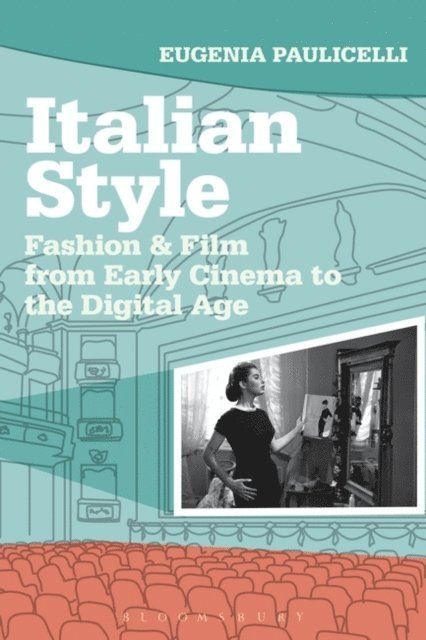
    Italian Style

    Fashion & Film from Early Cinema to the Digital Age

    AvEugenia Paulicelli

    Inbunden, Engelska, 2016

    Del i serien Topics and Issues in National Cinema

    2 009 kr

    Beställningsvara. Skickas inom 10-15 vardagar. Fri frakt över 249 kr.

    Fler format och utgåvor

    Häftad

    522 kr

    E-bok

    560 kr

    E-bok

    560 kr

    Beskrivning

    This is the first in-depth, book-length study on fashion and Italian cinema from the silent film to the present. Italian cinema launched Italian fashion to the world. The book is the story of this launch. The creation of an Italian style and fashion as they are perceived today, especially by foreigners, was a product of the post World War II years. Before then, Parisian fashion had dominated Europe and the world. Just as fashion was part of Parisian and French national identity, the book explores the process of shaping and inventing an Italian style and fashion that ran parallel to, and at times took the lead in, the creation of an Italian national identity. In bringing to the fore these intersections, as well as emphasizing the importance of craft in cinema, fashion and costume design, the book aims to offer new visions of films by directors such as Nino Oxilia, Mario Camerini, Alessandro Blasetti, Federico Fellini, Michelangelo Antonioni, Luchino Visconti and Paolo Sorrentino, of film stars such as Lyda Borelli, Francesca Bertini, Pina Menichelli, Lucia Bosè, Monica Vitti, Marcello Mastroianni, Toni Servillo and others, and the costume archives and designers who have been central to the development of Made in Italy and Italian style.

    Produktinformation

    • Utgivningsdatum:2016-09-22
    • Mått:152 x 229 x 21 mm
    • Vikt:576 g
    • Format:Inbunden
    • Språk:Engelska
    • Serie:Topics and Issues in National Cinema
    • Antal sidor:288
    • Förlag:Bloomsbury Publishing Plc
    • ISBN:9781441189158

    Utforska kategorier

    • Modedesign och textilformgivning inom Kultur
    • Film inom Kultur

    Mer om författaren

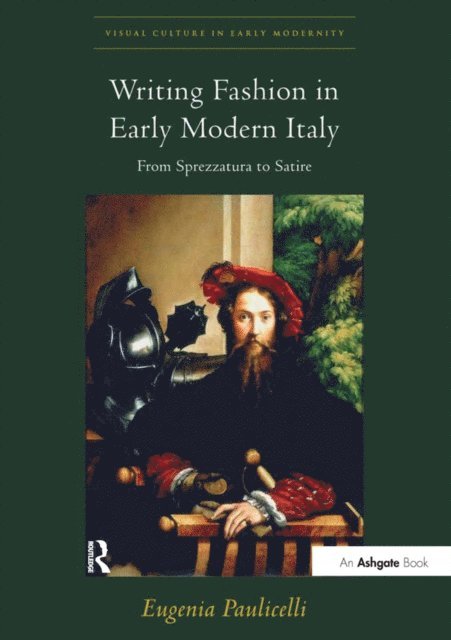
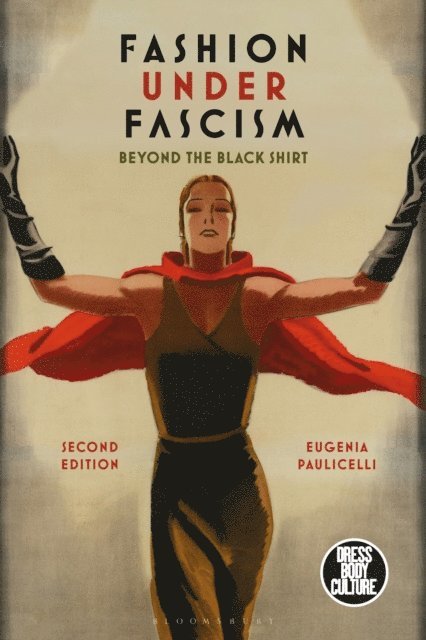
    Eugenia Paulicelli is Professor of Italian, Comparative Literature and Women's Studies at Queens College and The Graduate Center, The City University of New York (CUNY), USA. At The Graduate Center she directs Fashion Studies in the Master of Arts in Liberal Studies (MALS) and the PhD Concentration. Among her books: Fashion under Fascism: Beyond the Black Shirt (2004); Moda e Moderno (editor, 2006); The Fabric of Cultures: Fashion, Identity, Globalization (co-editor, 2009); Writing Fashion in Early Modern Italy (2014); Rosa Genoni: Fashion is a Serious Business (2015). Visit her website at www.eugeniapaulicelli.com.

    Recensioner i media

    The insight at the heart of Paulicelli's earnest and unflashy book is that dress cultivates mood and can variously intimate the languor or lasciviousness of a specific moment or the state of an entire country ... [Paulicelli is] knowledgeable and unafraid to wade deep into obscure Italian films and textile history.

    Innehållsförteckning

    • List of Illustrations Acknowledgments 1 Fashion, Film, Modernity a. Nostra Dea: the goddess of fashion b. Pirandello, cinema, and clothing: elective affinities c. “The Tight Frock-Coat”: performing dress d. Film, costume, fashion, and intermediality e. Italian style: fashion and film 2 Italian Fashion and Film in the 1910s: From the Futurists to Rosa Genoni a. The Futurists, fashion, film, and performance b. Rosa Genoni: Per una moda italiana: fashioning the diva 3 From the Body of the Diva to the Body of the Nation a. The Italian divas and the “gowns of emotions”b. Lyda Borelli (1887–1959): the ethereal melancholic beauty and Ma l’amore mio non muore! (love everlasting)c. The veil: modernity in motion in Nino Oxilia’s Rapsodia Satanicad. Francesca Bertini (1892–1985): the glamorous embodied e. Nino Oxilia’s Sangue Bleu (1914) and Gustavo Serena’s Assunta Spina (1915) f. Pina Menichelli (1890–1981): “the other woman” and the end of an era 4 Fashion, Film, Modernity, under Fascism a. Fashion in motion: the LUCE newsreelsb. Rhythms of the modern city: fashion in Corrado D’Errico’s Stramilano (1929)c. Contessa di Parma (Alessandro Blasetti, 1937): a manifesto for the promotion of Italian fashion and Turin as a fashion city d. Grandi Magazzini (1939, Mario Camerini): fashion consumption, gender roles, and work in Milane. Epilogue: towards a new dawn 5 Launching Italian Style in Cinema and Fashion: The Films of Michelangelo Antonionia. The fabric of film: Sette canne, un vestito (1949)b. The 1950s: Cronaca di un amore, La signora senza camelie and Le amichec. The fashion show in Cronaca: a narrative mise en abymed. “Was I a good femme fatale?” (Lucia Bosè (Clara) in La signora senza camelie)e. The fashion show in Le amiche: the end of the game f. The 1960s: from costume to fashion. L’Avventura and beyond g. Outsiders, doubles, wanderersh. Conclusion: a visual tactility6 Rome, Fashion, Filma. From “Hollywood on the Tiber” to La Dolce Vitab. Rome as a fashion city in the postwar years 161c. La Dolce Vitad. La Dolce Vita and its discontentse. Roma (Fellini, 1971): space and time f. The broken watch of historyg. The ecclesiastical fashion show7 After La Dolce Vita: La Grande Bellezza (2013) by Paolo Sorrentinoa. Fashion, film, and Rome today: national identity revisitedAppendices:a. The Photographic Archive by Giuseppe Palmas (1918–1977)b. Interview with Fernanda Gattinoni, Rome, June 16, 2000c. Dressing the Dreams: Interview with Dino Trappetti—Tirelli Costumi Rome, December 2015d. Interview with Teresa Allegri, founder of Annamode, Rome, Fondazione Annamode, June 6, 2013e. Adriana Berselli f. Some notes on the set of L’avventura (1960) by Michelangelo Antonioni g. “Cesare Attolini” and La Grande Bellezza: Interview with Massimiliano Attolini, Son of Cesare and Grandson of Vincenzo, Founder of the SartoriaSelected Bibliography Filmography Index