
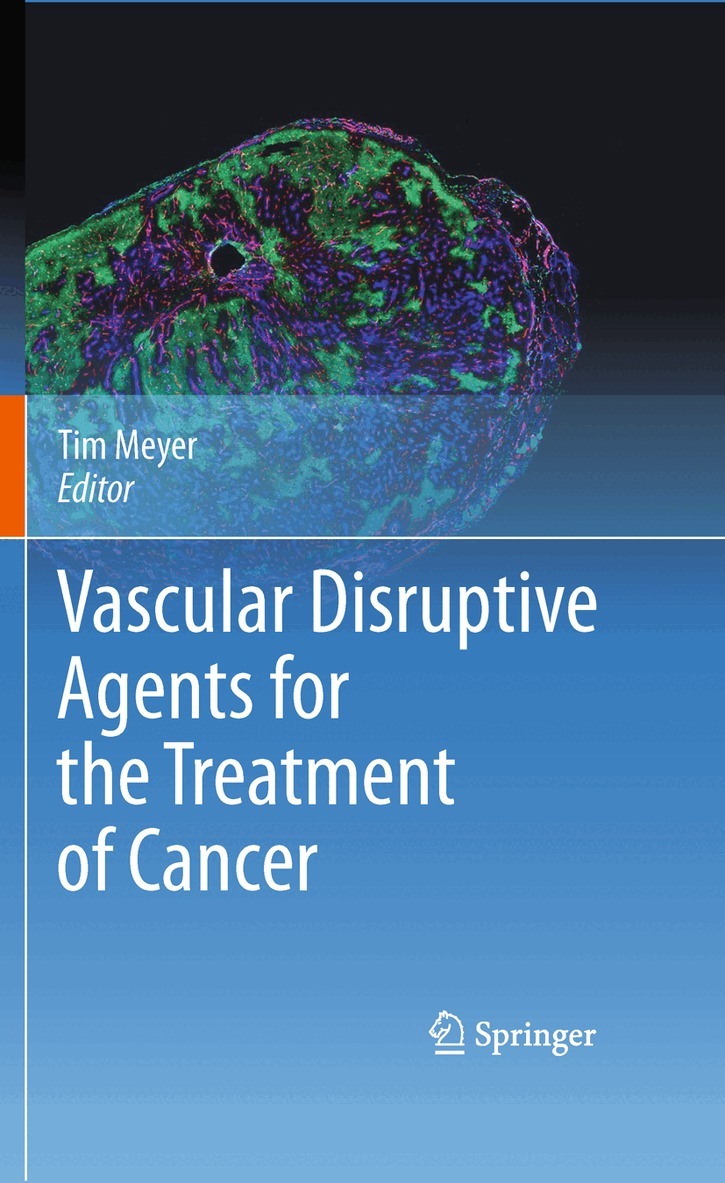
Vascular Disruptive Agents for the Treatment of Cancer
E-bok
PDF, Engelska, 20102 127 kr
Läs direkt i Bokus Reader – eller ladda ned till din enhet (PDF kräver ofta zoom och scroll på små skärmar).
Beskrivning
Angiogenesis (formation of new vessels from pre-existing ones) is a crucial early event in the process of tumor development. New vessels supply the tumor with nutrients that are needed for further local growth and enable distant metastases (Folkman 1995). Judah Folkman (1971) highlighted the potential therapeutic imp- cations of tumor angiogenesis. He hypothesized that if tumor angiogenesis is inhibited, then tumor growth and metastasis will be impaired greatly or even impossible. The subsequent quest for endogenous and exogenous inhibitors of angiogenesis has yielded a variety of promising therapeutic agents that block one or more angiogenic pathways, a few of which have been approved by the FDA (e. g. , bevacizumab, sorafenib, sunitinib) for use as single agents or in combination with chemotherapy in specific populations of cancer patients (Sessa et al. 2008). There has also been a dramatic expansion in the exploration of novel anti-angiogenic agents pre-clinically and in clinical trials (Ferrara 2002). Some of the most promising data comes from the development of agents that inhibit one of the key growth factors involved in tumor angiogenesis – vascular endothelial growth factor (VEGF) (Ferrara et al. 2003). Bevacizumab is a monoclonal antibody against VEGF that was the first an- angiogenic agent that improved significantly the overall survival of patients with colorectal and non-squamous non-small cell lung cancer (Ferrara et al. 2005). Various agents that target tumor angiogenesis are currently under investigation in different cancer types in many clinical trials (Ferrara and Kerbel 2005).
Produktinformation
Utforska kategorier
Hoppa över listan



Du kanske också är intresserad av
Encyclopedia of Football Medicine, Vol. 3
Tim Meyer, Ian Dr. Beasley, Zoran Bahtijarevic, Greg Dupont, Mike Earl, Jan Ekstrand, Ron Maughan, Jason Palmer, Christopher Willis
Inbunden, 2017
1 282 kr
Encyclopedia of Football Medicine, Vol. 3
Christopher Willis, Jason Palmer, Ron Maughan, Jan Ekstrand, Mike Earl, Greg Dupont, Zoran Bahtijarevic, Ian Beasley, Tim Meyer
E-bok
20171 919 kr
Encyclopocalypse of Legends and Lore: Volume One
Ken Winkler, Markus J. Williams, Judith Sonnet, Stephanie Rabig, Mocha Pennington, Bret Nelson, Mo Moshaty, Tim Meyer, Brennan LaForo, Rayne King, R. J. Joseph, Ross Jeffery, Stephanie Ellis, Janine Pipe
E-bok
50 kr