1 209 kr
Läs direkt efter köp
1 209 kr
Läs direkt efter köp
734 kr
Läs direkt efter köp
Essential Mathematica: With Applications to Mathematics and Physics, based on the lecture notes of a course taught at the University of Illinois at Chicago to advanced undergrad and graduate students, teaches how to use Mathematica to solve a wide variety problems in mathematics and physics. It is illustrated with many detailed examples that require the student to construct meticulous, step-by-step, easy to read Mathematica programs.
The first section, in which the reader learns how to use a variety of Mathematica commands, avoids long discussions and overly sophisticated techniques. Its aim is to provide the reader with Mathematica proficiency quickly and efficiently.
The second section covers a broad range of applications in physics, engineering and applied mathematics, including Egyptian Fractions, Happy Numbers, Mersenne Numbers, Multibases, Quantum Harmonic Oscillator, Quantum Square Potential, Van der Pol Oscillator, Electrostatics, Motion of a Charged Particle inan Electromagnetic Field, Duffing Oscillator, Negative and Complex Bases, Tautochrone Curves, Kepler’s Laws, Foucault’s Pendulum, Iterated Function Systems, Public-Key Encryption, and Julia and Mandelbrot Sets.
The first part - examples, not long explanations. The second part-attractive applications.
1 209 kr
Läs direkt efter köp
1 948 kr
Läs direkt efter köp
1 502 kr
Läs direkt efter köp
The economic system is generally understood to operate on the premise of exchange. The most important factor in economic development has always been technology, as a way to expand a limited resource base. Such increase in technology and knowledge is generally accepted by economists, but the mechanisms of exchange through which this happens are much less studied. Generally, a static analysis of product exchange, incorporating new technology, has been undertaken.
This book explores the transition of trade in ideas from an exchange largely within firms and nations to an exchange between firms and nations. This process has been going on since the beginning of the patent system, where importing (trading) technology was made policy in 1474, more than 500 years ago. However, during the past 25-30 years, a growth in exchange of technology between specialized firms, cooperating based on patent licensing, has been phenomenal, with annual licensing transactions exceeding a trillion dollars, not counting value of cross-licensing. Such specialized exchange has been seen in history but not at this scale and level of coordination.
Using principles of experimental economics, the author investigates the licensing contract and mechanisms of exchange (rules of trade) as this exchange moves towards organized markets with prices. A key issue concerns the effect of introducing demand side bidding, through which the patent system introduces specialization and multiple use of the same technology in different new products, thus expanding the use of technology a firm has to more actors, products, and consumers. The risk and uncertainty in market access for cheaper, better and unique products and services are reduced through new and competitive technology.
Questions raised are related to the“optimal” integration of information and rules in dynamic exchange of patents through institutions. The view presented shows how inventors and traders can sell their intellectual property to buyers in a producer market, in this case in licensing contracts on patents, to diversify risk and monetize value based on an experimental economic study where the performance and behavioral properties of these institutions is the object of investigation. More fundamentally the work illustrates the theoretical, design, and patent system policy issues in a transition from personal to impersonal trade in ideas.
This book explores the transition of trade in ideas from an exchange largely within firms and nations to an exchange between firms and nations. This process has been going on since the beginning of the patent system, where importing (trading) technology was made policy in 1474, more than 500 years ago. However, during the past 25-30 years, a growth in exchange of technology between specialized firms, cooperating based on patent licensing, has been phenomenal, with annual licensing transactions exceeding a trillion dollars, not counting value of cross-licensing. Such specialized exchange has been seen in history but not at this scale and level of coordination.
Using principles of experimental economics, the author investigates the licensing contract and mechanisms of exchange (rules of trade) as this exchange moves towards organized markets with prices. A key issue concerns the effect of introducing demand side bidding, through which the patent system introduces specialization and multiple use of the same technology in different new products, thus expanding the use of technology a firm has to more actors, products, and consumers. The risk and uncertainty in market access for cheaper, better and unique products and services are reducedthrough new and competitive technology.
Questions raised are related to the “optimal” integration of information and rules in dynamic exchange of patents through institutions. The view presented shows how inventors and traders can sell their intellectual property to buyers in a producer market, in this case in licensing contracts on patents, to diversify risk and monetize value based on an experimental economic study where the performance and behavioral properties of these institutions is the object of investigation. More fundamentally the work illustrates the theoretical, design, and patent system policy issues in a transition from personal to impersonal trade in ideas.
1 076 kr
Läs direkt efter köp
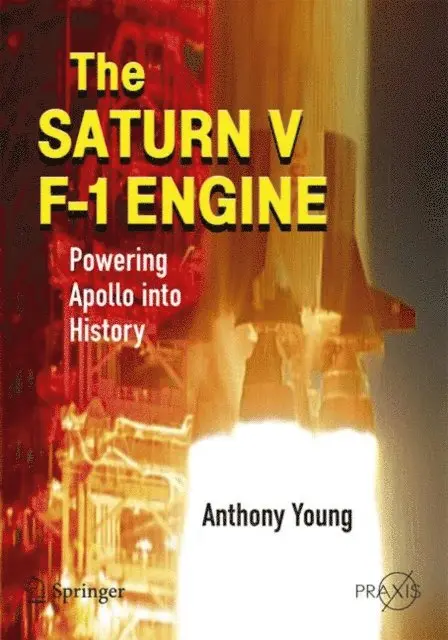
When the mighty Rocketdyne F-1 engine was conceived in the late 1950s for the U.S. Air Force, it had no defined mission and there was no launch vehicle it could power. It was a bold concept to push the technological envelope of rocket propulsion in order to put massive payloads into Earth orbit. Few realized at the time that the F-1 would one day propel American astronauts to the Moon. In The Saturn V F-1 Engine, Anthony Young tells the amazing story of unbridled vision, bold engineering, explosive failures during testing, unrelenting persistence to find solutions, and ultimate success in launching the Saturn V with a 100 percent success rate. The book
contains personal interviews with many Rocketdyne and NASA personnel involved in the engine’s design, development, testing and production;is lavishly illustrated with black-and-white and color photographs, many never previously publishedis the first complete history of the most powerful rocket engine ever built.The F-1 engine remains the high point in U.S. liquid rocket propulsion – it represents a period in American history when nothing was impossible.
408 kr
Läs direkt efter köp
1 148 kr
Läs direkt efter köp
734 kr
Läs direkt efter köp
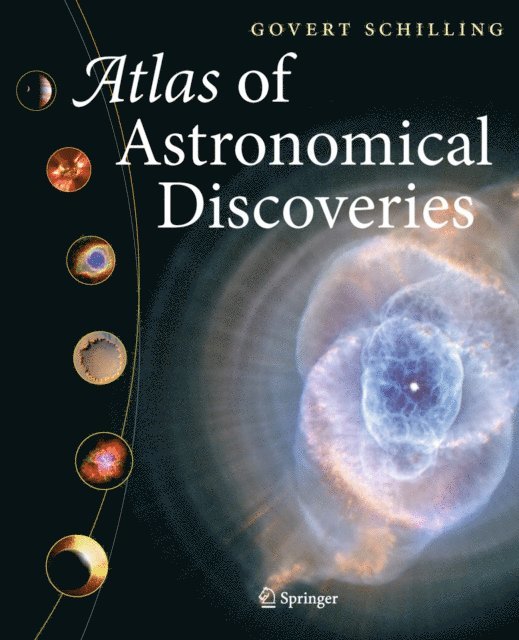
In his Atlas of Astronomical Discoveries, astronomy journalist Govert Schilling tells the story of 400 years of telescopic astronomy. He looks at the 100 most important discoveries since the invention of the telescope. Doing what Schilling does best, he takes the reader on an adventure through both space and time. Photographs and amazing pictures line the pages of this book, offering the reader an escape from this world and an invitation to a world far beyond what the unaided human eye can detect.
1 785 kr
Läs direkt efter köp
734 kr
Läs direkt efter köp
1 720 kr
Läs direkt efter köp
1 250 kr
Läs direkt efter köp
Computational Electromagnetics is a young and growing discipline, expanding as a result of the steadily increasing demand for software for the design and analysis of electrical devices. This book introduces three of the most popular numerical methods for simulating electromagnetic fields: the finite difference method, the finite element method and the method of moments. In particular it focuses on how these methods are used to obtain valid approximations to the solutions of Maxwell''s equations, using, for example, "staggered grids" and "edge elements." The main goal of the book is to make the reader aware of different sources of errors in numerical computations, and also to provide the tools for assessing the accuracy of numerical methods and their solutions. To reach this goal, convergence analysis, extrapolation, von Neumann stability analysis, and dispersion analysis are introduced and used frequently throughout the book. Another major goal of the book is to provide students with enough practical understanding of the methods so they are able to write simple programs on their own. To achieve this, the book contains several MATLAB programs and detailed description of practical issues such as assembly of finite element matrices and handling of unstructured meshes. Finally, the book aims at making the students well-aware of the strengths and weaknesses of the different methods, so they can decide which method is best for each problem.
In this second edition, extensive computer projects are added as well as new material throughout.
Reviews of previous edition:
"The well-written monograph is devoted to students at the undergraduate level, but is also useful for practising engineers." (Zentralblatt MATH, 2007)
701 kr
Läs direkt efter köp
897 kr
Läs direkt efter köp
2 005 kr
Läs direkt efter köp
This graduate textbook covers topics in statistical theory essential for graduate students preparing for work on a Ph.D. degree in statistics. The first chapter provides a quick overview of concepts and results in measure-theoretic probability theory that are useful in statistics. The second chapter introduces some fundamental concepts in statistical decision theory and inference. Chapters 3-7 contain detailed studies on some important topics: unbiased estimation, parametric estimation, nonparametric estimation, hypothesis testing, and confidence sets. A large number of exercises in each chapter provide not only practice problems for students, but also many additional results.
In addition to improving the presentation, the new edition makes Chapter 1 a self-contained chapter for probability theory with emphasis in statistics. Added topics include useful moment inequalities, more discussions of moment generating and characteristic functions, conditional independence, Markov chains, martingales, Edgeworth and Cornish-Fisher expansions, and proofs to many key theorems such as the dominated convergence theorem, monotone convergence theorem, uniqueness theorem, continuity theorem, law of large numbers, and central limit theorem. A new section in Chapter 5 introduces semiparametric models, and a number of new exercises were added to each chapter.
887 kr
Läs direkt efter köp
"Gratzer’s book is a solution."
-European Mathematical Society Newsletter
For close to two decades, Math into Latex has been the standard introduction and complete reference for writing articles and books containing mathematical formulas. In this fourth edition, the reader is provided with important updates on articles and books. An important new topic is discussed: transparencies (computer projections).
Key features of More Math into Latex, 4th edition:
- Installation instructions for PC and Mac users
- An example-based, visual approach and a gentle introduction with the Short Course
- A detailed exposition of multiline math formulas with a Visual Guide
- A unified approach to Tex, Latex, and the AMS enhancements
- A quick introduction to creating presentations with computer projections
From earlier reviews of Math into Latex:
"There are several Latex guides, but this one wins hands down for the elegance of its approach and breadth of coverage."
-Amazon.com Best of 2000, Editor’s choice
"A novice reader will be able to learn the most essential features of Latex sufficient to begin typesetting papers within a few hours of time…An experienced Tex user, on the other hand, will find a systematic and detailed discussion of Latex features."
-Report on Mathematical Physics
"A very helpful and useful tool for all scientists and engineers."
-Review of Astronomical Tools
877 kr
Läs direkt efter köp
734 kr
Läs direkt efter köp
734 kr
Läs direkt efter köp
603 kr
Läs direkt efter köp
Understanding Analysis outlines an elementary, one-semester course designed to expose students to the rich rewards inherent in taking a mathematically rigorous approach to the study of functions of a real variable. The aim of a course in real analysis should be to challenge and improve mathematical intuition rather than to verify it. The philosophy of this book is to focus attention on the questions that give analysis its inherent fascination. Does the Cantor set contain any irrational numbers? Can the set of points where a function is discontinuous be arbitrary? Are derivatives continuous? Are derivatives integrable? Is an infinitely differentiable function necessarily the limit of its Taylor series? In giving these topics center stage, the hard work of a rigorous study is justified by the fact that they are inaccessible without it.
553 kr
Läs direkt efter köp
This lively introductory text exposes the student to the rewards of a rigorous study of functions of a real variable. In each chapter, informal discussions of questions that give analysis its inherent fascination are followed by precise, but not overly formal, developments of the techniques needed to make sense of them. By focusing on the unifying themes of approximation and the resolution of paradoxes that arise in the transition from the finite to the infinite, the text turns what could be a daunting cascade of definitions and theorems into a coherent and engaging progression of ideas. Acutely aware of the need for rigor, the student is much better prepared to understand what constitutes a proper mathematical proof and how to write one.
Fifteen years of classroom experience with the first edition of Understanding Analysis have solidified and refined the central narrative of the second edition. Roughly 150 new exercises join a selection of the best exercises fromthe first edition, and three more project-style sections have been added. Investigations of Euler’s computation of ζ(2), the Weierstrass Approximation Theorem, and the gamma function are now among the book’s cohort of seminal results serving as motivation and payoff for the beginning student to master the methods of analysis.
212 kr
Läs direkt efter köp
Food Bites is an easy-to-read, often humorous book on the scientific basis of the foods we eat, and answers those pesky, niggling questions such as: Is the quality of beer really affected by the type of water used? and Processed foods: good or bad? Readers will be captivated by this superbly written book, especially so as their guides are Professor Richard Hartel, professor of Food Engineering at UW-Madison, along with his daughter, AnnaKate Hartel. Professor Hartel has for the last four years penned a witty and illuminating column on all aspects of food science for the Capital Times of Madison, and his weekly wisdom has now been collected into a single publication. With a huge and growing interest in the science of food, this treasure trove of knowledge and practical information, in 60 bite-sized chunks, is sure to be a bestseller.
1 059 kr
Läs direkt efter köp
1 214 kr
Läs direkt efter köp
Like its predecessor, this book starts from the premise that, rather than being a purely mathematical discipline, probability theory is an intimate companion of statistics. The book starts with the basic tools, and goes on to cover a number of subjects in detail, including chapters on inequalities, characteristic functions and convergence. This is followed by a thorough treatment of the three main subjects in probability theory: the law of large numbers, the central limit theorem, and the law of the iterated logarithm. After a discussion of generalizations and extensions, the book concludes with an extensive chapter on martingales. The new edition is comprehensively updated, including some new material as well as around a dozen new references.
877 kr
Läs direkt efter köp
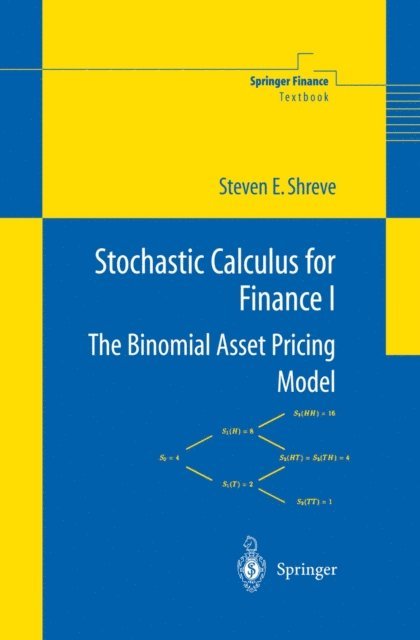
Stochastic Calculus for Finance evolved from the first ten years of the Carnegie Mellon Professional Master''s program in Computational Finance. The content of this book has been used successfully with students whose mathematics background consists of calculus and calculus-based probability. The text gives both precise statements of results, plausibility arguments, and even some proofs, but more importantly intuitive explanations developed and refine through classroom experience with this material are provided. The book includes a self-contained treatment of the probability theory needed for stochastic calculus, including Brownian motion and its properties. Advanced topics include foreign exchange models, forward measures, and jump-diffusion processes.
This book is being published in two volumes. The first volume presents the binomial asset-pricing model primarily as a vehicle for introducing in the simple setting the concepts needed for the continuous-time theory in the second volume.
Chapter summaries and detailed illustrations are included. Classroom tested exercises conclude every chapter. Some of these extend the theory and others are drawn from practical problems in quantitative finance.
Advanced undergraduates and Masters level students in mathematical finance and financial engineering will find this book useful.
Steven E. Shreve is Co-Founder of the Carnegie Mellon MS Program in Computational Finance and winner of the Carnegie Mellon Doherty Prize for sustained contributions to education.
1 076 kr
Läs direkt efter köp
1 838 kr
Läs direkt efter köp
Cataract surgery is one of the most frequently performed procedure in the United States, and cataracts are a leading cause of visual impairment in the world. Glaucoma is also a very common eye disease with an expected 3.3 million Americans afflicted with primary open angle glaucoma by 2020. The coexistence of these two diseases is not uncommon and management of a cataract can have significant impact on the glaucoma status of a patient.
Cataract surgery textbooks may have one chapter dedicated to the management of cataract with coexistent glaucoma. Likewise, a typical glaucoma surgical text dedicates one chapter to the management of these two diseases concurrently. This book will focus on the treatment of cataract in the setting of glaucoma, using an evidence-based medicine approach. Managing cataracts to the best advantage of the glaucoma should result in the best visual outcomes for patients. It should be a wonderful resource for general ophthalmologists and residents as well as glaucoma fellows.
1 335 kr
Läs direkt efter köp
A new field of medicine has emerged as a result of the global proliferation of terrorism. Terror medicine is related to emergency and disaster medicine but focuses on the constellation of medical issues uniquely related to terrorist attacks. The field encompasses four broad areas: preparedness, incident management, mechanisms of injuries and responses, and psychological consequences. In Essentials of Terror Medicine, these core concerns are addressed by a distinguished international authorship brought together by the three editors of this volume, who themselves are recognized experts in relevant disciplines: Shmuel Shapira, epidemiology and hospital administration; Jeffrey Hammond, trauma surgery and emergency response; Leonard Cole, bioterrorism and public policy. Essentials of Terror Medicine provides insightful and practical information for physicians, nurses, emergency responders, and other health professionals who may be called to service during or after a terror incident. It is indispensable reading for the medical community of the 21st century, in which diligence, continued education, and careful preparation for a variety of possible events are a preeminent responsibility.
1 459 kr
Läs direkt efter köp