Clark Glymour - Böcker
Visar alla böcker från författaren Clark Glymour. Handla med fri frakt och snabb leverans.
12 produkter
12 produkter
422 kr
Tillfälligt slut
357 kr
Tillfälligt slut
753 kr
Skickas inom 5-8 vardagar
Android epistemology is the exploration of the space of possible machines and their capacities for knowledge, beliefs, attitudes, desires, and for action in accord with their mental states.Android epistemology is the exploration of the space of possible machines and their capacities for knowledge, beliefs, attitudes, desires, and for action in accord with their mental states.
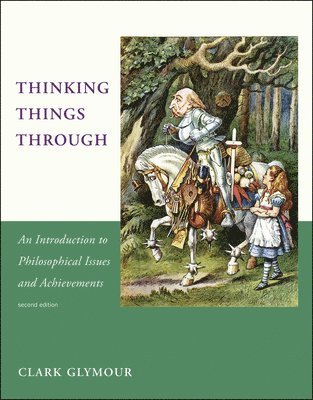
Thinking Things Through
An Introduction to Philosophical Issues and Achievements
Häftad, Engelska, 2015
428 kr
Tillfälligt slut
82 kr
Tillfälligt slut
How to think about minds that aren't like ours: using artificial intelligence and computation theory to study the powers and limits of systems that learn. For millennia, "from Aristotle to almost yesterday," the great problems of philosophy have all been about people: questions of epistemology and philosophy of mind have concerned human capacities and limitations. Still, say the editors of Thinking about Android Epistemology, there should be theories about other sorts of minds, other ways that physical systems can be organized to produce knowledge and competence. The emergence of artificial intelligence in mid-twentieth century provided a way to study the powers and limits of systems that learn, to theorize and to make theories sufficiently concrete so that their properties and consequences can be demonstrated. In this updated version of the 1995 MIT Press book Android Epistemology, computer scientists and philosophers—among them Herbert Simon, Daniel Dennett, and Paul Churchland—offer a gentle, unsystematic introduction to alternative systems of cognition. They look at android epistemology from both theoretical and practical points of view, offering not only speculative proposals but applications—ideas for using computational systems to expand human capacities. The accessible and entertaining essays include a comparison of 2001's HAL and today's computers, a conversation among aliens who have a low opinion of human cognition, an argument for the creativity of robots, and a short story illustrating the power of algorithms for learning causal relations.ContributorsNeil Agnew, Margaret Boden, Paul Churchland, Daniel Dennett, Ken M. Ford, Clark Glymour, Pat Hayes, Henry Kyburg, Doug Lenat, Marvin Minsky, Joseph Nadeau, Anatol Rappoport, Herbert Simon, Lynn Andrea Stein, Susan Sterrett
397 kr
Skickas inom 10-15 vardagar
What did the trial of Galileo share with the trial for fraud of the foremost investigator of the effects of lead exposure on children’s intelligence? In the title essay of this rollicking collection on science and education, Clark Glymour argues that fundamentally both were disputes over what methods are legitimate and authoritative. From testing the expertise of NASA scientists to discovering where software goes to die to turning educational research upside down, Glymour’s reports from the front lines of science and education read like a blend of Rachel Carson and Hunter S. Thompson. Contrarian and original, he criticizes the statistical arguments against Teach for America, argues for teaching the fallacies of Intelligent Design in high school science, places contemporary psychological research in a Platonic cave dug by Freud, and gives (and rejects) a fair argument for a self-interested, nationalist response to climate change.One of the creators of influential new statistical methods, Glymour has been involved in scientific investigations on such diverse topics as wildfire prediction, planetary science, genomics, climate studies, psychology, and educational research. Now he provides personal reports of the funny, the absurd, and the appalling in contemporary science and education. More bemused than indignant, Galileo in Pittsburgh is an ever-engaging call to rethink how we do science and how we teach it.
850 kr
Skickas inom 11-20 vardagar
A reprint of the Prentice-Hall edition of 1992.Prepared by nine distinguished philosophers and historians of science, this thoughtful reader represents a cooperative effort to provide an introduction to the philosophy of science focused on cultivating an understanding of both the workings of science and its historical and social context. Selections range from discussions of topics in general methodology to a sampling of foundational problems in various physical, biological, behavioral, and social sciences. Each chapter contains a list of suggested readings and study questions.
476 kr
Tillfälligt slut
1 381 kr
Skickas inom 10-15 vardagar
Natural and social sciences seem very often, though usually only implicitly, to hedge their laws by ceteris paribus clauses - a practice which is philosophically very hard to understand because such clauses seem to render the laws trivial and unfalsifiable. This volume collects some of the most prominent philosophers of science in the field and presents a lively, controversial, but well-integrated, discussion of the issue.
1 381 kr
Skickas inom 10-15 vardagar
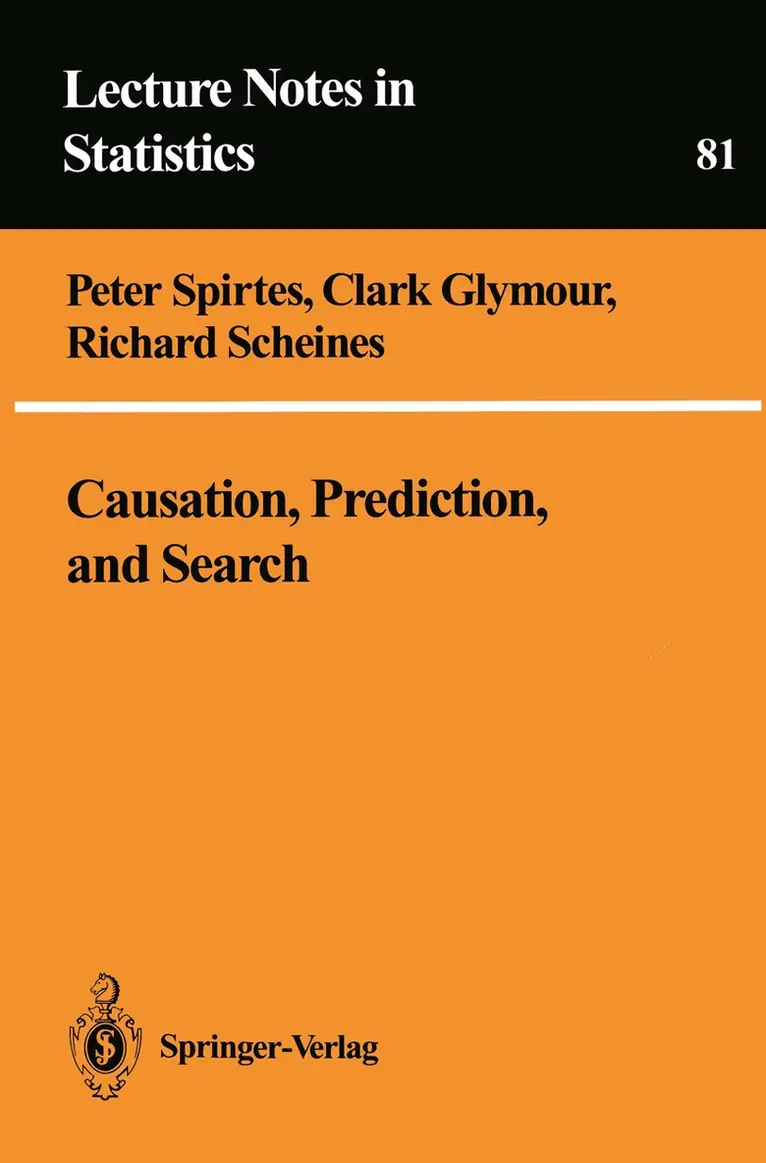
This book is intended for anyone, regardless of discipline, who is interested in the use of statistical methods to help obtain scientific explanations or to predict the outcomes of actions, experiments or policies. Much of G. Udny Yule's work illustrates a vision of statistics whose goal is to investigate when and how causal influences may be reliably inferred, and their comparative strengths estimated, from statistical samples. Yule's enterprise has been largely replaced by Ronald Fisher's conception, in which there is a fundamental cleavage between experimental and non experimental inquiry, and statistics is largely unable to aid in causal inference without randomized experimental trials. Every now and then members of the statistical community express misgivings about this turn of events, and, in our view, rightly so. Our work represents a return to something like Yule's conception of the enterprise of theoretical statistics and its potential practical benefits. If intellectual history in the 20th century had gone otherwise, there might have been a discipline to which our work belongs. As it happens, there is not. We develop material that belongs to statistics, to computer science, and to philosophy; the combination may not be entirely satisfactory for specialists in any of these subjects. We hope it is nonetheless satisfactory for its purpose.
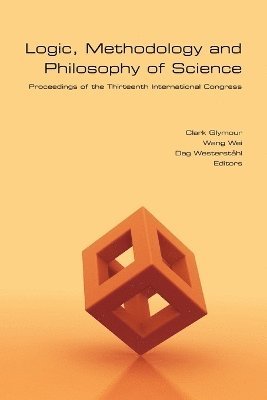
Logic, Methodology and Philosophy of Science
Proceedings of the Thirteenth International Congress
Häftad, Engelska, 2009
306 kr
Skickas inom 5-8 vardagar
1 392 kr
Skickas inom 10-15 vardagar
Natural and social sciences seem very often, though usually only implicitly, to hedge their laws by ceteris paribus clauses - a practice which is philosophically very hard to understand because such clauses seem to render the laws trivial and unfalsifiable. After early worries the issue is vigorously discussed in the philosophy of science and the philosophy of mind since ca. 15 years. This volume collects the most prominent philosophers of science in the field and presents a lively, controversial, but well-integrated, highly original and up-to-date discussion of the issue. It will be the reference book in the coming years concerning ceteris paribus laws.