• Fri frakt över 249 kr
  • •
  • Snabba leveranser
  • •
  • Billiga böcker
Kundservice

Du är på sajten för privatpersoner.

Företag, bibliotek eller offentlig verksamhet?

Du handlar på classic.bokus.com, där alla dina funktioner finns intakta.
Till classic.bokus.com
Bokus logotyp. Gå till startsidan.
  • Erbjudanden
  • Nyheter
  • Student
  • Topplistor
  • Barn & ungdom
  • Bokus Play
  • E-böcker
  • Pocketböcker
  • Spel & pussel

10% rabatt på allt med kod NYSTART10 →

Sidfot

Mina sidor

    Hjälp

    • Kundservice
    • Vanliga frågor och svar
    • Frakt och leverans
    • Retur vid ångerrätt
    • Reklamera vara
    • Betalning
    • Köpvillkor
    • Allmänna villkor
    • Information om webbplatsens tillgänglighet

    Om Bokus

    • Om oss
    • Pressrum
    • För studenter
    • För företag
    • För bibliotek och offentlig verksamhet
    • För leverantörer
    • Hållbarhet

    Populärt

    • Aktuella erbjudanden
    • Presentkort
    • Studentlitteratur
    • Nya böcker
    • Topplistor
    • Signerade böcker
    • Engelska böcker

    Inspiration

    • Boktips
    • BookTok
    • Populära bokserier
    • Barnbokskaraktärer
    • Populära författare
    Logotyp för Bokus
    Följ oss på Facebook (extern länk)Följ oss på Instagram (extern länk)Följ oss på YouTube (extern länk)Följ oss på TikTok (extern länk)
    bokus @ CookiesAnpassa cookiesIntegritetspolicyKöpvillkor
    Till Citymail hemsida (extern länk)Till Budbee hemsida (extern länk)Till Postnord hemsida (extern länk)Till Schenker hemsida (extern länk)Till Early Bird hemsida (extern länk)Till Walleys hemsida (extern länk)
    1. Historia och arkeologi
    2. Historia
    3. Asiens historia

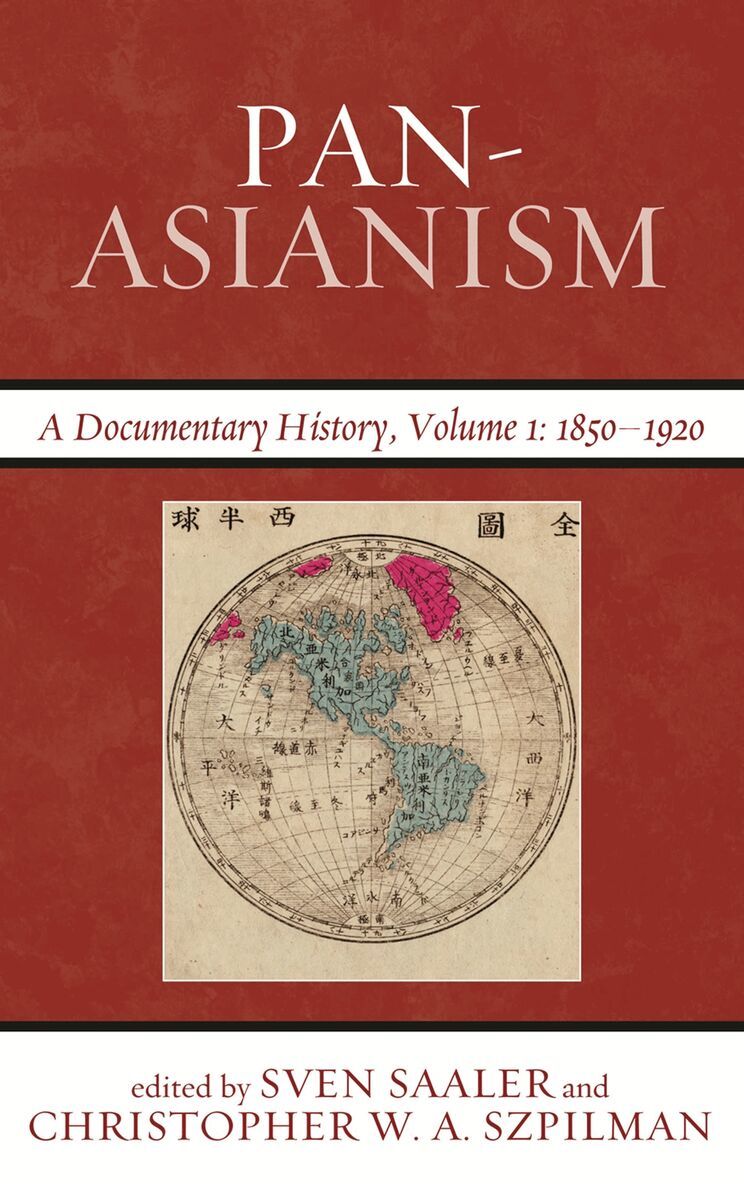
    Pan-Asianism

    A Documentary History, 1850–1920, Volume 1

    AvSven Saaler,Christopher W. A. Szpilman

    Inbunden, Engelska, 2011

    Del 1 i serien Asia/Pacific/Perspectives

    1 580 kr

    Beställningsvara. Skickas inom 10-15 vardagar. Fri frakt över 249 kr.

    Beskrivning

    This first volume in a two-volume set provides the only comprehensive, Western-language history of Pan-Asianism through primary sources and commentaries. The book argues that Pan-Asianism, often—though unfairly—associated with the Yellow Peril, has been a powerful political and ideological force in modern Asia. It has shaped national identities and strongly influenced the development of international relations across Asia and the Pacific. Scholars have long recognized the importance of Pan-Asianism as an ideal of Asian solidarity, regional cooperation, and integration but also as an ideology that justified imperialist expansion and military aggression. Yet sustained research has been hampered by the difficulty of accessing primary sources.Thoroughly remedying this problem, this unique sourcebook provides a wealth of documents on Pan-Asianism from 1850 to 1920, many translated for the first time from Asian languages. All sources are accompanied by expert commentaries that provide essential background information. Providing an essential overview of Pan-Asianism as it developed throughout modern Asia, this collection will be an indispensable tool for scholars in history, political science, international relations, and sociology. Its accessible presentation makes it a valuable resource for non-specialists as well.Contributions by: Cemil Aydin, Yuan P. Cai, Peter Duus, Selçuk Esenbel, Jing He, Eri Hotta, Joël Joos, Kim Bongjin, Kyu Hyun Kim, Eun-jeung Lee, Matsuda Koichiro, Marc Andre Matten, Sven Saaler, Michael A. Schneider, Alistair Swale, Christopher W. A. Szpilman, Brij Tankha, Renée Worringer, and Urs Matthias Zachmann.

    Produktinformation

    • Utgivningsdatum:2011-04-16
    • Mått:164 x 239 x 33 mm
    • Vikt:717 g
    • Format:Inbunden
    • Språk:Engelska
    • Serie:Asia/Pacific/Perspectives
    • Antal sidor:360
    • Förlag:Bloomsbury Publishing Plc
    • ISBN:9781442205963

    Utforska kategorier

    • Asiens historia inom Historia och arkeologi

    Mer om författaren

    Sven Saaler is professor of modern Japanese history at Sophia University, Tokyo.Christopher W. A. Szpilman is professor of modern Japanese history at Teikyo University, Tokyo.

    Recensioner i media

    The first substantial compilation of materials on the topic in the English language . . . [which] not only fulfills the historiographical gap and teaching needs but also opens up further research into the subject. . . . The editors do not assume a coherent Pan-Asianism; rather, the strength of this collection lies in its acknowledgment of varieties, tensions, and changes within various voices of Pan-Asianism. . . . Each short chapter comes with an informative, easy-to-follow essay as well as translations of primary materials, making the collection ideal for undergraduate teaching. . . . Despite the sense of taboo around the subject of pan-Asianism, or rather because of it, carefully contextualized analyses of its history are highly important. Not only for teachers but also for any critical readers of Asian history and contemporary discussions of Asian integration, Pan-Asianism is a welcome and invaluable collection.

    Innehållsförteckning

    • Introduction: The Emergence of Pan-Asianism as an Ideal of Asian Identity and Solidarity, 1850–2008Sven Saaler and Christopher W. A. SzpilmanPart I: The Dawn of Pan-Asianism, 1850–1900Chapter 1: The Concept of "Asia" before Pan-AsianismMatsuda KoichiroChapter 2: The Foundation Manifesto of the Koakai (Raising Asia Society) and the Ajia Kyokai (Asia Association), 1880–1883Urs Matthias ZachmannChapter 3: The Genyosha (1881) and Premodern Roots of Japanese ExpansionismJoël JoosChapter 4: Koa—Raising Asia: Arao Sei and Inoue MasajiMichael A. SchneiderChapter 5: Tarui Tokichi’s Arguments on Behalf of the Union of the Great East, 1893Kyu Hyun KimChapter 6: Konoe Atsumaro and the Idea of an Alliance of the Yellow Race, 1898Urs Matthias ZachmannChapter 7: Okakura Tenshin: "Asia Is One," 1903Brij TankhaChapter 8: Okakura Tenshin and Pan-Asianism, 1903–1906Jing HePart II: The Era of Imperialism and Pan-Asianism in Japan, 1900–1914Chapter 9: The Foundation Manifesto of the Toa Dob